
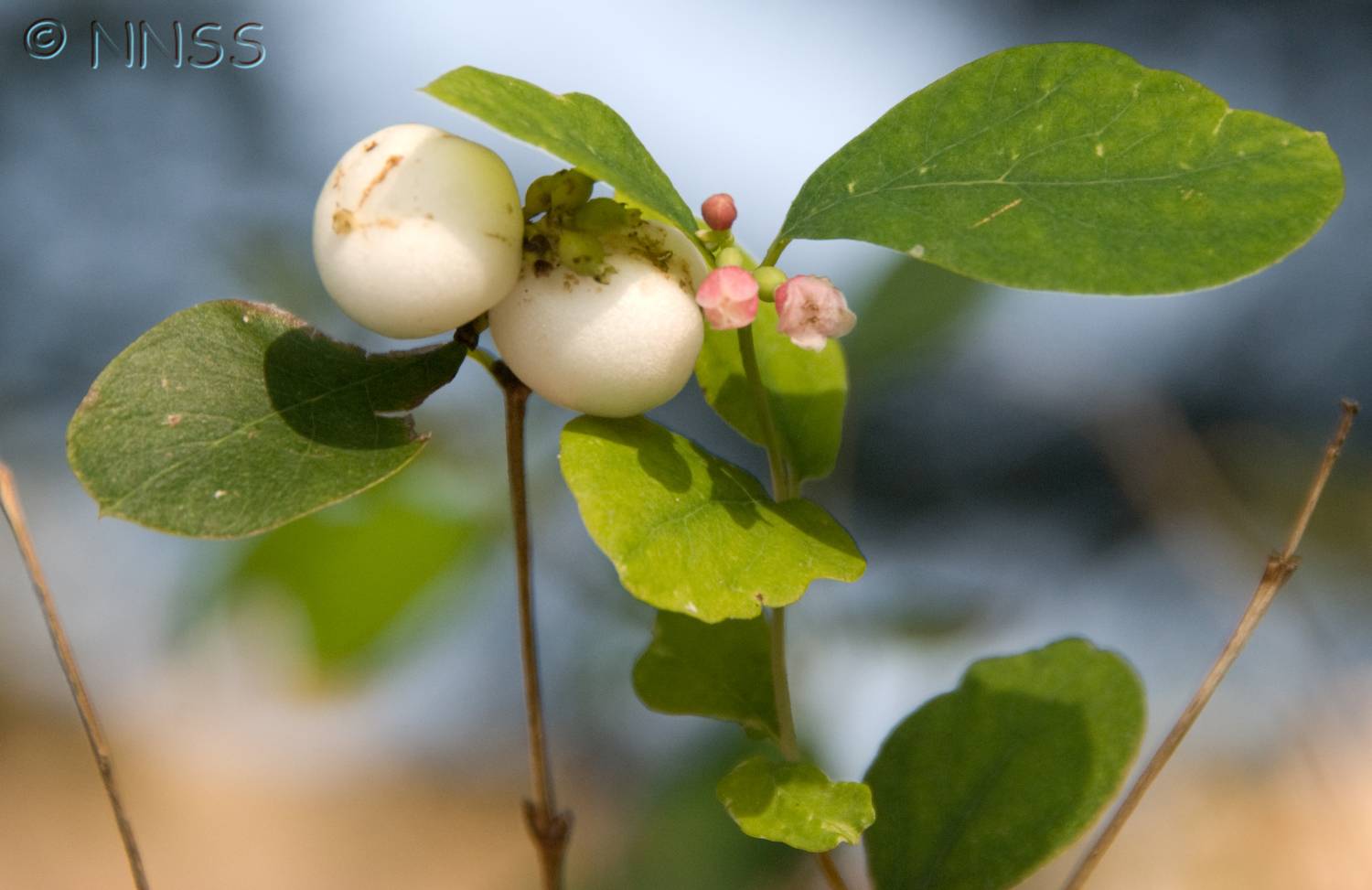
Snowberry - Symphoricarpos albus
Expand and collapse the sections below by clicking on the title or + / - icons.
Short description of Symphoricarpos albus, Snowberry
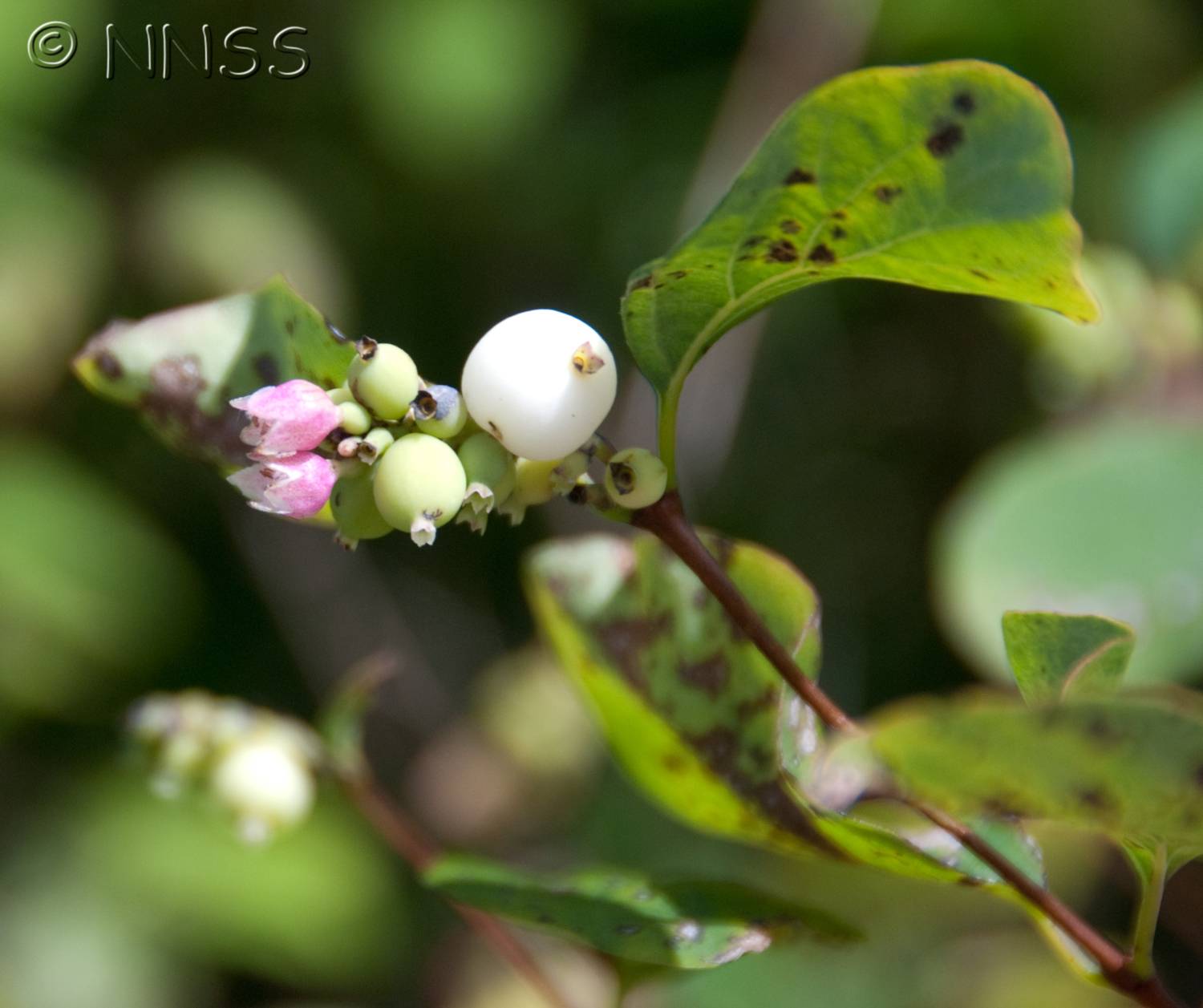
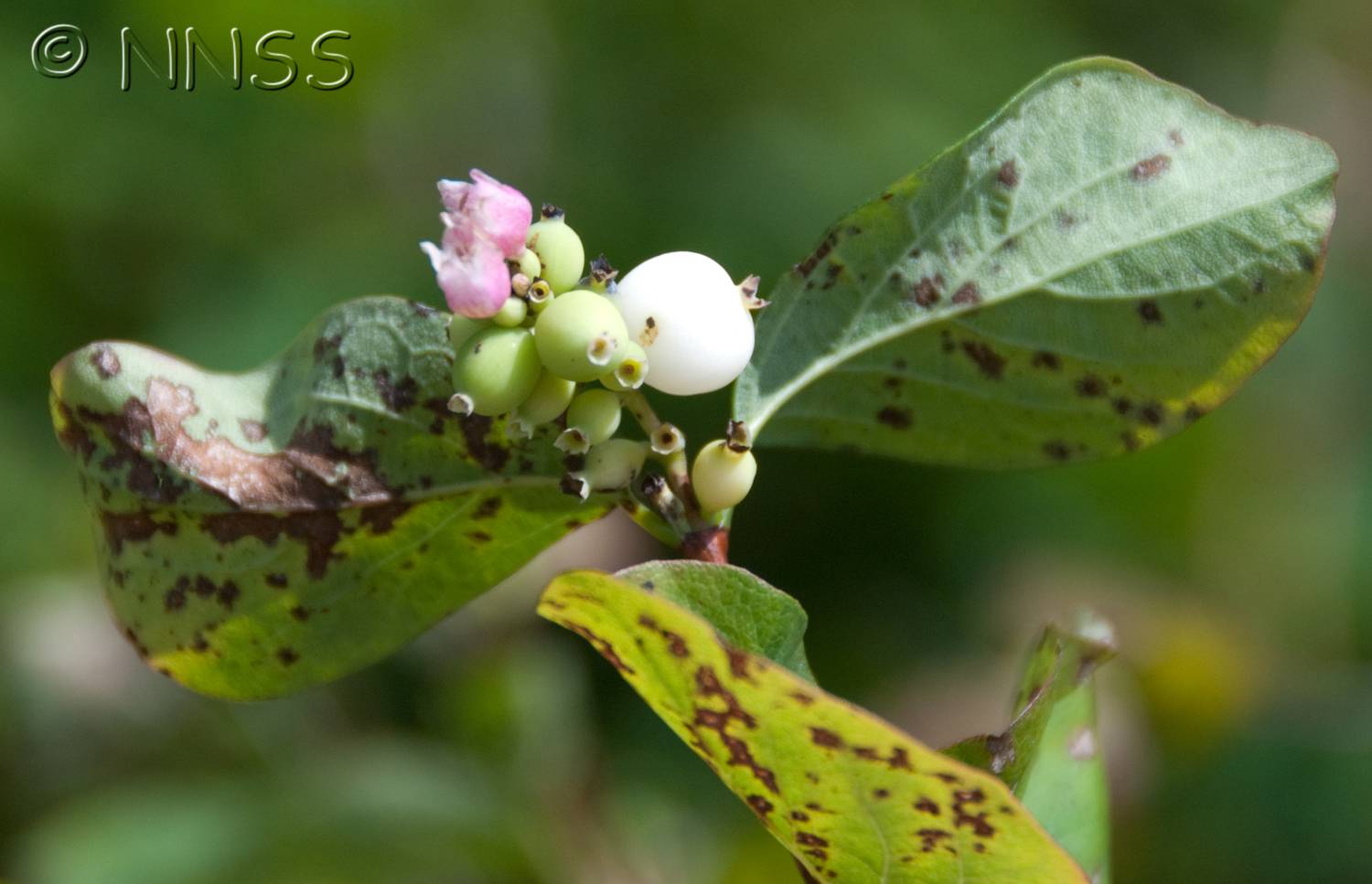
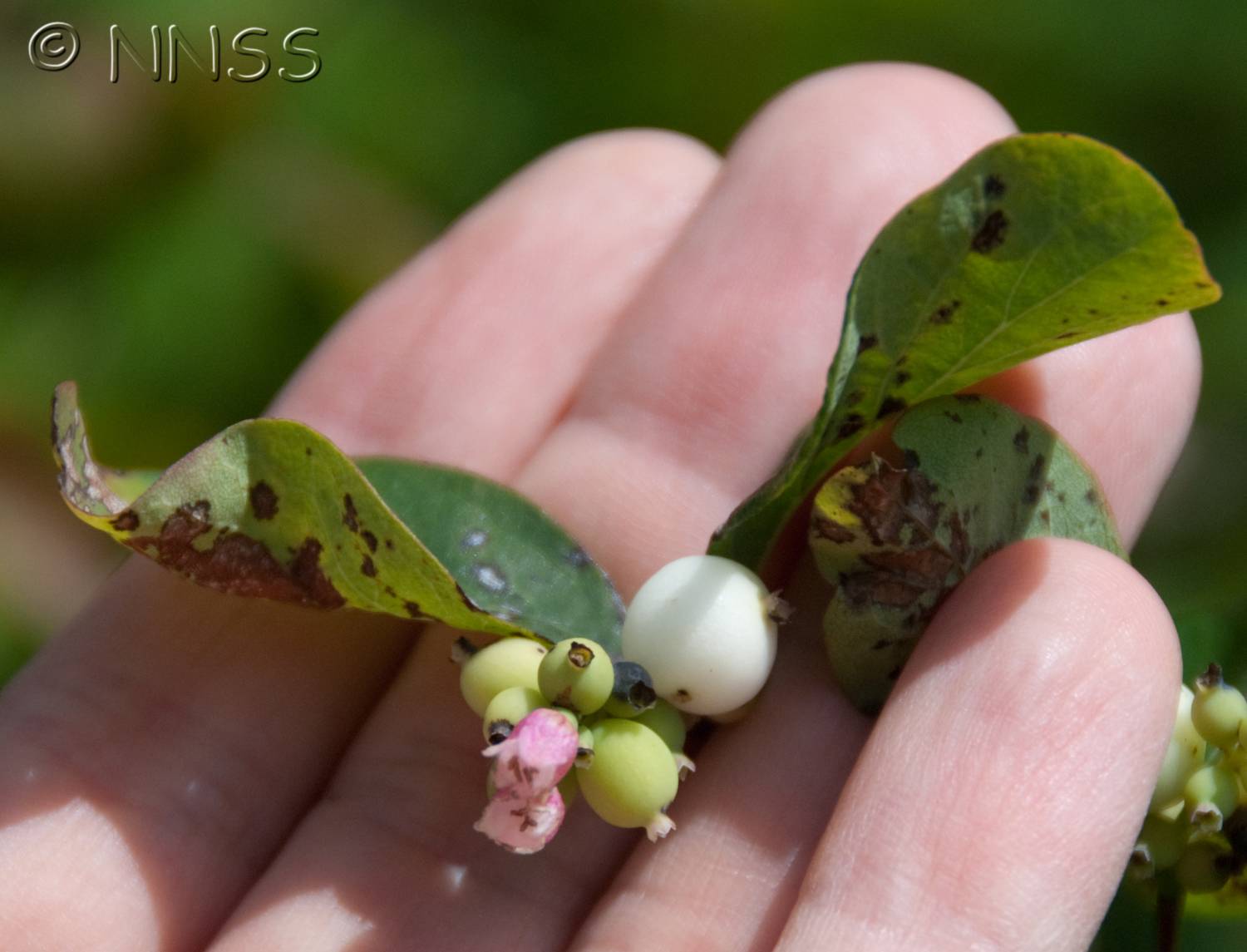
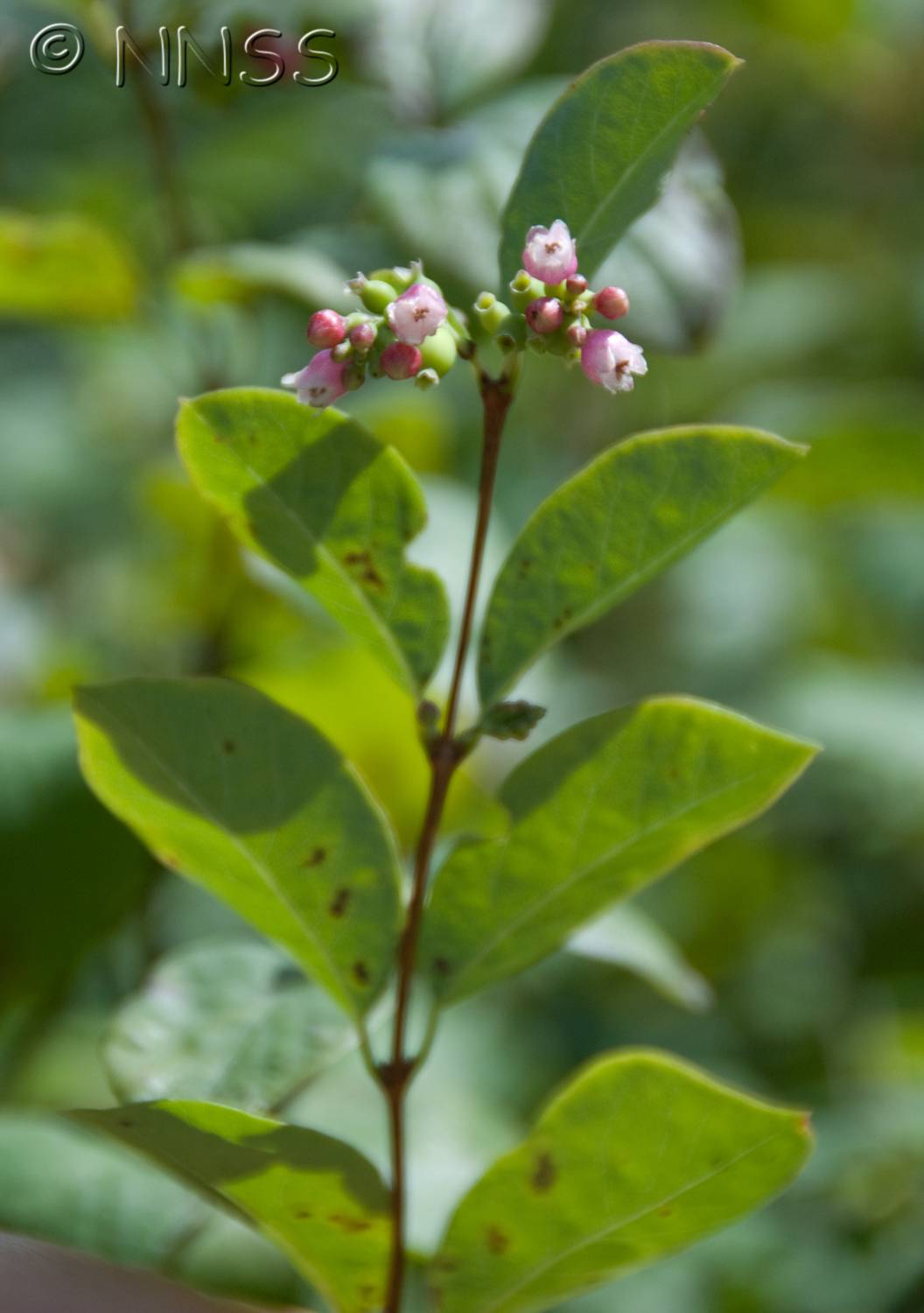
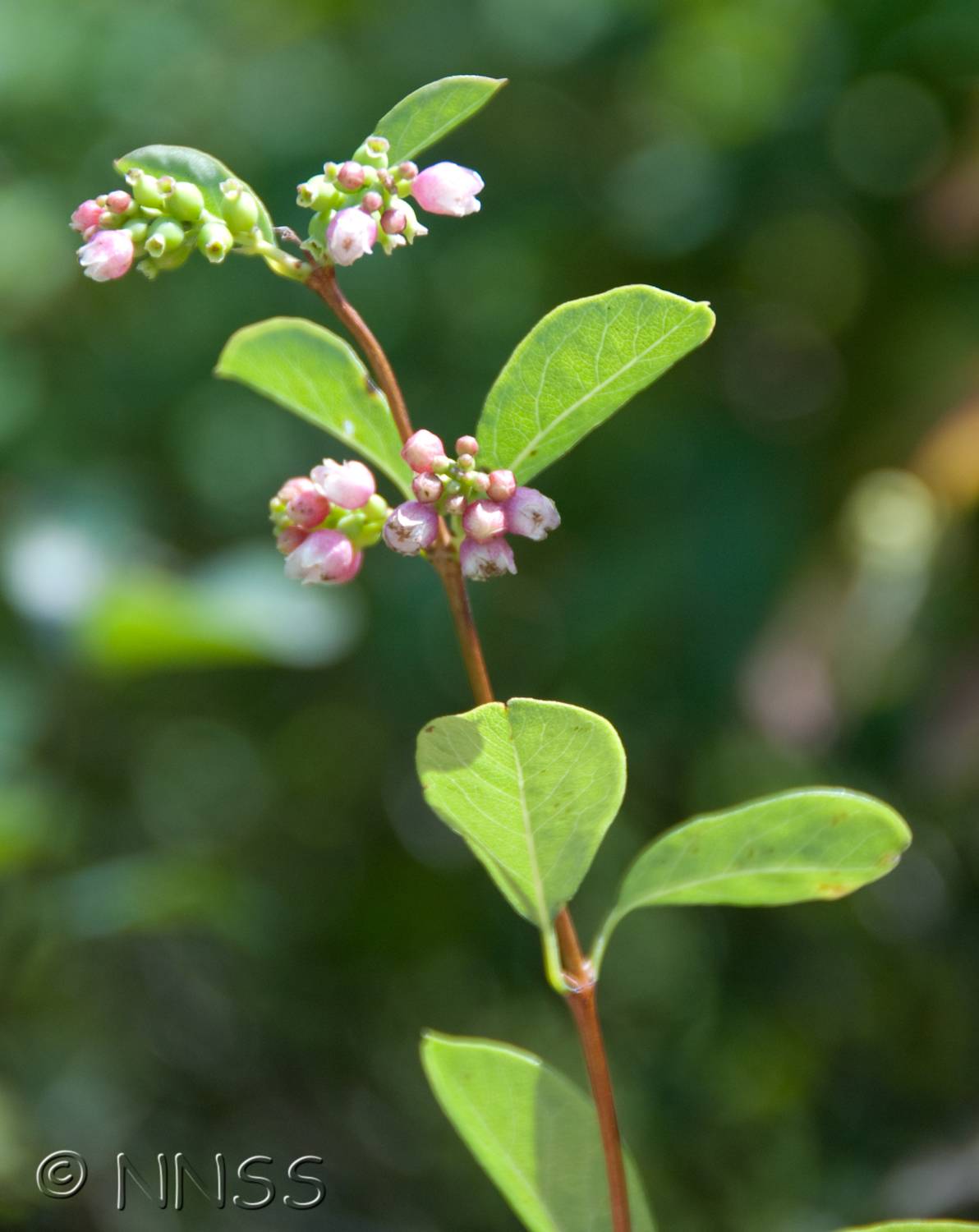
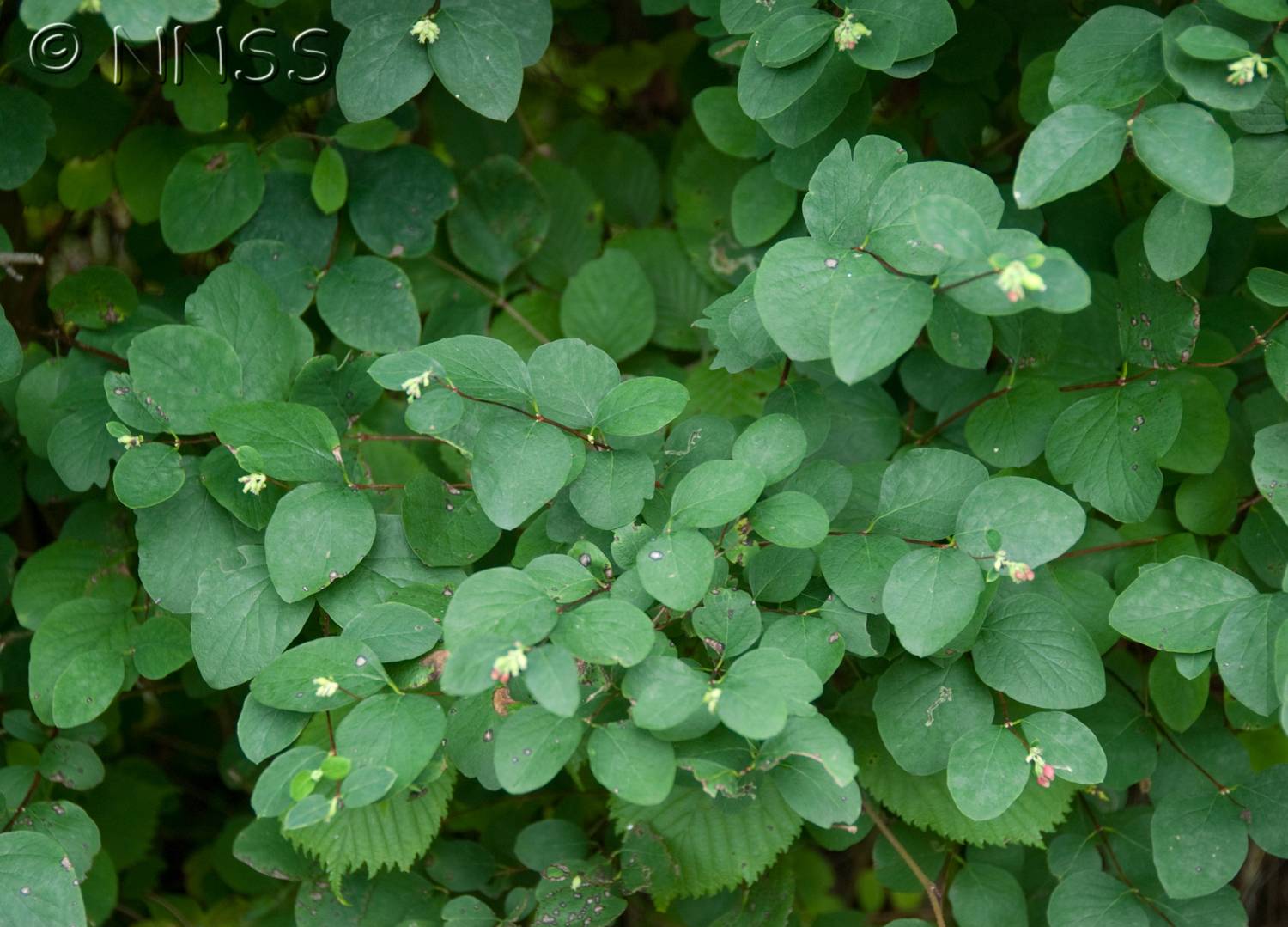
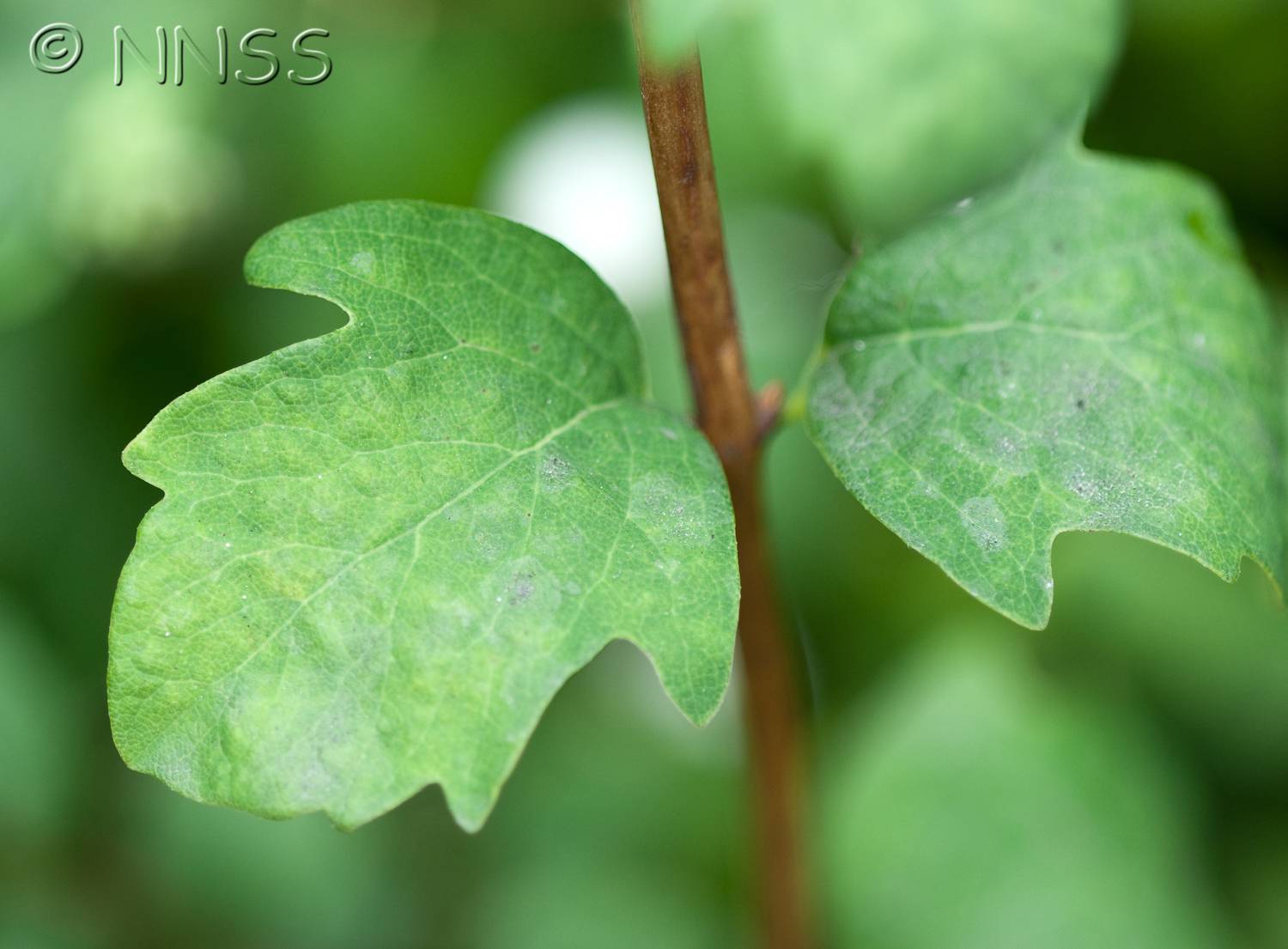
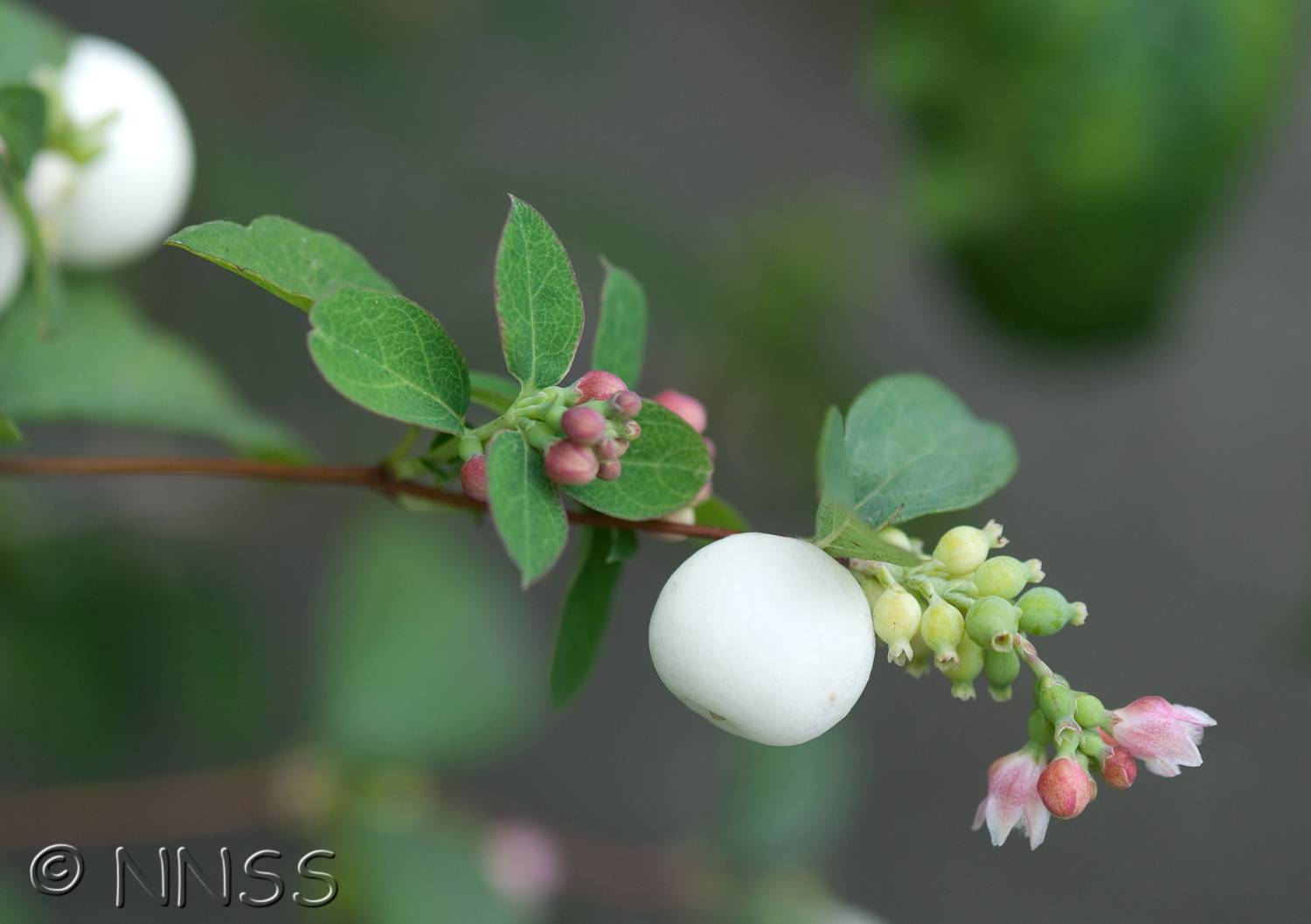
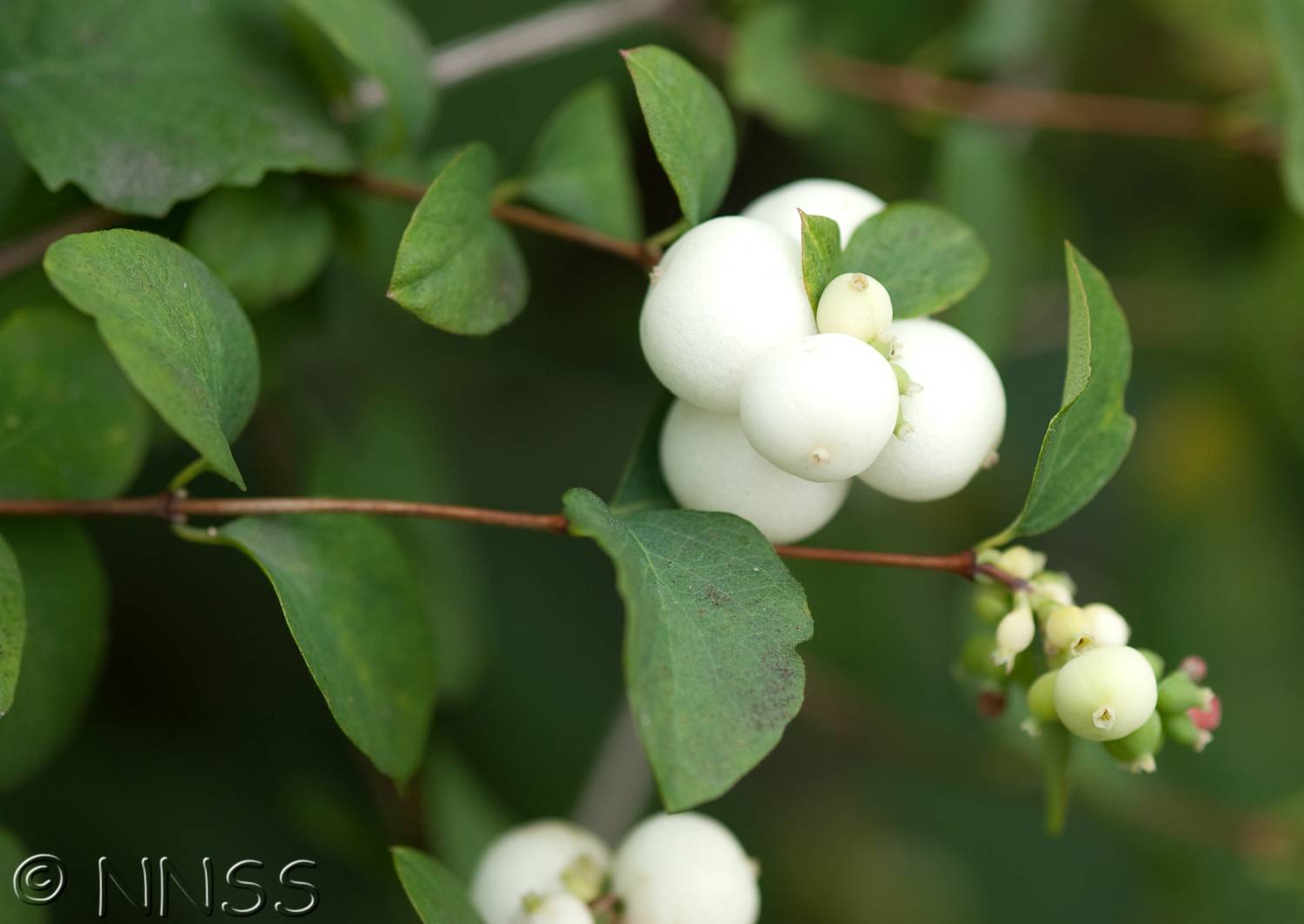
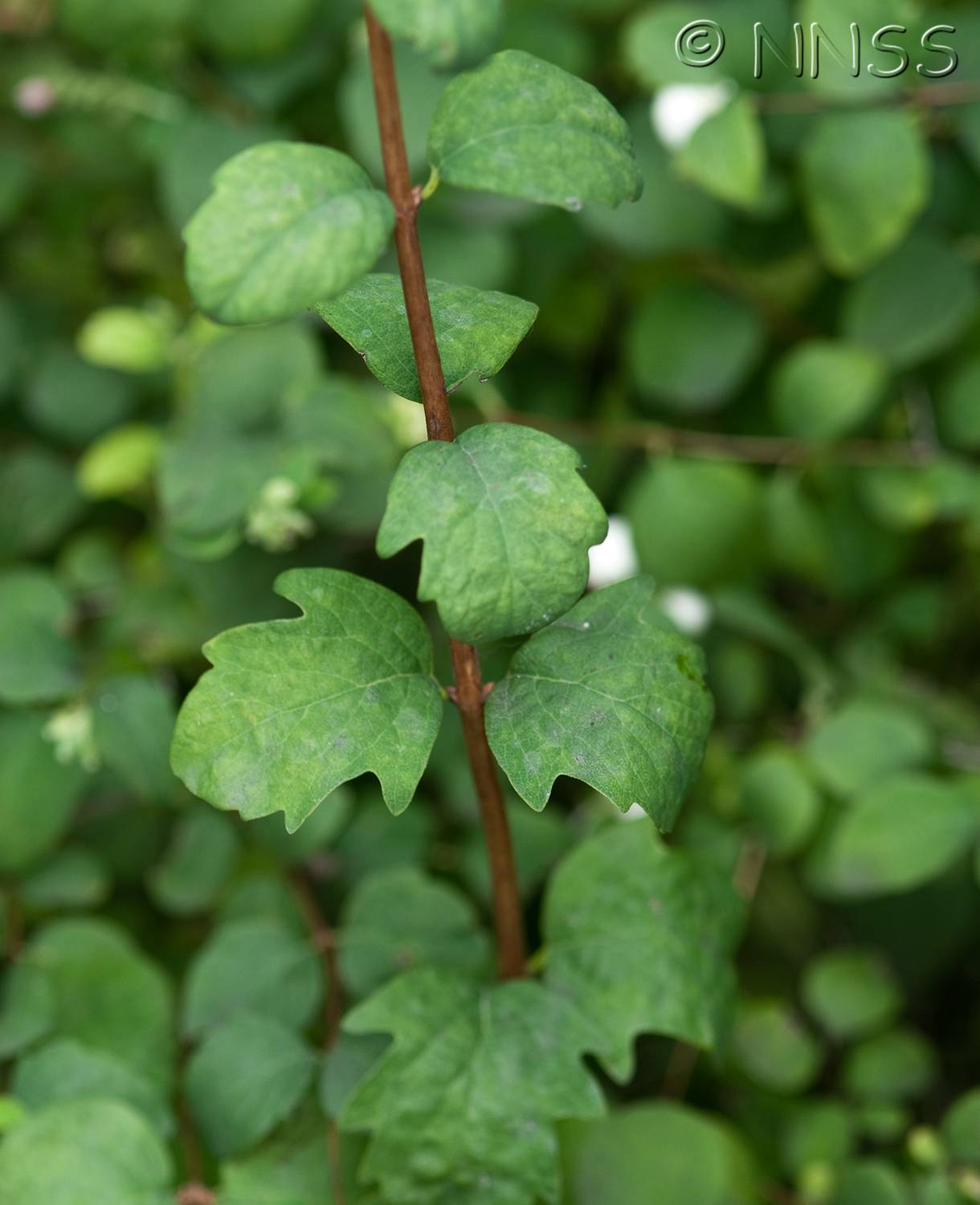
Deciduous shrub, forming arching thickets up to 3 m high; leaves 2-4 cm long, dull green and glabrous, simple, entire or deeply lobed; flowers in dense pink terminal spikes.
Impact summary: Symphoricarpos albus, Snowberry
Vigorous dense shrubby growth, suppressing all but the most shade-tolerant species.
Habitat summary: Symphoricarpos albus, Snowberry
Found in woods, hedges, scrub, waste ground and on railway embankments.
Overview table
| Environment | Terrestrial |
|---|---|
| Species status | Non-Native |
| Native range | Northern America |
| Functional type | Land plant |
| Status in England | Non-Native |
| Status in Scotland | Non-Native |
| Status in Wales | Non-Native |
| Location of first record | v.c.23 |
| Date of first record | 1863 |
Origin
Native of western North America from Alaska and Alberta to California and Colorado, where it is present as S. albus var. laevigatus, from which GB stock has emanated.
First Record
First introduced to GB in 1817. First sighting in the wild unknown.
Pathway and Method
Originally introduced from the Pacific coast of North America for horticultural purposes, then towards the late nineteenth century universally used as cover at game-bird flushing points in coverts.
The plant is strongly gregarious, spreading steadily by prolific growth of suckers. Rarely spreads by seed.
Species Status
Steadily invasive; however, not listed as a member of Schedule 9 of the Wildlife and Countryside Act. Widely naturalised in temperate regions of Europe.
Dispersal Mechanisms
Mature plants annually set abundant seed, but there is no evidence that these have ever given rise to new plants in GB. The white colour of the fruits are unattractive to birds, so remain on the bushes until January when they turn brown and fall to the ground.
Reproduction
Evidence is rare that rapid and aggressive spreading takes place. Sites where expansion appears to be relatively rapid are in well lit, semi-open habitats. Dense thickets are usually the result of close initial planting; and gardeners have reported patches that have hardly spread in 50 years. The plant has been noted as spreading by seed around many German towns, where this might be its most eastern/northern limit.
Known Predators/Herbivores
There have been occasional reports of birds tearing off and swallowing portions of the discoloured over-ripe fruit pulp. Activity of leaf miners (Diptera) has been recorded as widespread, as has that of caterpillars. The leaves are a food plant of Death's-head Hawk-moth caterpillars. There are no records of heavy defoliation by insect attack. Livestock such as sheep and cattle readily browse stands.
Resistant Stages
Dried seed stored at 5oC can remain viable for up to two years. Dormancy can be broken by high summer temperatures followed by a cold winter; and germination may be expected in nature about 18 months after the fruits have been shed.
Habitat Occupied in GB
Stands in GB have arisen as a result of planting, or have established themselves from vegetative fragments; the plant is often therefore found close to habitation and within an enclosed landscape.
Widespread distribution across most of GB except northern Scotland. It occurs in the Channel Islands, and in 110 of the 112 British vice-counties in at least 2550 10 km squares (hectads).
Environmental Impact
Its vigorous suckering habit causes it to spread from its original planting; it then produces dense thickets which outcompete other less vigorous plants; the dense foliage will, however, provide good cover for smaller mammals.
Health and Social Impact
It is stated that the berries might be poisonous to humans, but as the main compound isolated is a weak saponin it is unlikely to be very toxic, except if eaten in very large quantities. In North America it was extensively used by many native peoples as a medication for a variety of ailments, ranging from external conditions such as skin disorders and injuries, to a host of internal ailments.
Economic Impact
None known except where eradication programmes

 026.jpg)
 027.jpg)
Identification
Bean, W.J. (1980) Trees and Shrubs Hardy in the British Isles. Vol. IV. 8th ed., John Murray, London.
Stace, C.A. (2010) New flora of the British Isles, Third Edition, Cambridge University Press, Cambridge.
Biology, ecology, spread, vectors
Gilbert, O.L. (1995) Biological Flora of the British Isles: Symphoricarpos albus (L.) S.F. Blake (S. rivularis Suksd., S. racemosus Michaux), Journal of Ecology, 83, 159-166.
Management and impact
http://www.habitas.org.uk/invasive/species.asp?item=4329
General
Preston, C.D., Pearman, D.A. & Dines, T.D. (2002) New Atlas of the British and Irish Flora, Oxford University Press, Oxford.
Spotted this species?
Distribution map
View the Distribution map for Snowberry, Symphoricarpos albus from BSBI