
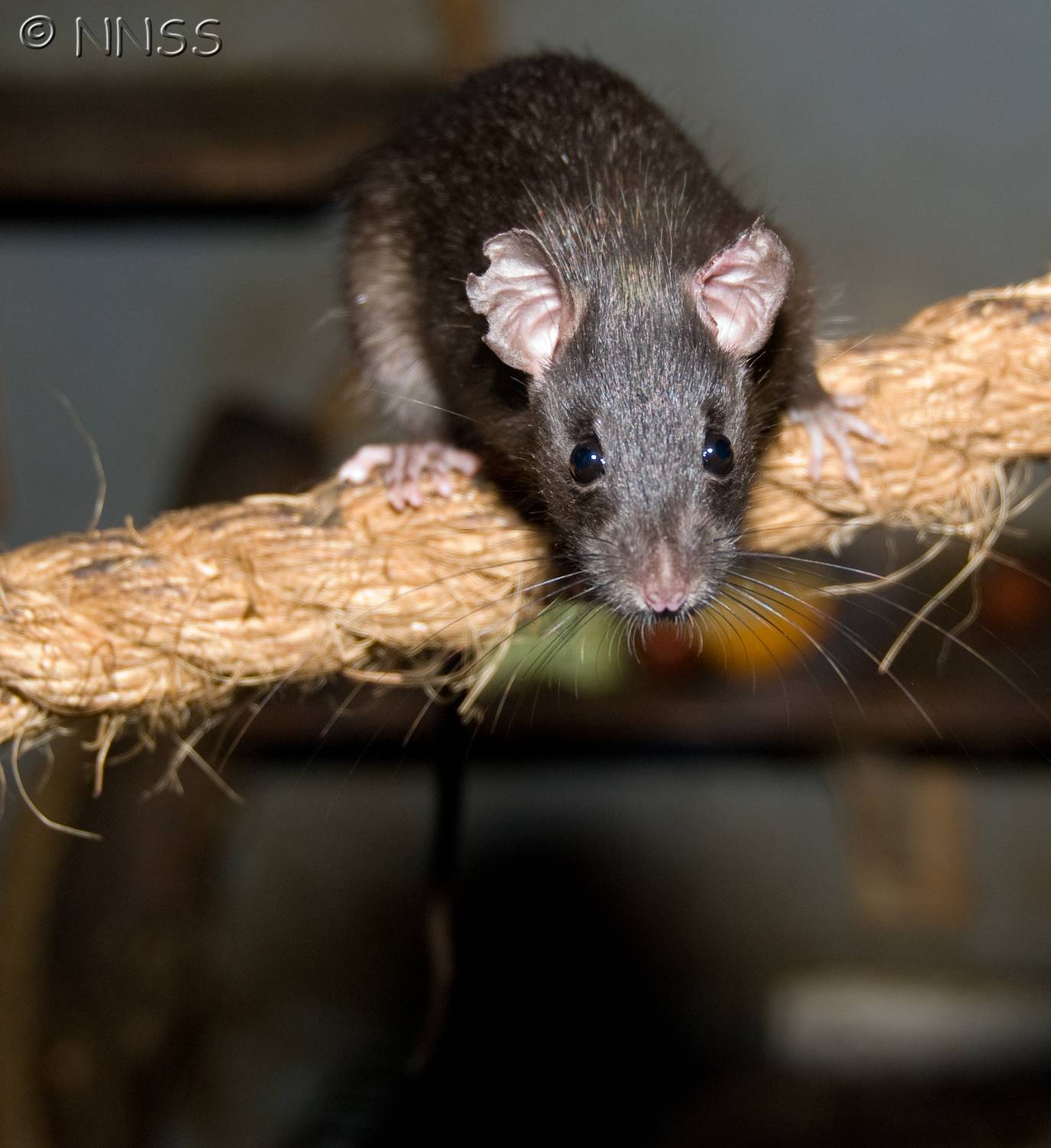
Ship Rat - Rattus rattus
Expand and collapse the sections below by clicking on the title or + / - icons.
Short description of Rattus rattus, Ship Rat
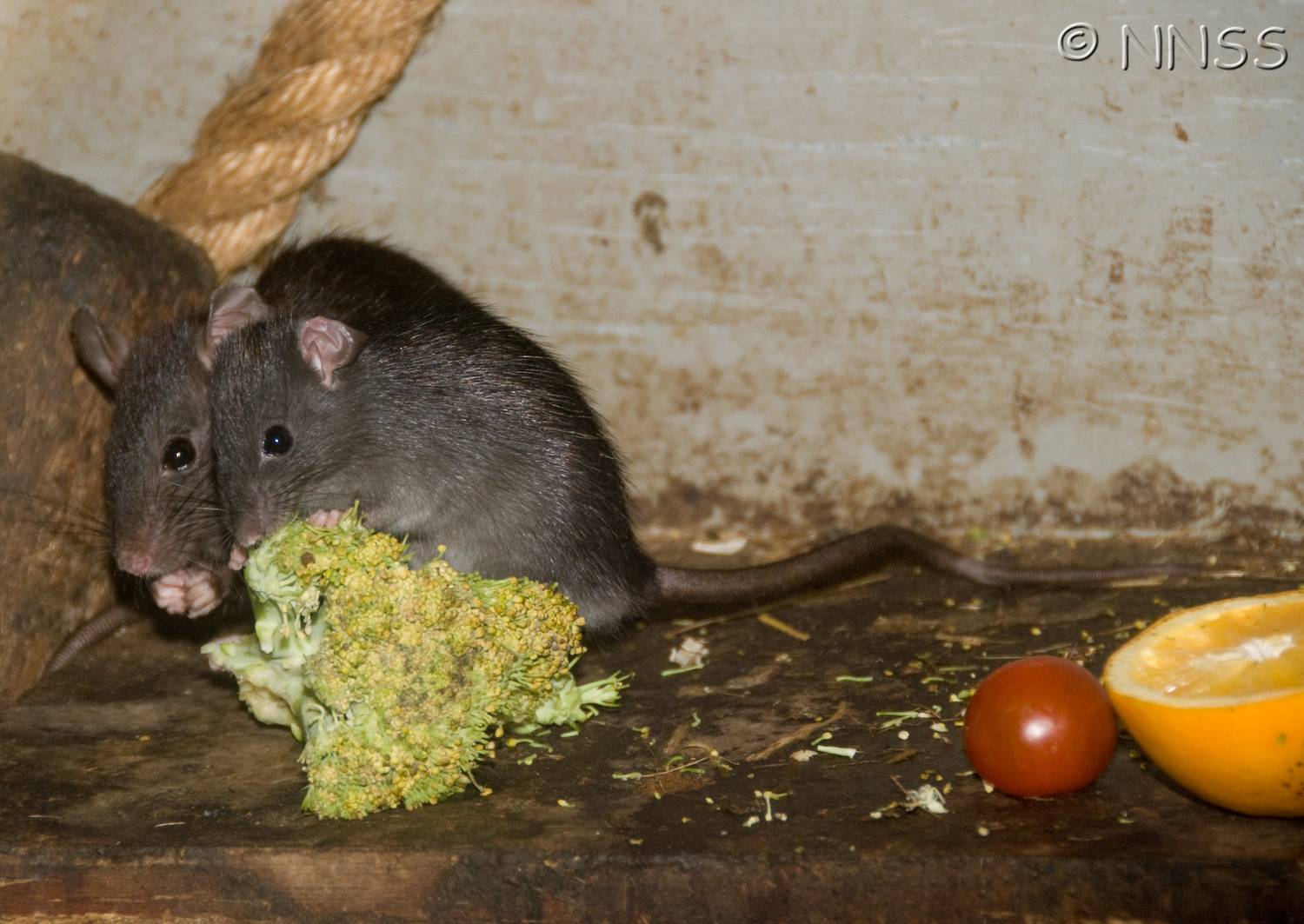
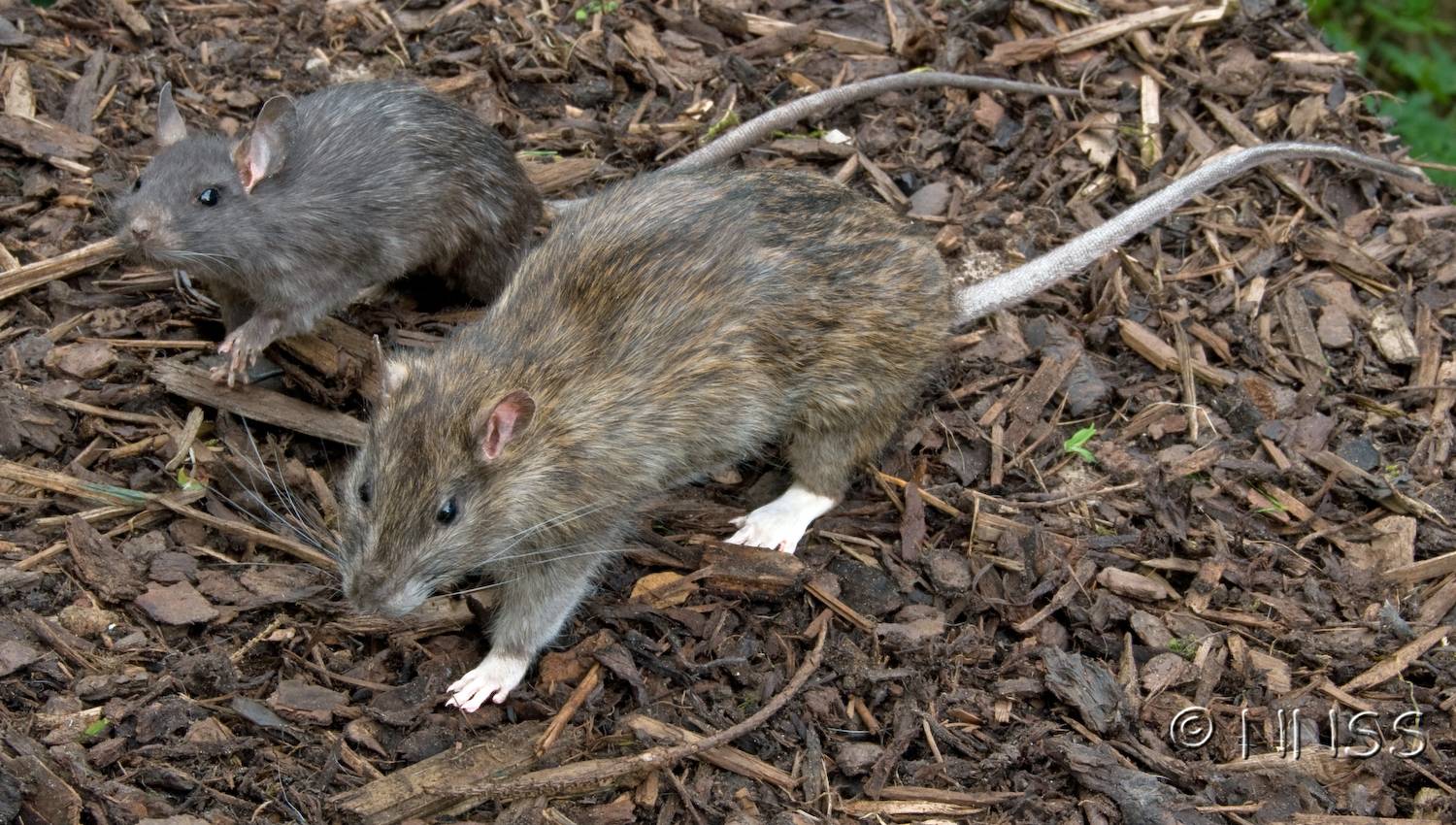
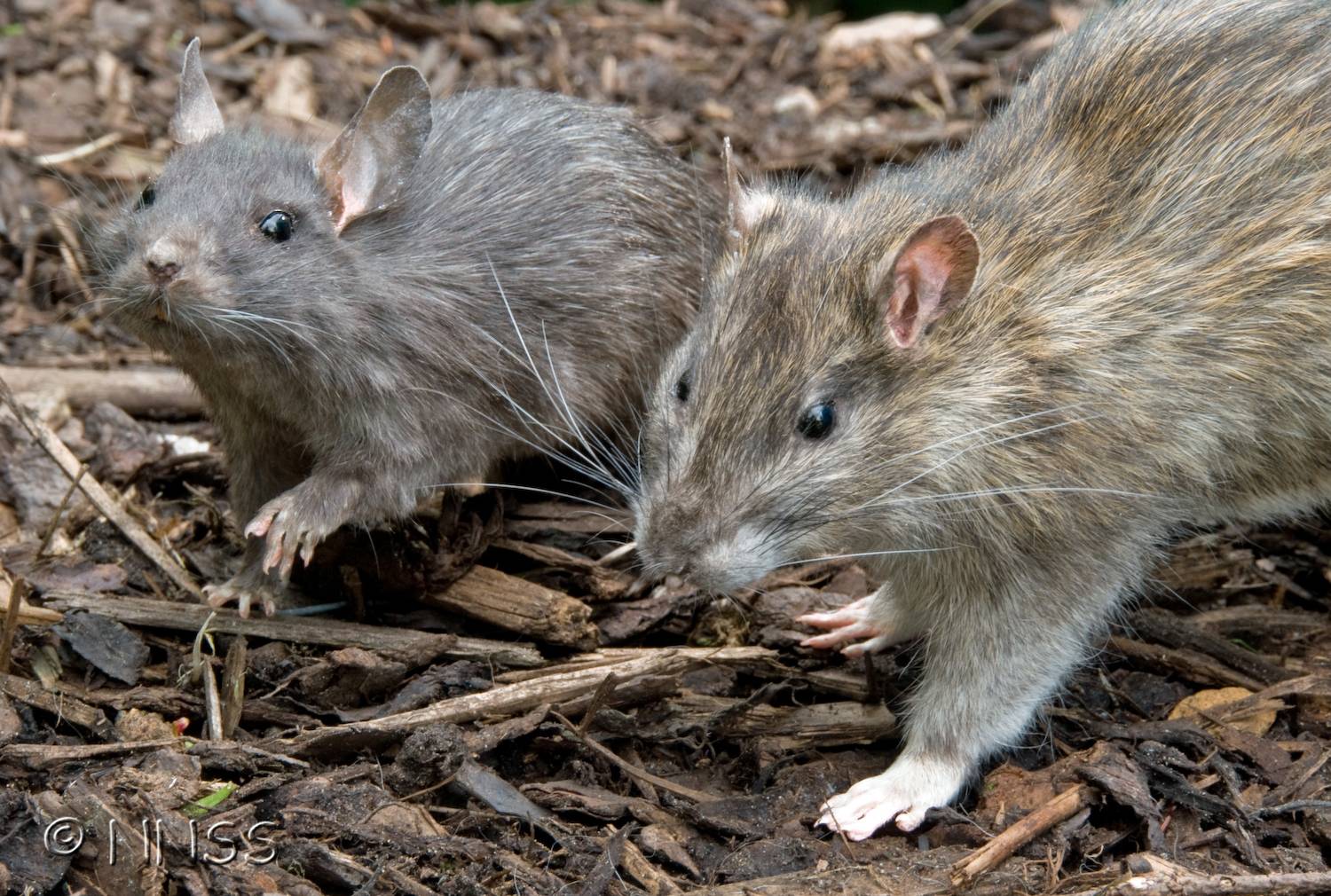
The large size and long, thin, almost hairless tail distinguish rats from other grey-brown rodents. Water voles are smaller and darker brown, with shorter ears, a furry tail and a blunter snout. The ship rat is slimmer than the brown rat, with relatively longer ears: its uniformly coloured tail is always longer than the head and body length combined.
Impact summary: Rattus rattus, Ship Rat
The ship rat has spread around the world and is a major pest species in many countries.
Habitat summary: Rattus rattus, Ship Rat
Ship rats were formerly found in a very wide range of habitat types in GB, typically in association with man. They now occur mainly in seaports, with an isolated population in the Hebrides.
Overview table
| Environment | Terrestrial |
|---|---|
| Species status | Non-Native |
| Native range | Indian Subcontinent, Pakistan |
| Functional type | Omnivore |
| Status in England | Non-Native |
| Status in Scotland | Non-Native |
| Status in Wales | Non-Native |
| Location of first record | London |
| Date of first record | 250 250 |
Origin
The original distribution of the ship rat was probably India, from where it spread westward to Egypt by the 4th century BC and subsequently to Europe.
First Record
Remains have been found in Roman settlements in GB dating from as early as the 3rd century BC.
Pathway and Method
Ship rats can thrive on ships at sea and come ashore in ports or through shipwrecks. The first arrivals are believed to have been with the Romans and the Vikings. Shipborne arrivals continue in GB ports.
Species Status
The ship rat is highly invasive and is regarded as a serious pest in many countries, especially in warmer climates where it appears better able to co-exist with or outcompetes the brown rat. In New Zealand, where there are no native land mammals, the ship rat has become a widespread arboreal predator in native forests. Having been widespread in GB, it was eventually displaced almost completely by the brown rat.
Dispersal Mechanisms
Ship rats have spread around the world through their readiness to travel in ships. They are poorer swimmers than brown rats and are less likely to disperse naturally to and from offshore islands.
Reproduction
Ship rats breed from March to November, each female producing up to five litters a year, each averaging about seven young. Females mature sexually after just 12–16 weeks.
Known Predators/Herbivores
Ship rats fall prey to a variety of avian and mammalian predators, including owls, domestic cats and dogs, and foxes.
Resistant Stages
None.
Habitat Occupied in GB
Ship rats occupy warehouses and other buildings in seaport areas and, being better climbers, are more likely than brown rats to be found in roof spaces. Following shipwrecks, they have survived well on seabird islands.
Strong populations exist in the Shiants and, until they were recently extirpated, on Lundy Island. Ship rats survive in some seaport areas, such as at Tilbury.
Environmental Impact
Ship rats have contributed to many extinctions or near-extinctions of island endemic species and particularly of seabird colonies. In GB they present a serious threat to seabirds on the Shiant Islands.
Health and Social Impact
Ship rats can spread a number of diseases to humans through their bites and droppings, including leptospirosis (Weil's disease). Inside buildings, rats can cause considerable nuisance through fouling surfaces and water tanks, gnawing timbers and wiring, and through their noise and aggression.
Economic Impact
Ship rats previously had major economic impacts through their consuming and contamination of foodstuffs in storage and through damage to property. The species is now very rare in GB, however, and its impacts are much reduced.

Identification
Macdonald, D. & Barrett, P. (1993) Mammals of Britain & Europe. HarperCollins, London.
Biology, ecology, spread, vectors
Audoin-Rouzeau, F. & Vigne, J.-D. (1994) La colonisation de l’Europe par le rat noir Rattus rattus. Revue de Paléobiologie, 13, 125–145.
Bentley, E.W. (1964) A further loss of ground by Rattus rattus L. in the United Kingdom during 1956–61. Journal of Animal Ecology, 33, 371–373.
Smith, P.A., Smith, J.A., Tattersall, F.H., Lancaster, V., Natynczuk, S.E. & Seymour, R.S. (1993) The ship rat (Rattus rattus) on Lundy, 1991. Journal of Zoology, London, 231, 689–695.
Twigg, G.I. 1992. The black rat Rattus rattus in the United Kingdom in 1989. Mammal Review, 22, 33–42.
Management and impact
General
Harris, S. & Yalden, D.W. (2008) Mammals of the British Isles: Handbook. Fourth edition. The Mammal Society, Southampton.
Lever, C. (2009) The Naturalized Animals of Britain and Ireland. New Holland Publishers, London.
Spotted this species?
Distribution map
View the Distribution map for Ship Rat, Rattus rattus from NBN Atlas