
Sitka Spruce - Picea sitchensis
Expand and collapse the sections below by clicking on the title or + / - icons.
Short description of Picea sitchensis, Sitka Spruce
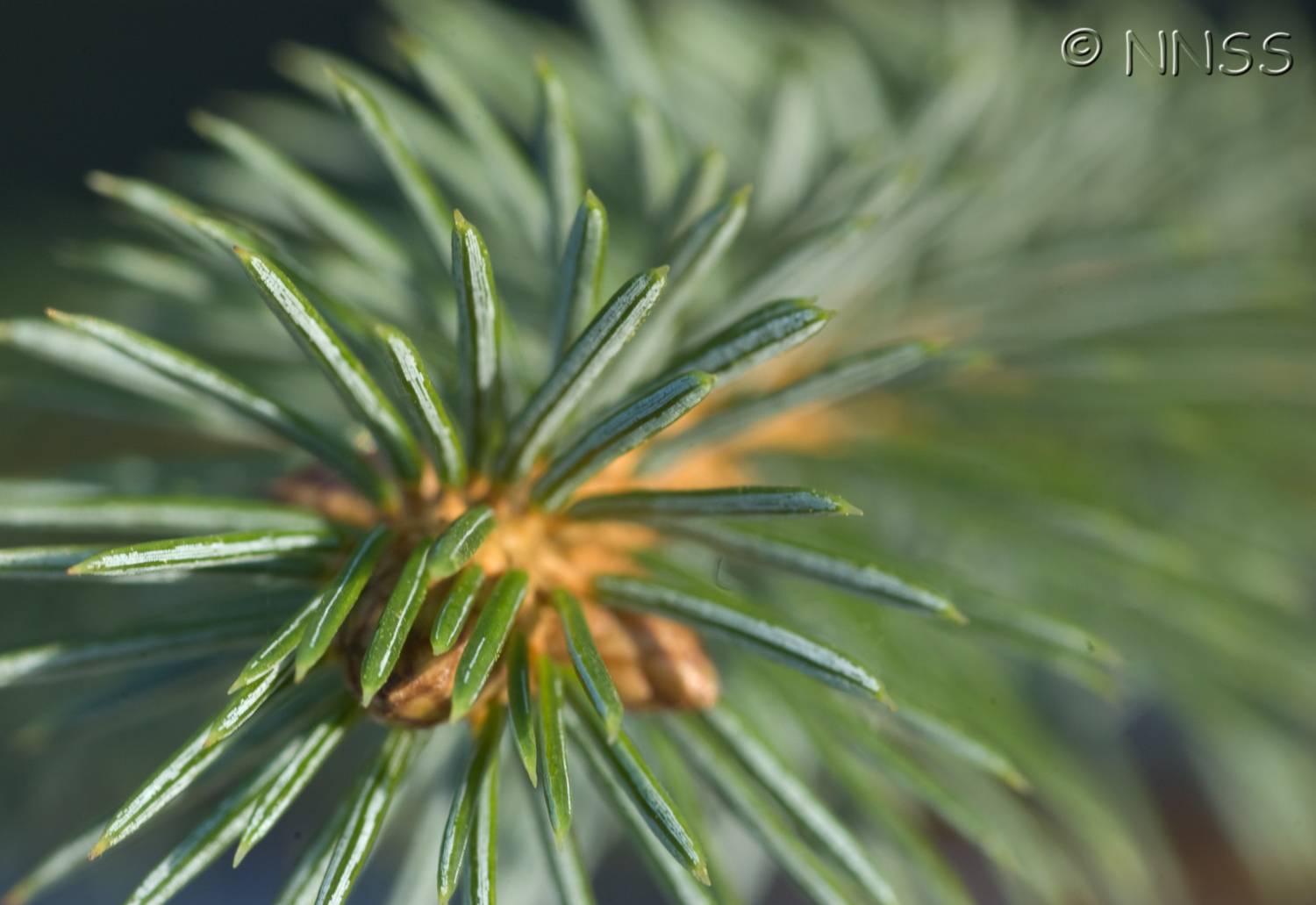
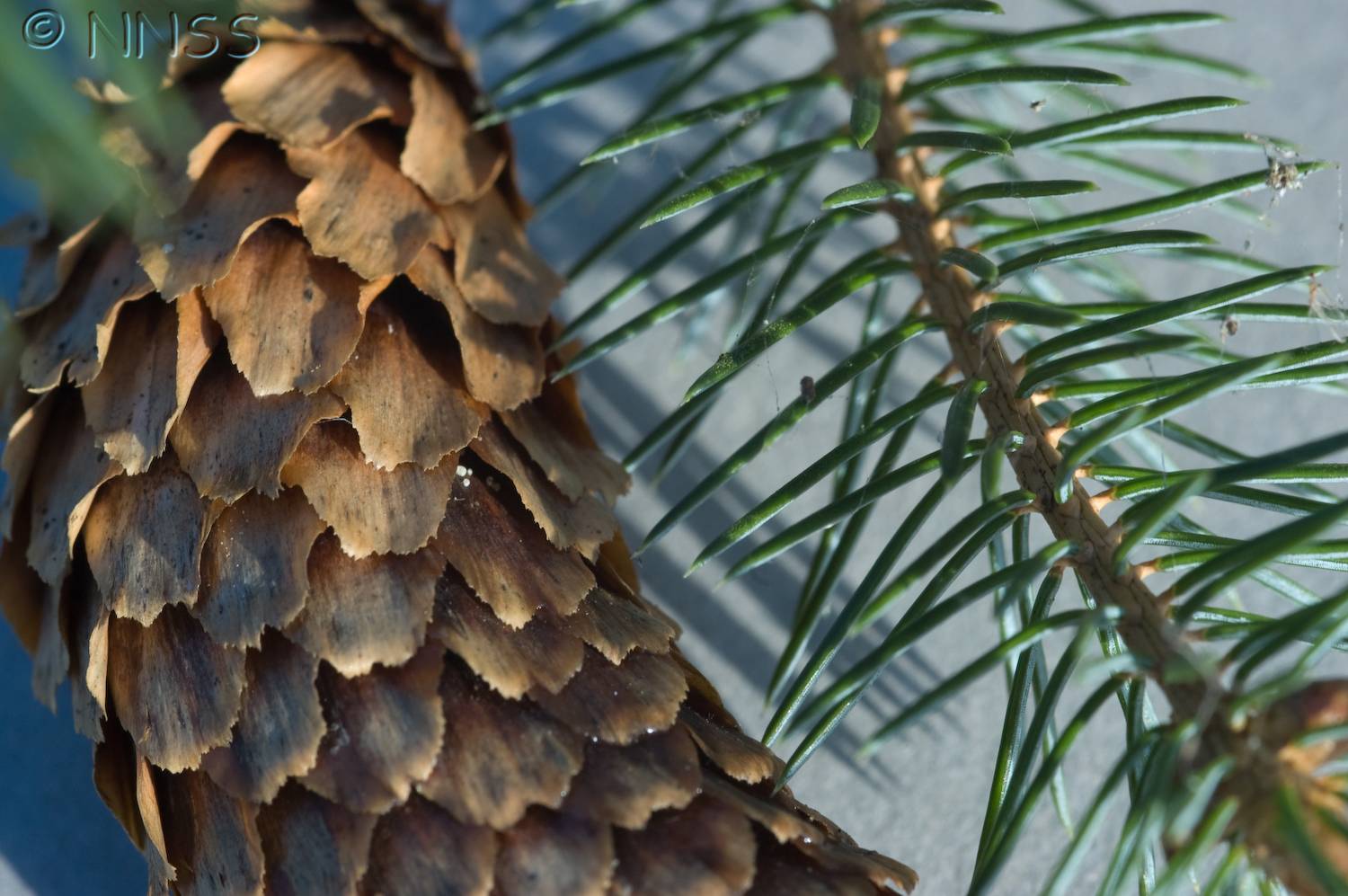
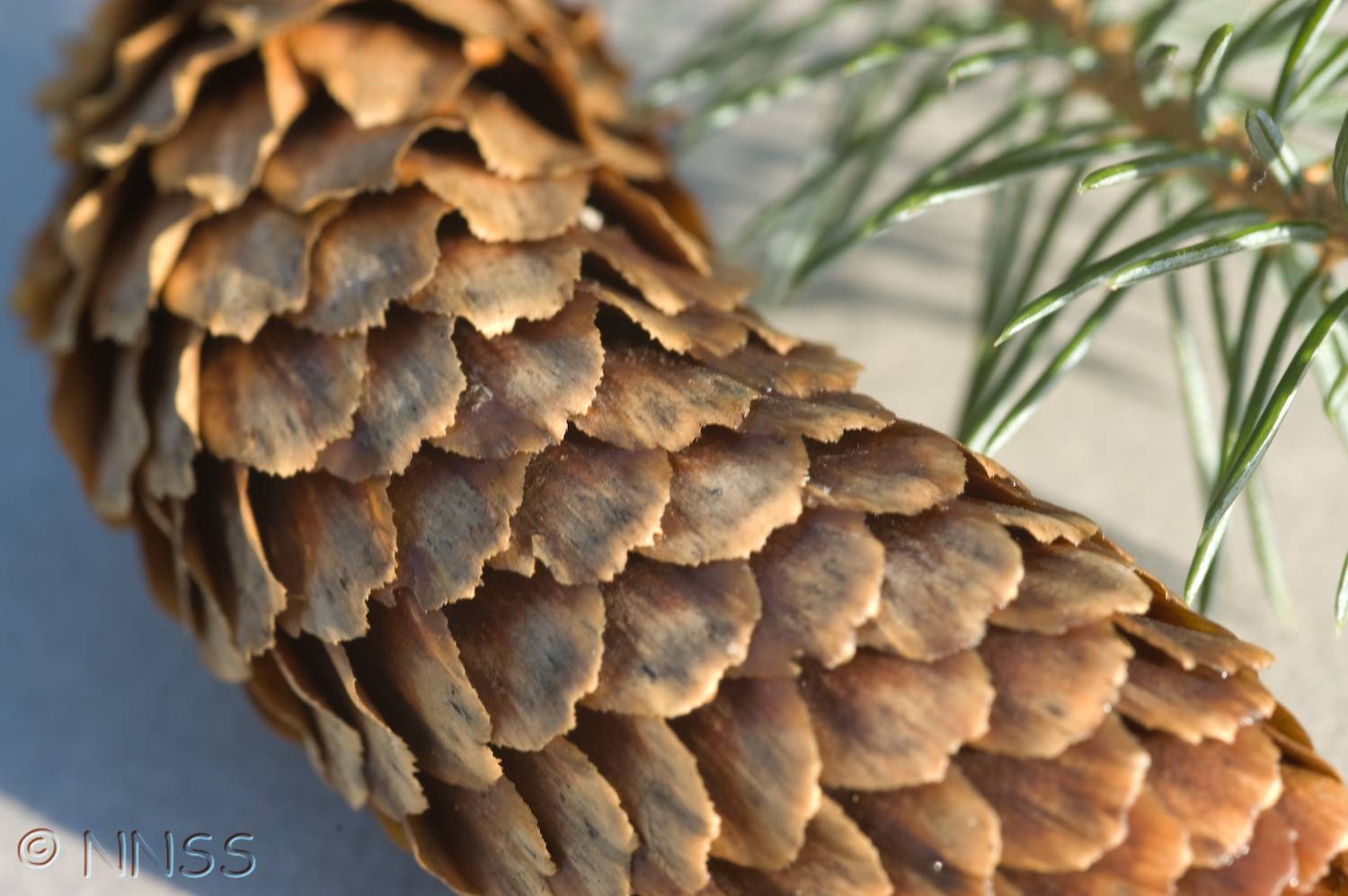
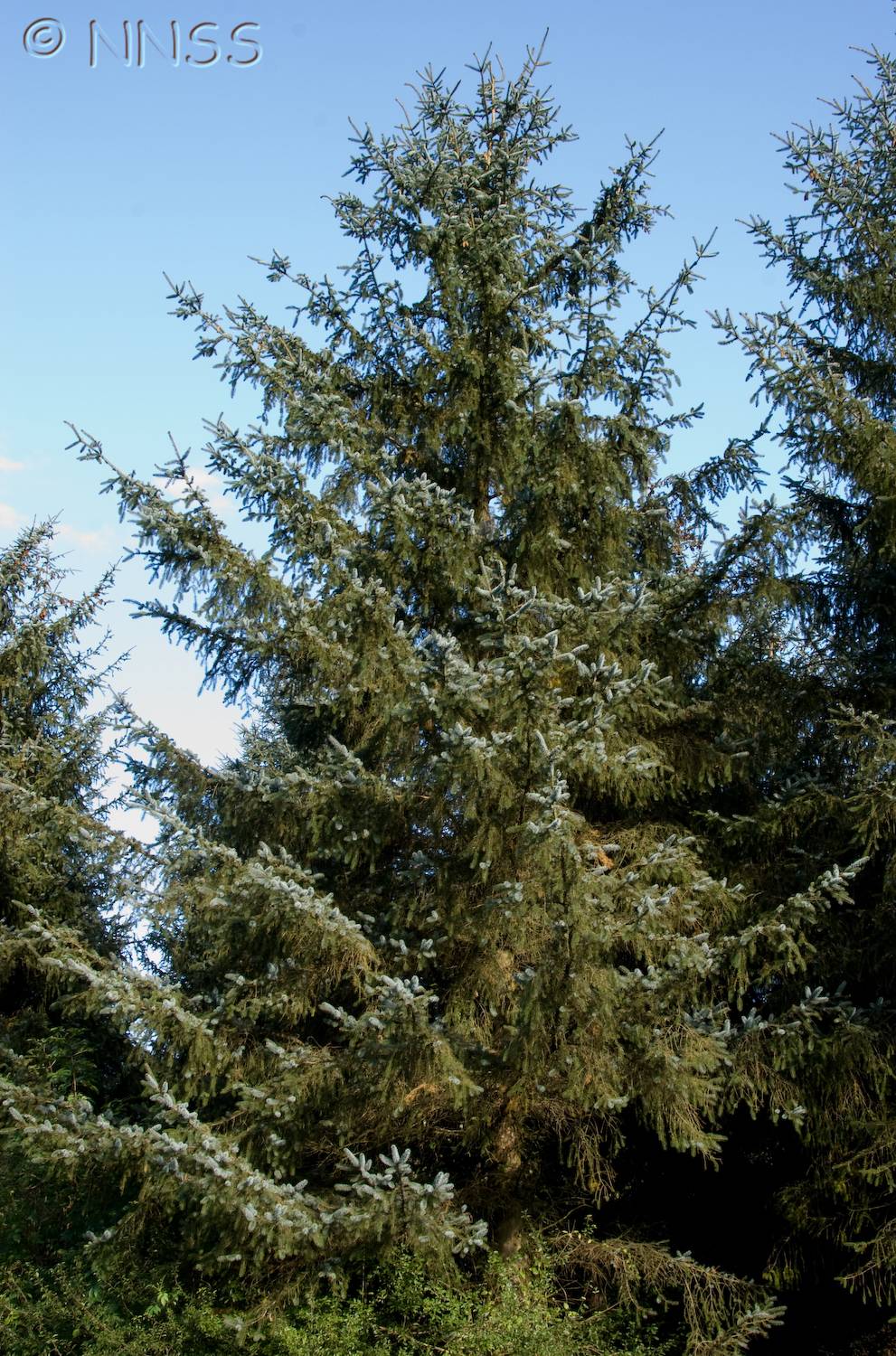
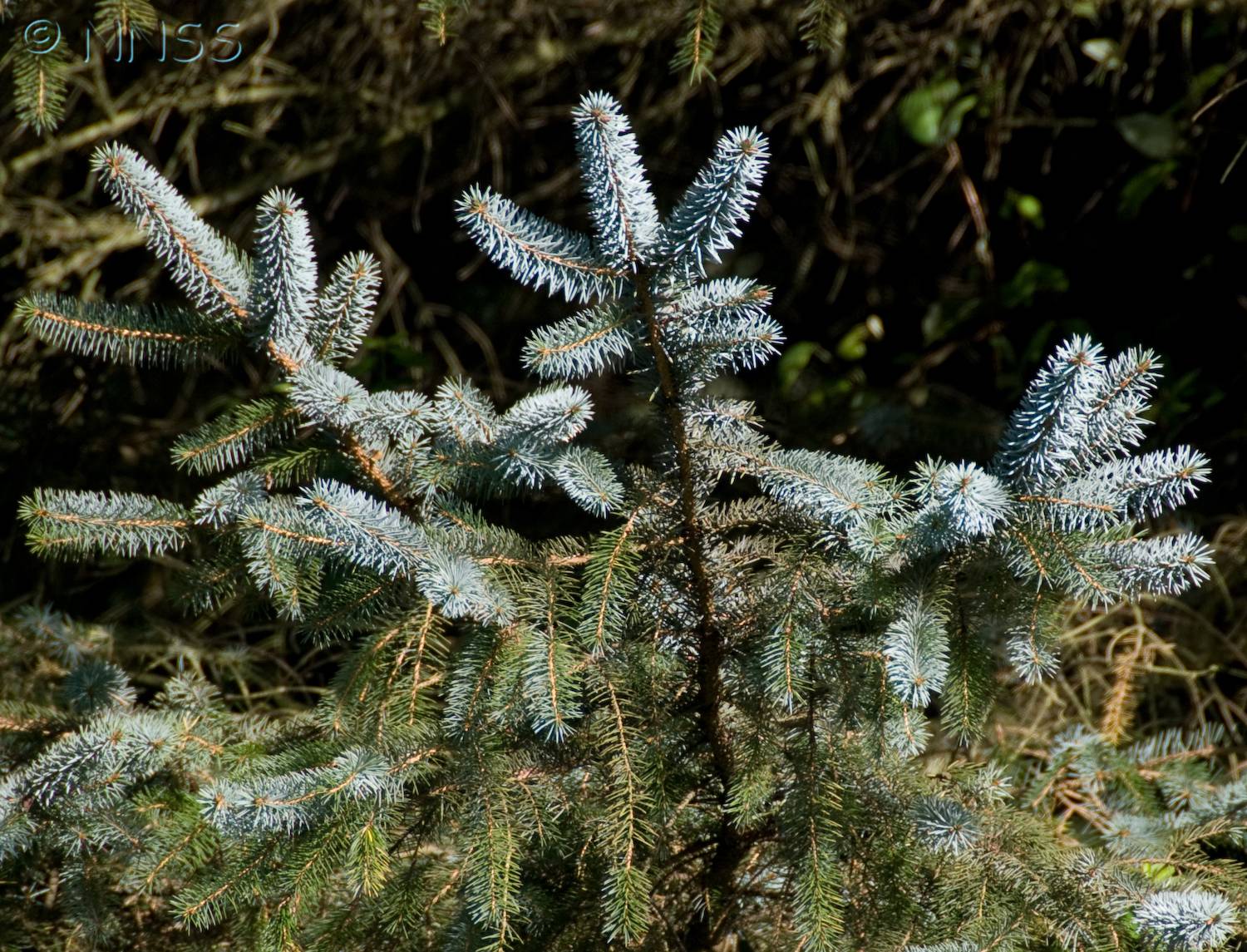
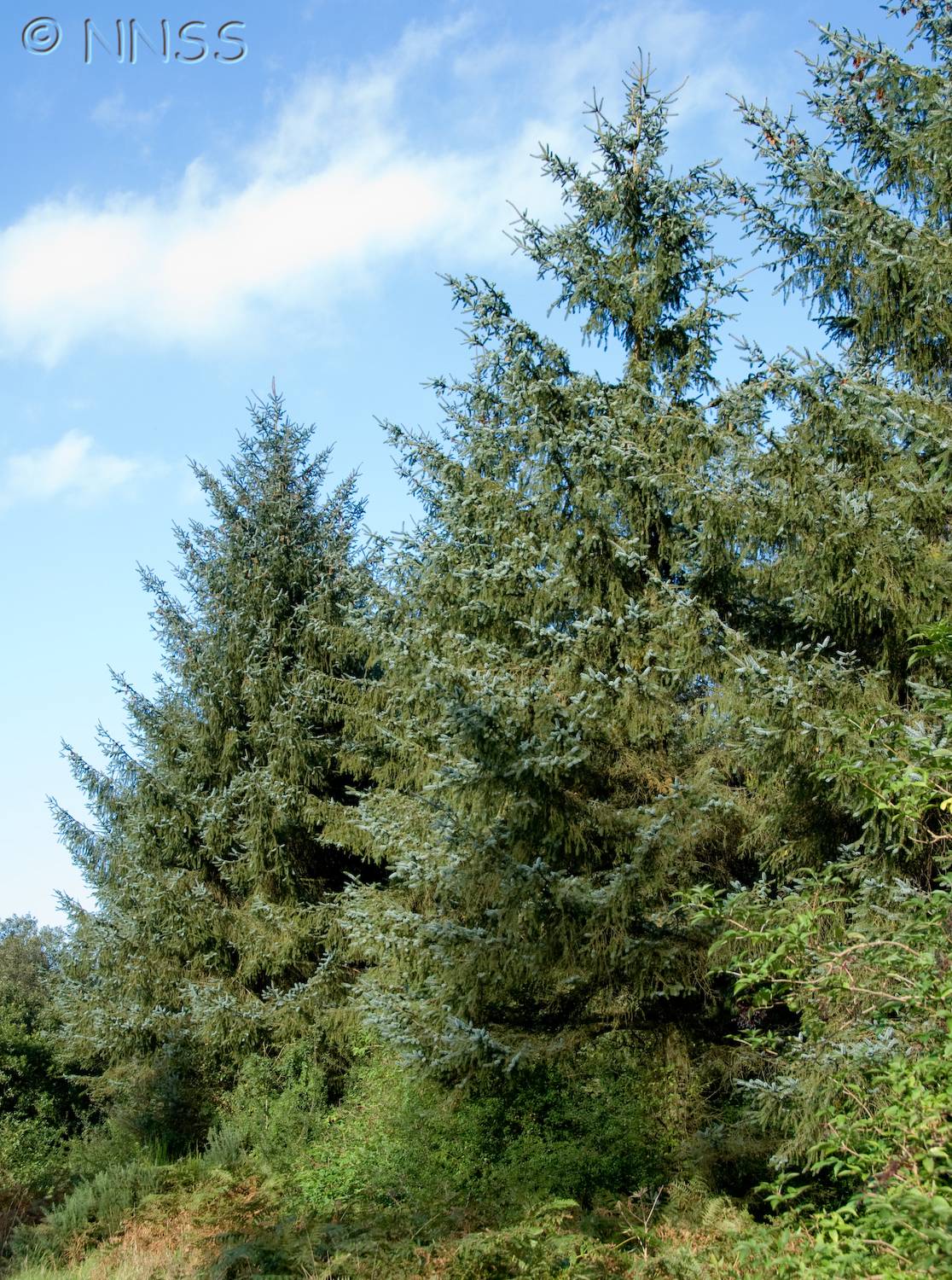
An evergreen conifer with very sharp needles and cones with wavy scales. In its native range it can reach a height of nearly 100m, but more typically it grows up to 65m. It may live up to 800 years and so British trees are not yet old enough to have reached their maximum size. Plantation trees are usually harvested by the time they are 50 years old but some specimen trees (trees planted as singletons for ornaments in parks, gardens or sometimes on the edge of plantations) are much older.
Impact summary: Picea sitchensis, Sitka Spruce
Sitka Spruce regenerates freely along forestry tracks and in cleared areas within plantations, as well as on adjacent peatland habitats, in some case many kilometres from the nearest seed sources.
Habitat summary: Picea sitchensis, Sitka Spruce
Sitka Spruce is adapted to wet, peaty ground, in areas of high rainfall areas and exposure, mainly in the north and west of Britain. It is less successful in plantations in the drier east; in these areas it is mainly planted as a specimen tree in parks and arboreta.
Overview table
| Environment | Terrestrial |
|---|---|
| Species status | Non-Native |
| Native range | Subarctic America, Northwestern U.S.A., Southwestern U.S.A., British Columbia, Alaska, California, Oregon, Washington |
| Functional type | Land plant |
| Status in England | Non-Native |
| Status in Scotland | Non-Native |
| Status in Wales | Non-Native |
| Location of first record | |
| Date of first record | 1957 |
Origin
Sitka Spruce is native to the coastal forests of western North America, from Alaska to northern California.
First Record
Sitka Spruce was brought back from North America by David Douglas in 1831 and was first recorded in the wild in 1957.
Pathway and Method
Sitka Spruce was investigated as a commercial forestry tree in the 1920s and its fast growth and high productivity on poor soils led to it being planted in huge numbers from the 1950s onwards, mainly to provide timber for the construction industry. It now accounts for around 50% of the total area of conifer forests in Britain with 76% of this area located in Scotland (Moore, 2011). Sitka Spruce plantations now dominate huge areas of upland landscapes in Wales, northern England and Scotland and it is likely to increase further as tree planting accelerates achieve 'net zero' (carbon sequestration) targets. It is also now being planted more often at lower altitudes.
Species Status
Since it was first introduced, Sitka Spruce been recorded in 72% (2043) of British 10 x 10 km grid squares (hectads) and 67% of British hectads since 2000 (1911), this could reflect an increase in planting and also the increased frequency by which botanists are recording planted trees such as Sitka. In recent decades it has become widely self-sown in peaty habitats surrounding plantations, although it is not yet fully naturalized as the vast majority of offspring have not reached seed bearing age.
Dispersal Mechanisms
The winged seeds are dispersed by the wind. The US Forest Service quotes dispersal distances of up to 0.8 km. Similar observations have been made in Norway where Sitka Spruce can spread up to 0.9 km away from plantations (Nygaard & Øyen, 2017) whereas in many parts of Britain small trees have been observed up to 2 km from the source of the seed (Ison & Braithwaite, 2009).
Reproduction
Sitka Spruce is monoecious, with male and female cones produced on the same tree. Trees become sexually mature at between 20-40 years old. In its native range Sitka Spruce can also reproduce by layering (where trees regrow from detached or fallen branches)
Known Predators/Herbivores
Sitka Spruce is mostly unaffected by predators even in its native range. Young trees can be browsed by sheep or deer, but the sharp needles are a considerable deterrent. In Britain, trees are susceptible to the Spruce Aphid Elatobium abietum when subject to moisture-stress. The greatest losses are probably due to wind throw.
Resistant Stages
Seeds are dispersed following drying of the cones and germinate following a period of cold stratification. The germination rate is around 50% and in the wild, most of those that germinate probably do so in the first year following the cold period. Seedling densities in naturally regenerating stands can reach 100,000 per hectare (Mason, 2010).
Habitat Occupied in GB
Sitka Spruce has been planted in monospecific stands on a huge scale on acidic, mineral and peaty soils in the wetter parts of northern and western Britain. Most of the British population occurs within forestry plantations, from where it has spread into adjacent peaty habitats including dry heathland, blanket bogs, raised mires and rocky slopes. In southern and eastern Britain, it has been planted as a specimen tree in parks and arboreta and on a small scale in plantations.
Sitka Spruce occurs throughout Britain but is most abundant in wetter regions in the north and west, which is where most regeneration has been recorded. Its range is currently around 70% of British 10 x 10 km grid squares (hectads) with a notable increase in recent decades, partly due to better recording of alien trees by British botanists, but also because of its increasing frequency of self-sown trees in semi-natural habitats. Presumably this reflects the maturation of trees planted in the 1960s and 1970s and self-seeding away from these. It has been reported as growing from sea-level to 690 m near to Stuc a' Chroin, West Perthshire (where it was regenerating), and 1015 m at Creag Mor (Mid Perthshire).
Environmental Impact
Whilst there have been numerous studies showing the negative impacts of Sitka Spruce plantations on native biodiversity (for a meta-analysis see Øyen & Nygaard, 2020), no similar studies have been carried out on the impacts of naturally regenerating stands within semi-natural habitats. However, the high density of some self-sown stands on heathlands are likely to be significantly altering light and soil moisture levels as well as changing vegetation composition and structure, with obvious knock-on effects for associated biota. It is a long-lived species and its true impact will not be realised until the descendants of the current generation of self-sown trees start to appear. Regeneration of Sitka Spruce may hamper efforts to restore plantations on ancient woodland sites to native woodland in the north and west, although in eastern counties it is more likely to be replaced by birch or sycamore.
Health and Social Impact
Moorland is a much-loved landscape in Britain that has declined due to the spread of forestry plantations, largely made up of Sitka Spruce, in many upland regions since the 1950s. The colonisation of the adjacent moorland by self-sown trees has the potential to alter the character of this landscape further, although the more ‘naturalistic’ distribution of self-sown trees is likely to be more aesthetically pleasing than the dense, regimented rows of trees planted in commercial forests.
Economic Impact
Sitka Spruce is our most economically important forestry crop. Natural regeneration in plantations is of benefit to the forestry industry as ‘continuous cover’ but not when it colonises open habitats managed for other purposes such as shooting or sheep grazing. The costs of removal of self-sown trees are likely to be high on ecologically important sites, especially if they are remote.

Identification
Eckenwalder, J.E. (2009). Conifers of the world. Timber Press, Portland.
Stace, C.A. (2019) New flora of the British Isles, Fourth Edition, Cambridge University Press, Cambridge.
https://conifers.fscbiodiversity.uk/
Biology, ecology, spread, vectors
Ison, J. & Braithwaite, M. (2009). The status of some alien trees and shrubs in Britain. Botanical Society of Britain and Ireland, London.
Nygaard, P.H. & Øyen, B-H. (2017). Spread of introduced Sitka Spruce (Picea sitchensis) in coastal Norway. Forests 2017, 8, 24; doi:10.3390/f8010024
Mason, B. (2010). Respacing naturally regenerating Sitka Spruce and other conifers. Forestry Commission Practice Note (FCNP016).
Moore, J. (2011). Wood properties and uses of Sitka Spruce in Britain. Forestry Commission, Edinburgh.
Forestry Commission, Forest Research http://www.forestry.gov.uk/fr/INFD-8CYJLU [March 2011].
Management and impact
Øyen, B-H. & Nygaard, P.H. (2020). Impact of Sitka spruce on biodiversity in NW Europe with a special focus on Norway – evidence, perceptions and regulations. Scandinavian Journal of Forest Research, 35: 117-133.
Walker, K.J., Trippier, B. & Pinches, C.E. (2022). Right tree, right place: using botanical heatmaps to inform tree-planting. BSBI News 150: 40-44.
US Forest Service. http://www.fs.fed.us/database/feis/plants/tree/index.html [Jan 2011].
General
Eckenwalder, J.E. (2009). Conifers of the world. Timber Press, Portland.
Mitchell, A.F. (1972) Conifers in the British Isles: a Descriptive Handbook. HMSO, London.
E-Flora BC: Electronic Atlas of the Plants of British Columbia. http://www.geog.ubc.ca/biodiversity/eflora/ [March 2011].
Spotted this species?
Distribution map
View the Distribution map for Sitka Spruce, Picea sitchensis from BSBI