
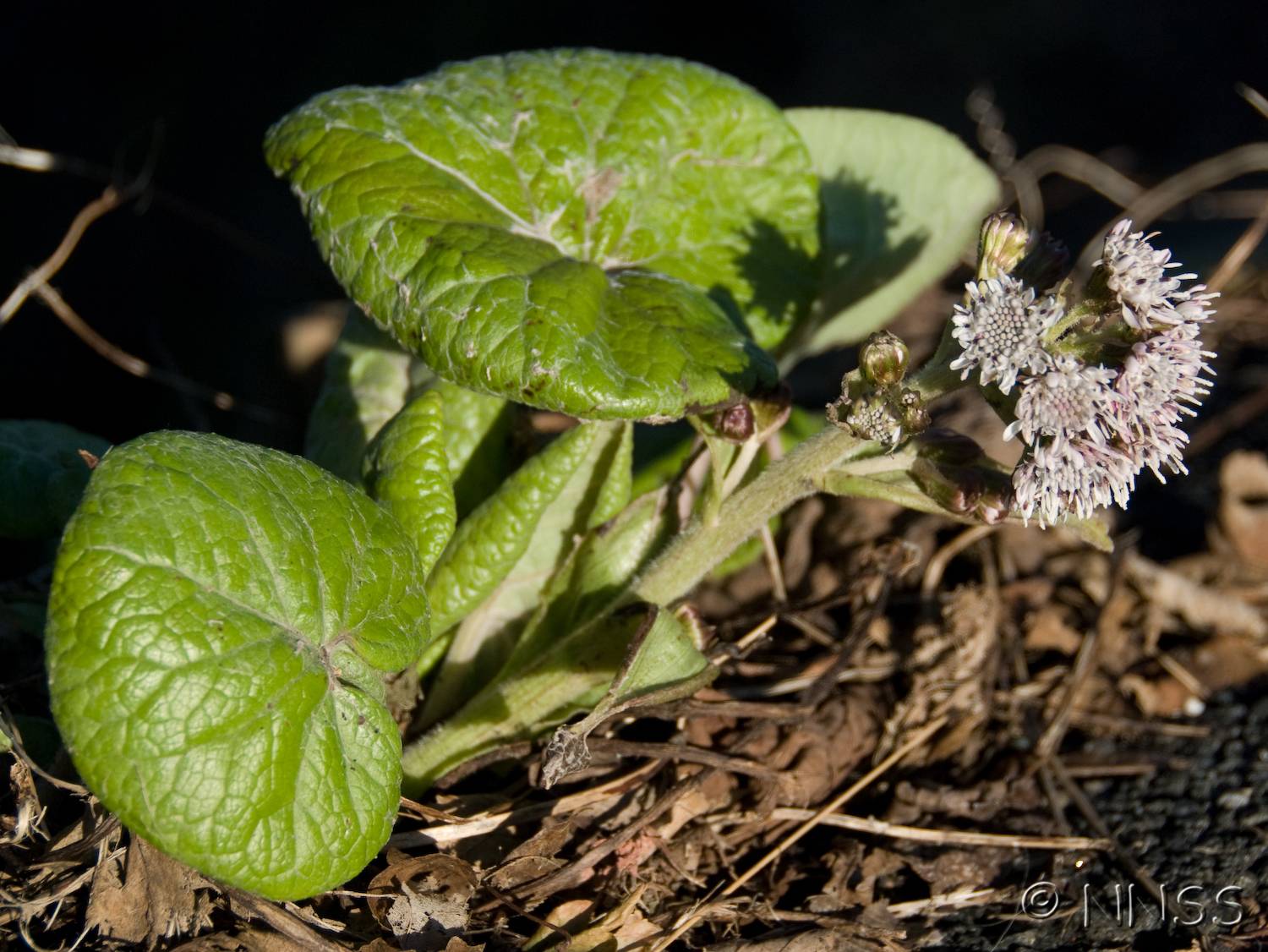
Winter Heliotrope - Petasites fragrans
Expand and collapse the sections below by clicking on the title or + / - icons.
Short description of Petasites fragrans, Winter Heliotrope
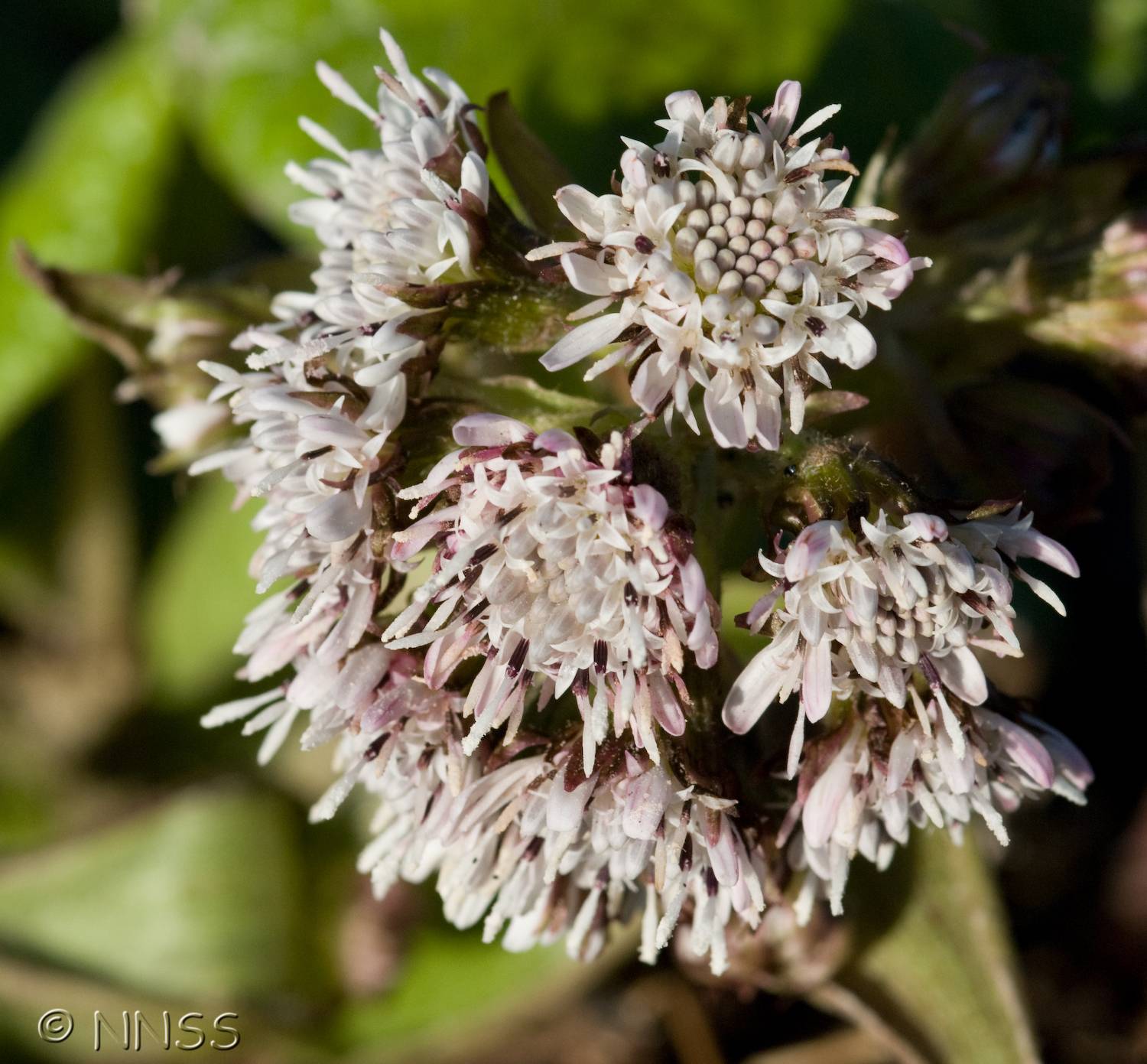
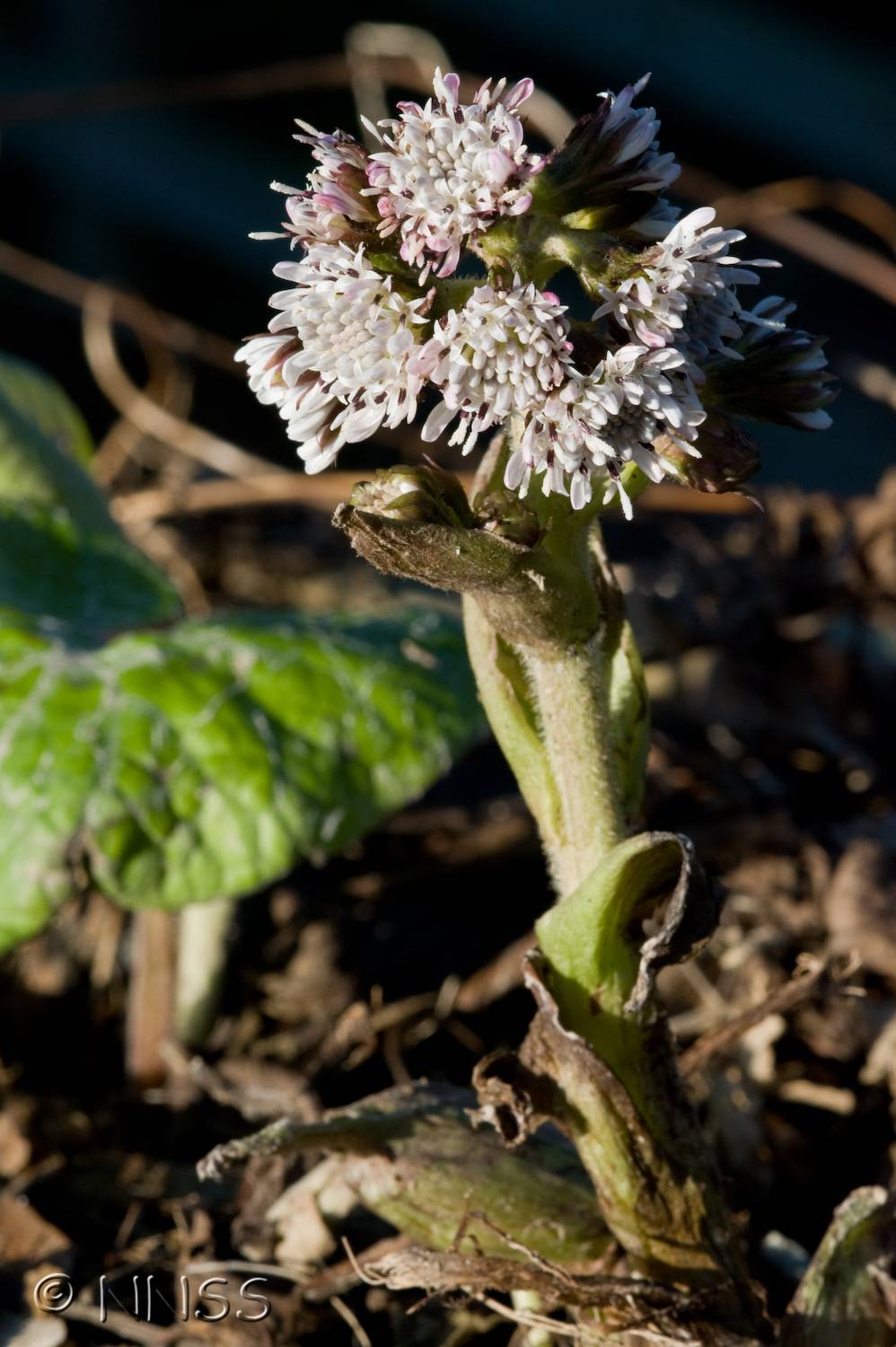
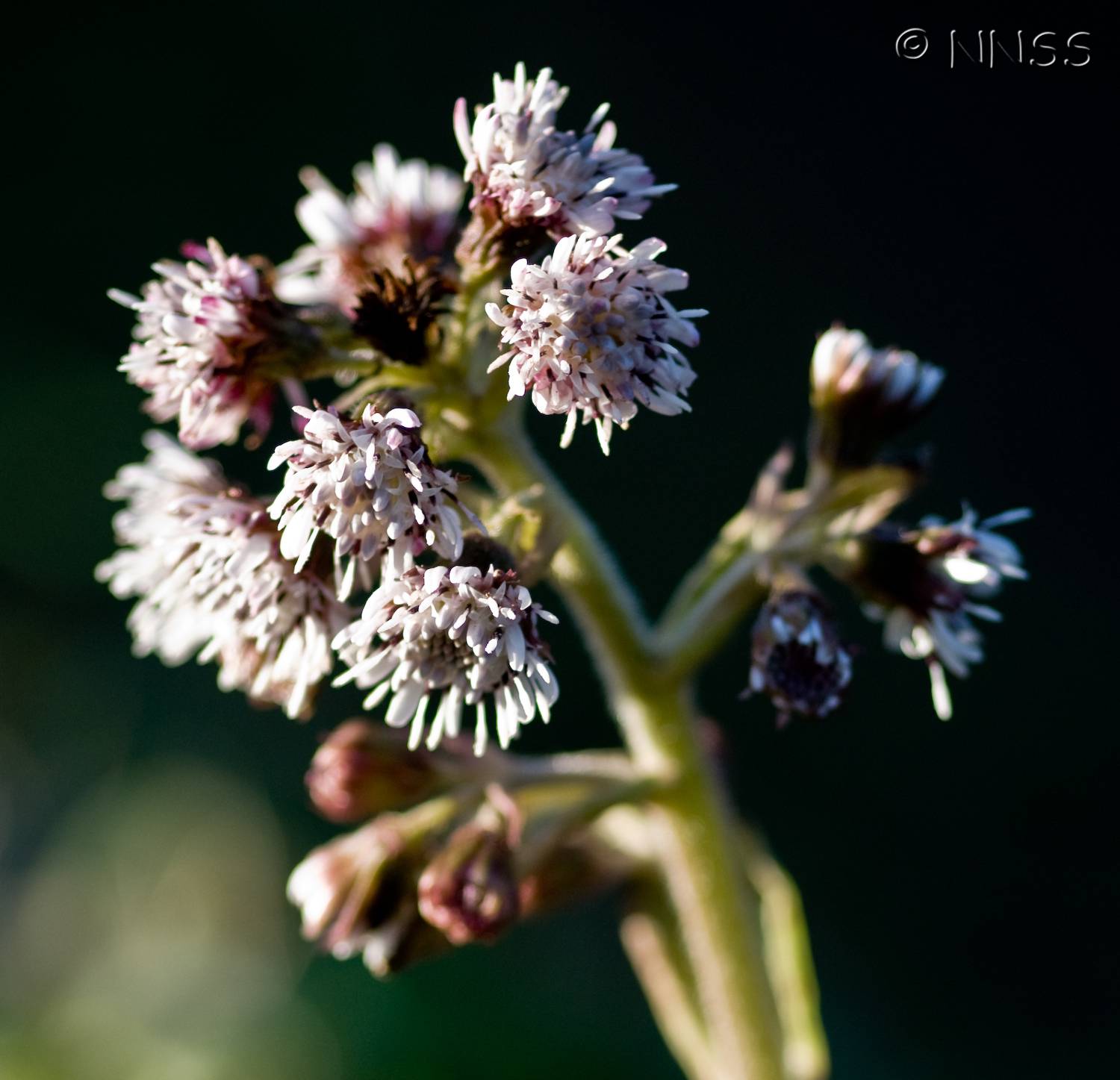
A dioecious, rhizomatous, perennial herb, producing fragrant inflorescences in winter, forming large persistent patches of round leaves.
Impact summary: Petasites fragrans, Winter Heliotrope
Forms complete cover to the exclusion of other species.
Habitat summary: Petasites fragrans, Winter Heliotrope
Rough grassland, especially roadsides, quite shade-tolerant and found on woodland margins.
Overview table
| Environment | Terrestrial |
|---|---|
| Species status | Non-Native |
| Native range | Southwestern Europe, Southeastern Europe, Northern Africa |
| Functional type | Land plant |
| Status in England | Non-Native |
| Status in Scotland | Non-Native |
| Status in Wales | Non-Native |
| Location of first record | v.c.21 |
| Date of first record | 1835 |
Origin
Mediterranean region of North Africa.
First Record
Introduced 1806, recorded in the wild by 1835.
Pathway and Method
Introduced as an ornamental plant and for ground cover. Distributed by dumping of discarded garden waste on roadsides, etc.
Species Status
Widely naturalised in the south and west, more local in northern GB. The recorded number of 10km squares in the British Isles increased from 486 in the period from 1970 to 1986 to 1640 between 1987 and 1999.
Dispersal Mechanisms
Fragments of rhizomes can be distributed along roadsides by machinery, and along watercourses.
Reproduction
Dioecious, female plant does not occur in GB.
Known Predators/Herbivores
None known.
Resistant Stages
Winter Heliotrope perennates as rhizomes. It does not set seed in GB as the female plant is absent.
Habitat Occupied in GB
Mostly roadsides and other rough grassland and woodland edges.
Throughout GB, very frequent in the south and west, more local and mainly coastal in Scotland.
Environmental Impact
Spreads to form dense stands that exclude other vegetation.
Health and Social Impact
None known.
Economic Impact
Costly to remove if it invades sites of conservation importance.

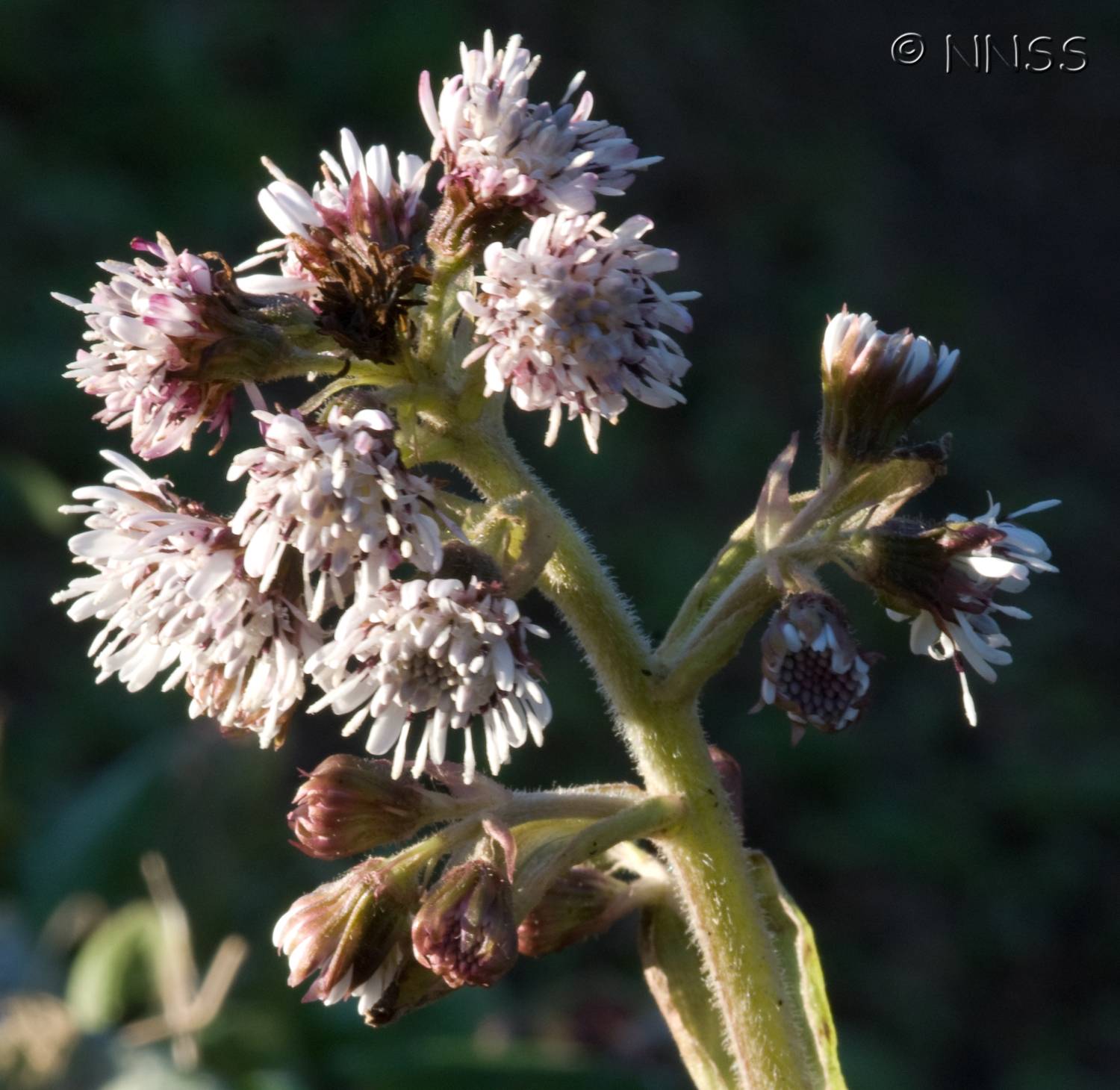
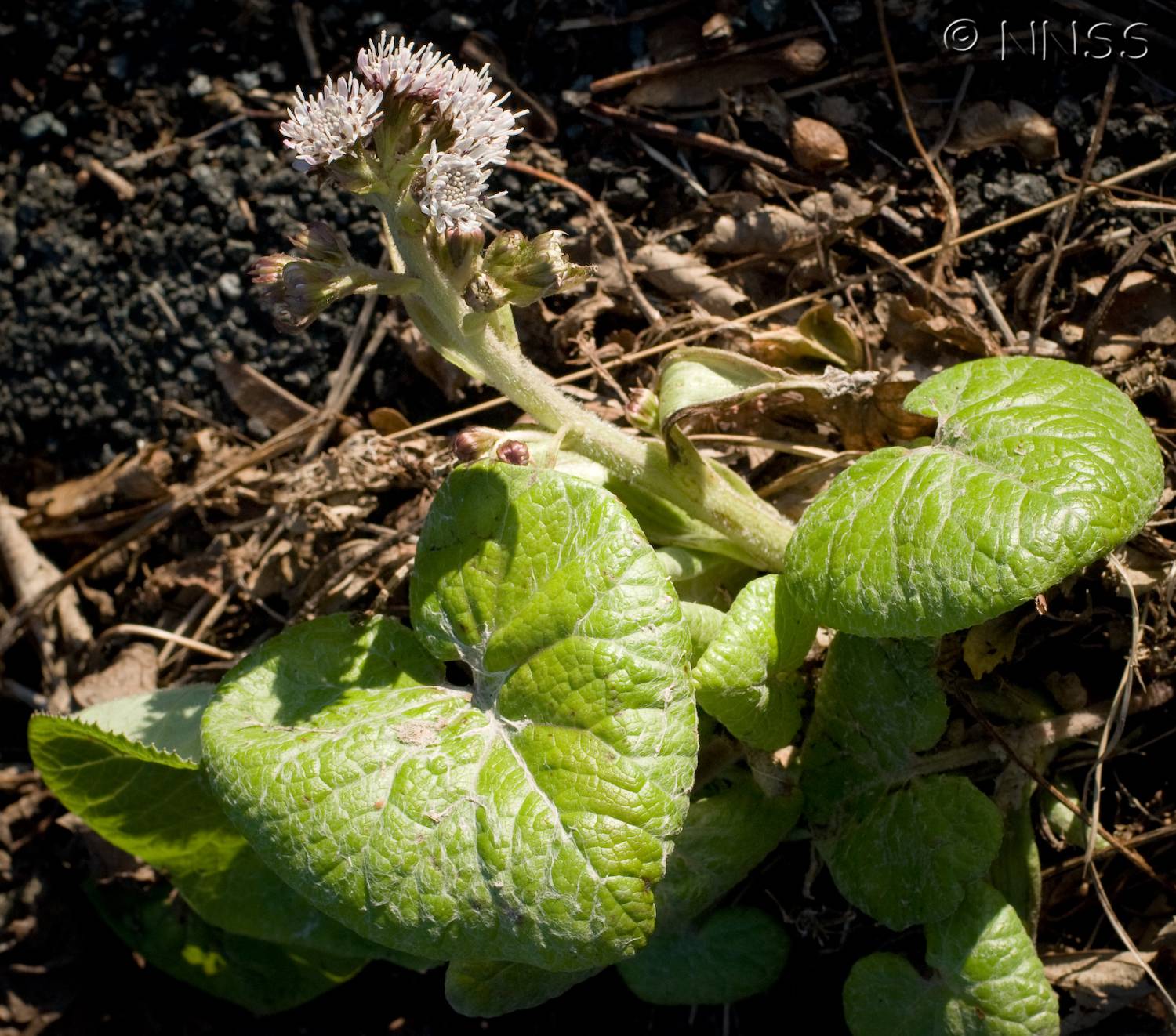


Identification
Stace, C.A. (2010) New flora of the British Isles, Third Edition, Cambridge University Press, Cambridge.
Biology, ecology, spread, vectors
Botanical Society of the British Isles (2011). Vascular Plant Atlas Update Project http://www.bsbimaps.org.uk/atlas/ [March 2011].
Clement, E.J. & Foster, M.C. (1994) Alien Plants of the British Isles, BSBI, London.
Management and impact
Cornwall Local Nature Reserves: Invasive Species. http://www.cornwallnr.org.uk/inspec.htm [March 2011].
General
Ecological Flora of the British Isles http://www.ecoflora.co.uk/search_species2.php?plant_no=1690900080 [March 2011]
Spotted this species?
Distribution map
View the Distribution map for Winter Heliotrope, Petasites fragrans from BSBI

Native range map
View an interactive native range map for Winter Heliotrope, Petasites fragrans