
 2 AJ.jpg)
Virginia-creeper - Parthenocissus quinquefolia
Expand and collapse the sections below by clicking on the title or + / - icons.
Short description of Parthenocissus quinquefolia, Virginia-creeper
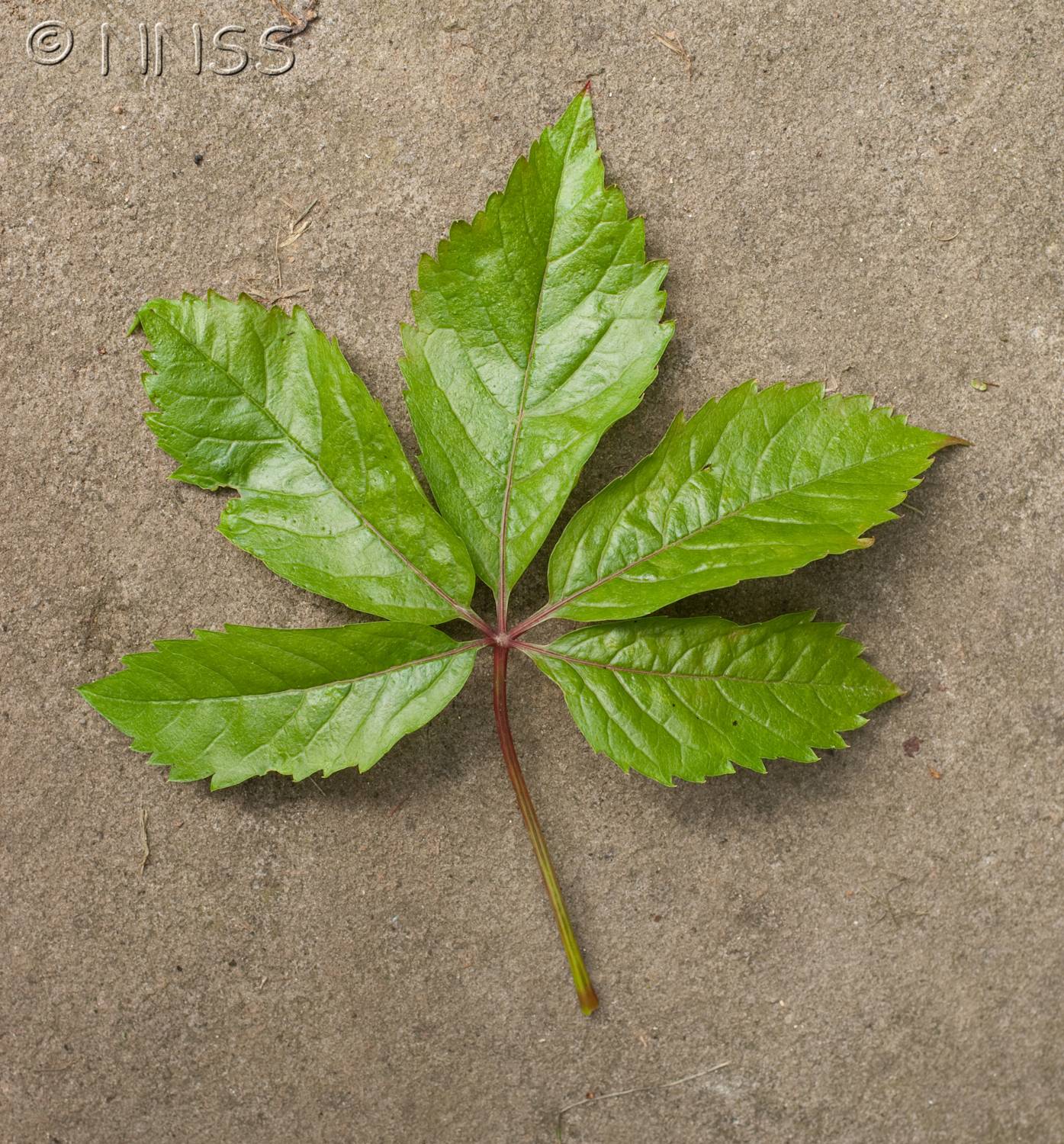
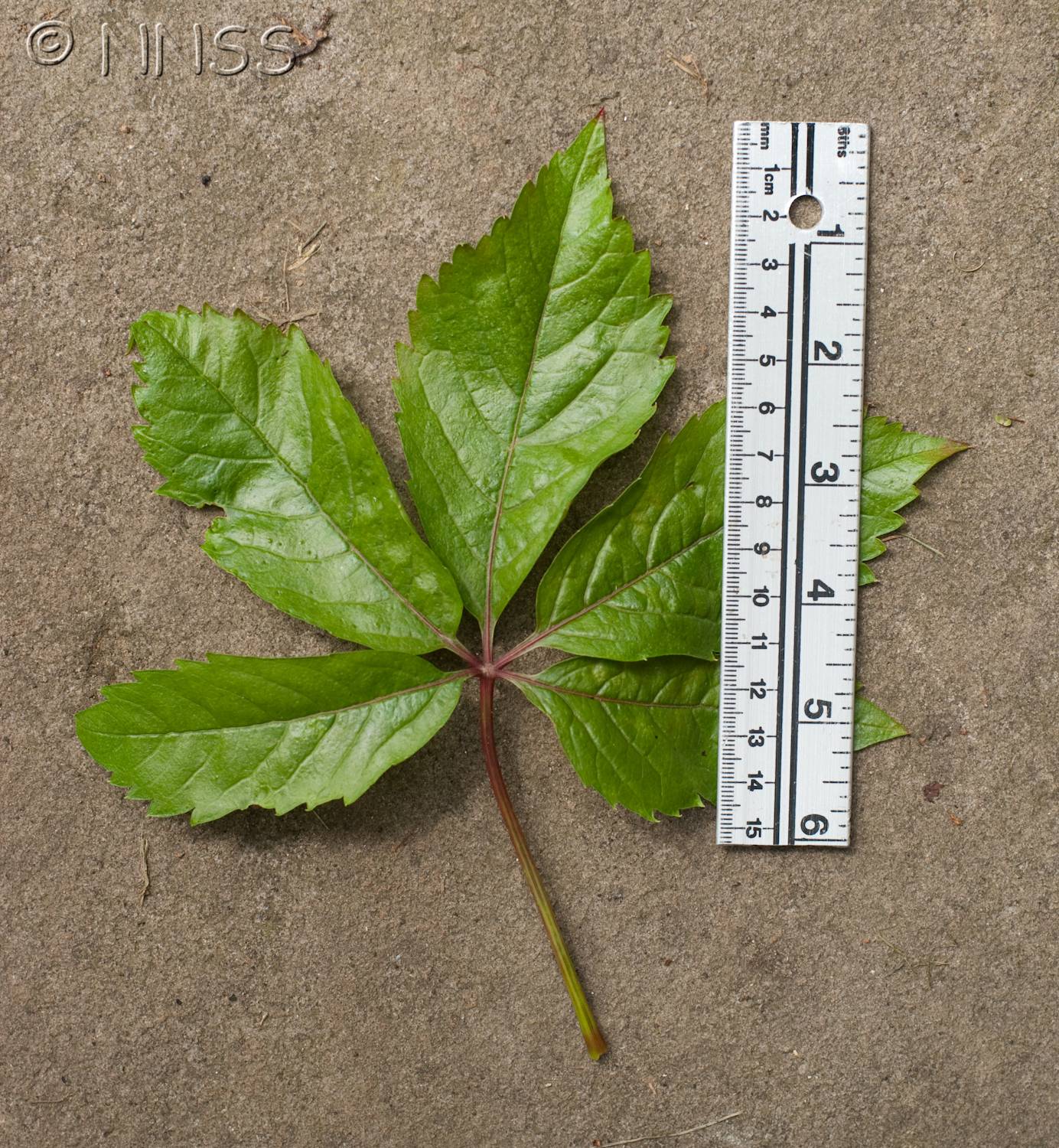
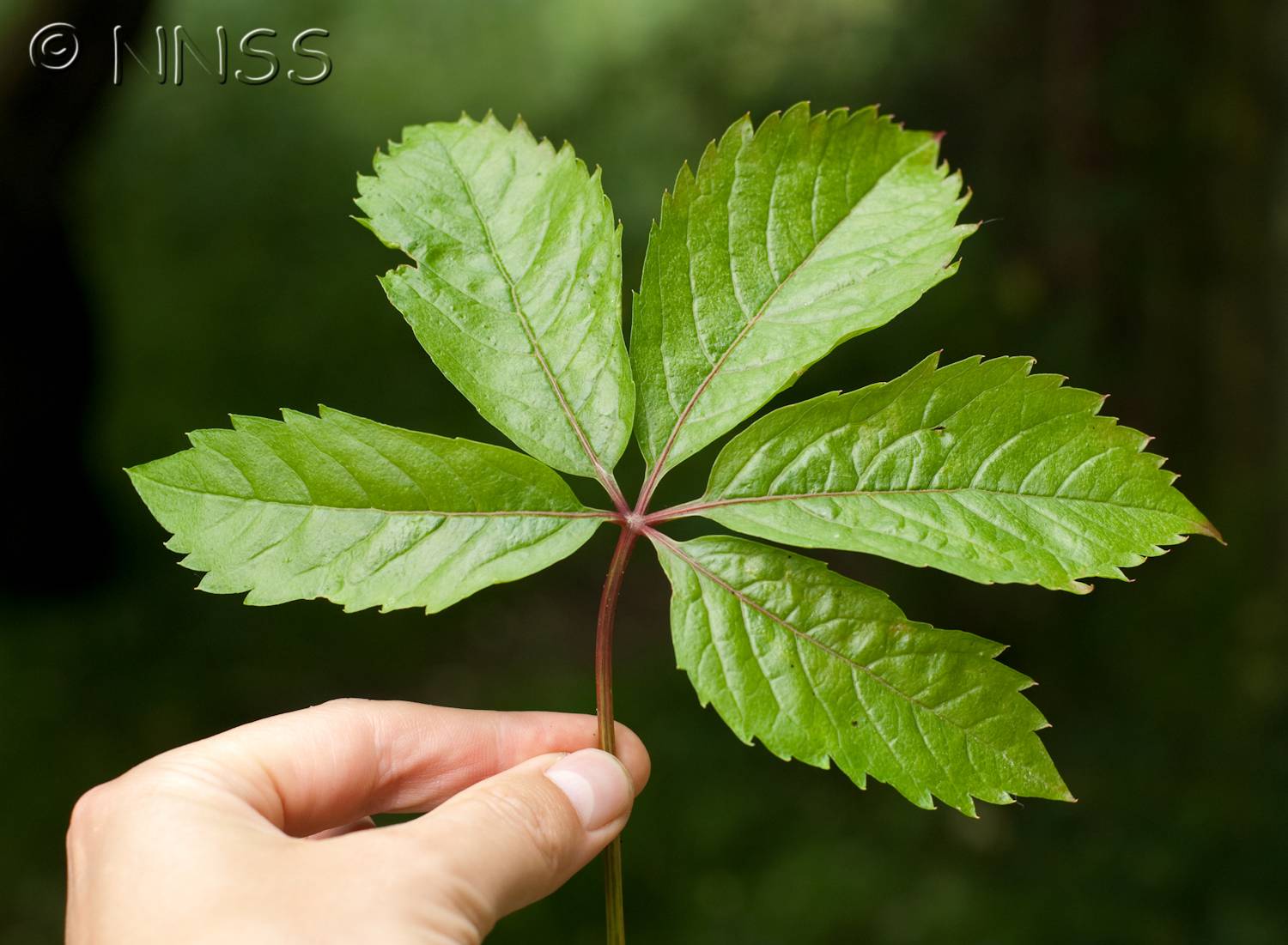
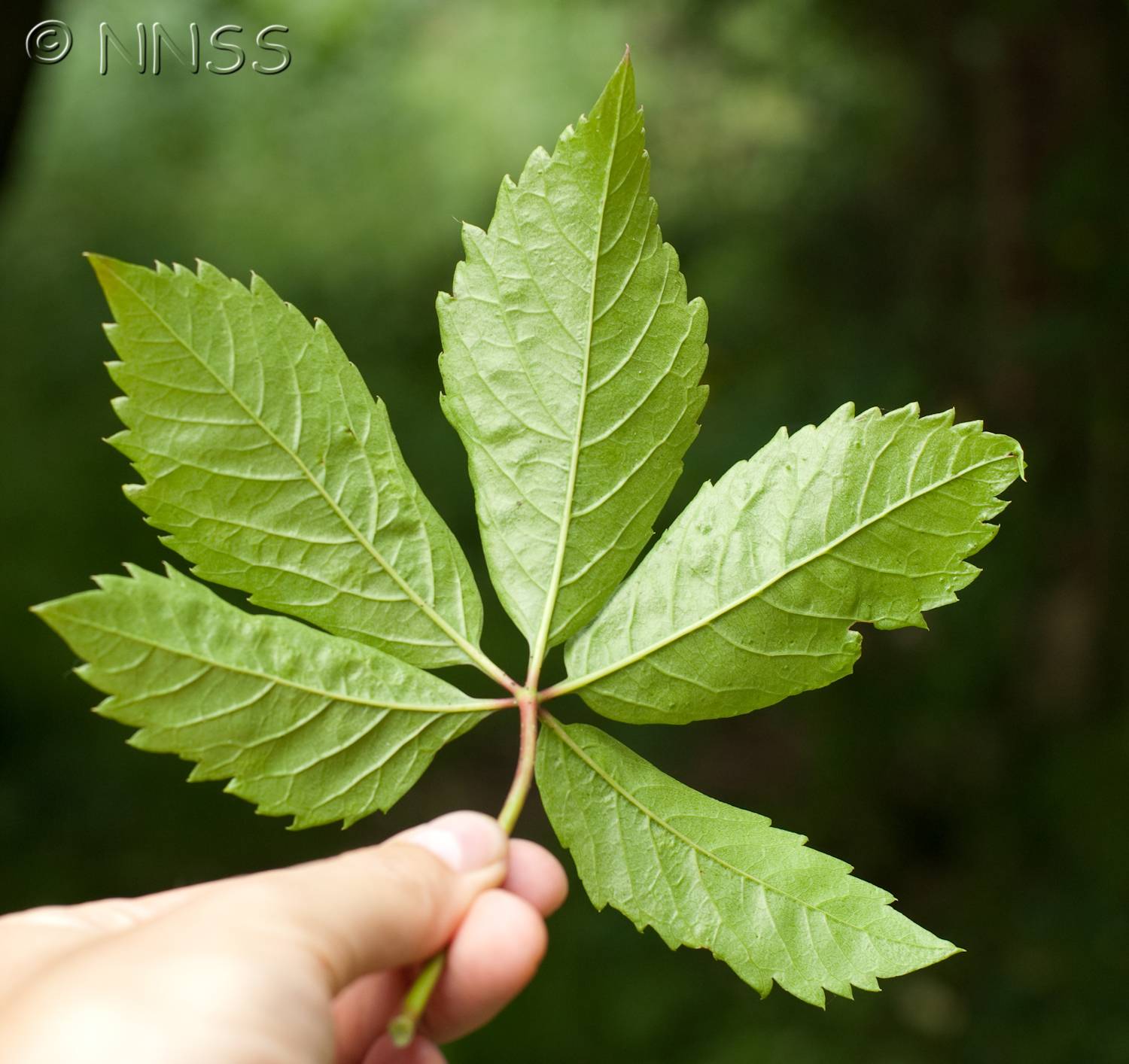
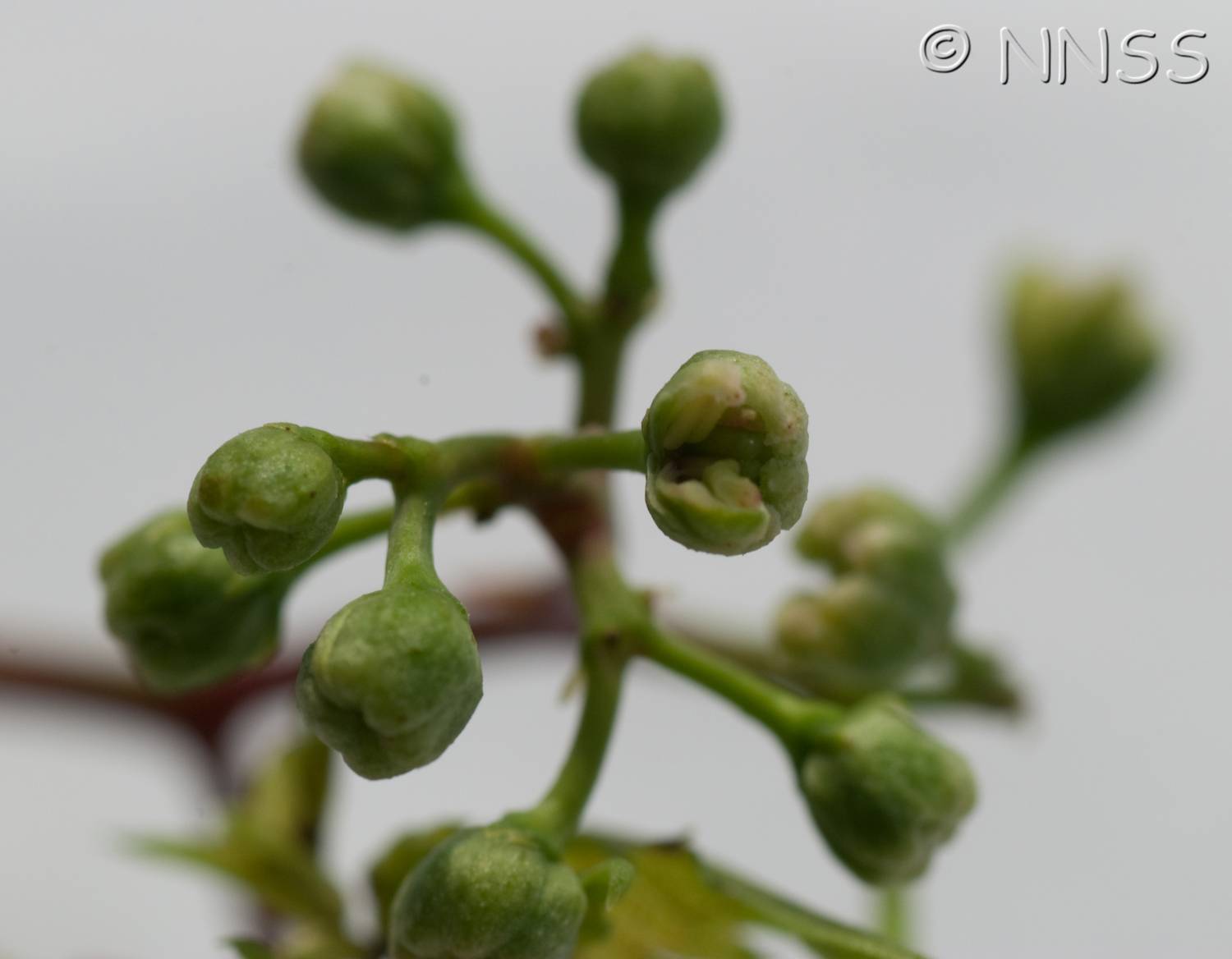
It is a deciduous perennial woody climber that can grow 15m or more over trees or up walls and structures. It climbs by means of cup-like adhesive shoot tips borne on branched tendrils. It has stalked five-lobed leaves which turn crimson before falling in the autumn. Each leaflet is 3-15cm long with toothed margins. Inconspicuous small white-green flowers are borne on loose clusters and berries are rounded, 4-6mm in diameter and blue-black when ripe.
Impact summary: Parthenocissus quinquefolia, Virginia-creeper
Well-grown plants smother and kill trees and other vegetation. Attempts to remove plants from masonry can cause damage to mortar and parts of the plant may be poisonous or irritant to humans.
Habitat summary: Parthenocissus quinquefolia, Virginia-creeper
It is most typically found in man-made habitats such as urban railway embankments, old walls and buildings and road verges but it also invades scrub and hedgerows.
Overview table
| Environment | Terrestrial |
|---|---|
| Species status | Non-Native |
| Native range | Northern America, Mexico, Alberta, British Columbia, Labrador, Manitoba, New Brunswick, Nova Scotia, Ontario, Saskatchewan, Yukon, Guatemala, South Dakota, Texas, Utah |
| Functional type | Land plant |
| Status in England | Non-Native |
| Status in Scotland | Non-Native |
| Status in Wales | Non-Native |
| Location of first record | v.c.23 |
| Date of first record | 1927 |
Origin
It is native in southern, mid-western and eastern parts of the United States, in north Mexico and south-eastern Canada.
First Record
It was first recorded in the wild by 1927.
Pathway and Method
It is a popular garden plant and was introduced to cultivation by 1629. Its desirable attributes include its ability to screen east or north-facing walls and unsightly areas and its vivid red autumn foliage. More recently it has been used in urban design to cool buildings and provide urban wildlife habitat. It has been awarded the Award of Garden Merit by the Royal Horticultural Society and its rampant growth has led to many introductions from garden throw-outs and it also readily spreads via self-layering.
Species Status
It is introduced and naturalised in scattered lowland localities in the British Isles. By 1999 it had been recorded in 215 10km grid squares, with 93% of the records made after 1987. It is almost certainly continuing to spread. In Europe, it is established in many countries including Belgium, France, Spain, Italy, Slovakia, Czech Republic, Estonia, Lithuania and Switzerland.
Dispersal Mechanisms
Birds and small mammals are known to eat the berries and disperse seeds in their droppings but it is not clear how viable the seed is in the GB climate. It is more likely to reproduce vegetatively, either by rooting at nodes wherever stems are in contact with the ground or from a creeping rootstock which throws up new shoots at intervals. It can regenerate from root fragments discarded in garden waste.
Reproduction
Plants are monoecious and bear small open clusters of inconspicuous flowers in June or July. These are pollinated by bees and wasps and followed by pea-sized reddish berries turning blue-black when ripe in October. Each berry contains 2-3 seeds.
Known Predators/Herbivores
In its native range many animals eat its leaves and stems but it has no known major predators or herbivores in GB. Vines may be afflicted by various fungal disorders including downy mildews and Honey Fungus Armillarea spp.
Resistant Stages
Seeds do not germinate immediately but first require cold stratification of 30 – 60 days at 5-6oC. Their viability in the GB climate is poorly known and plants may not always set seed. Root systems appear to be extremely resistant to above-ground control or disturbance and they retain considerable potency.
Habitat Occupied in GB
It is a lowland plant and frequently associated with man-made habitats. It is established on railway banks, roadsides, hedgerows, scrub, old walls and buildings.
It is frequent in southern England with most populations in highly inhabited areas to the south and west of London and in a line from Bristol to Bournemouth. Occurrences are much more scattered elsewhere and it is so far absent from Scotland.
Environmental Impact
With its rampant growth, Virginia-creeper will scale most trees and shrubs. This causes several problems; first, the climber prevents the host and other plants below from receiving sufficient light and may cause death. Secondly the weight of the climber can contribute to branch breakage or canopy collapse and finally the climber can girdle trees, effectively slowly strangling them over an extended period.
Health and Social Impact
The berries contain oxalic acid and are reported to be toxic to humans if ingested, although this is doubted by some sources. Oxalate crystals in the sap can cause skin irritation and rashes in some people.
Economic Impact
Well-established climbers can be costly to eradicate for landowners and managers; its liking for road verges and railway embankments means that regular control is essential to prevent a health and safety hazard. Where Virginia-creeper invades parks and commercial orchards it can cause damage to valuable trees and shrubs. In addition, where it is established on walls or buildings it is very difficult to remove owing to its close adherence to the surface with tendrils and adhesive pads. Removing it can damage the mortar of the structure it is growing on and it is nearly impossible to remove it without damaging wooden fences.
 2 AJ.jpg)
 AJ.jpg)

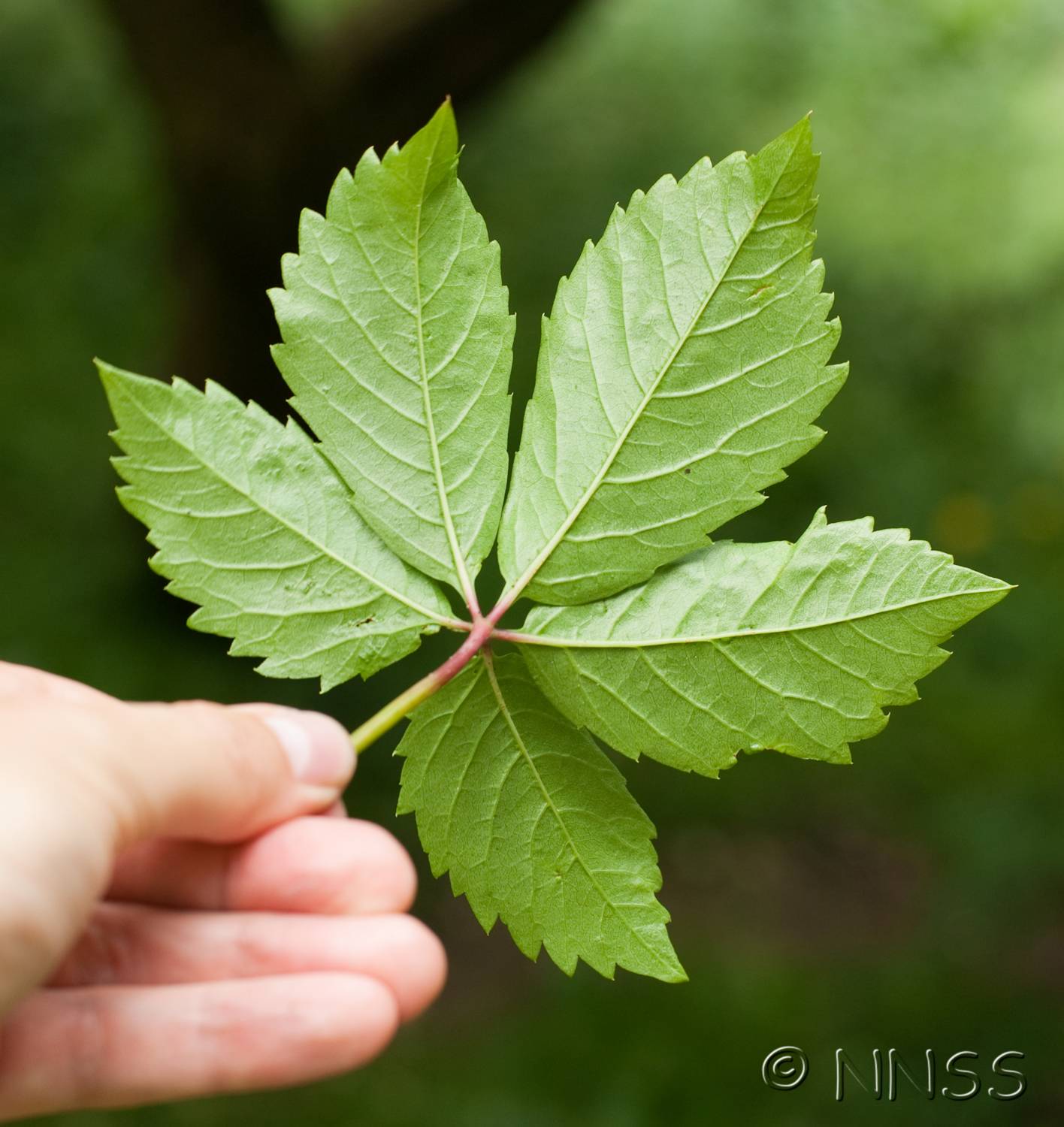
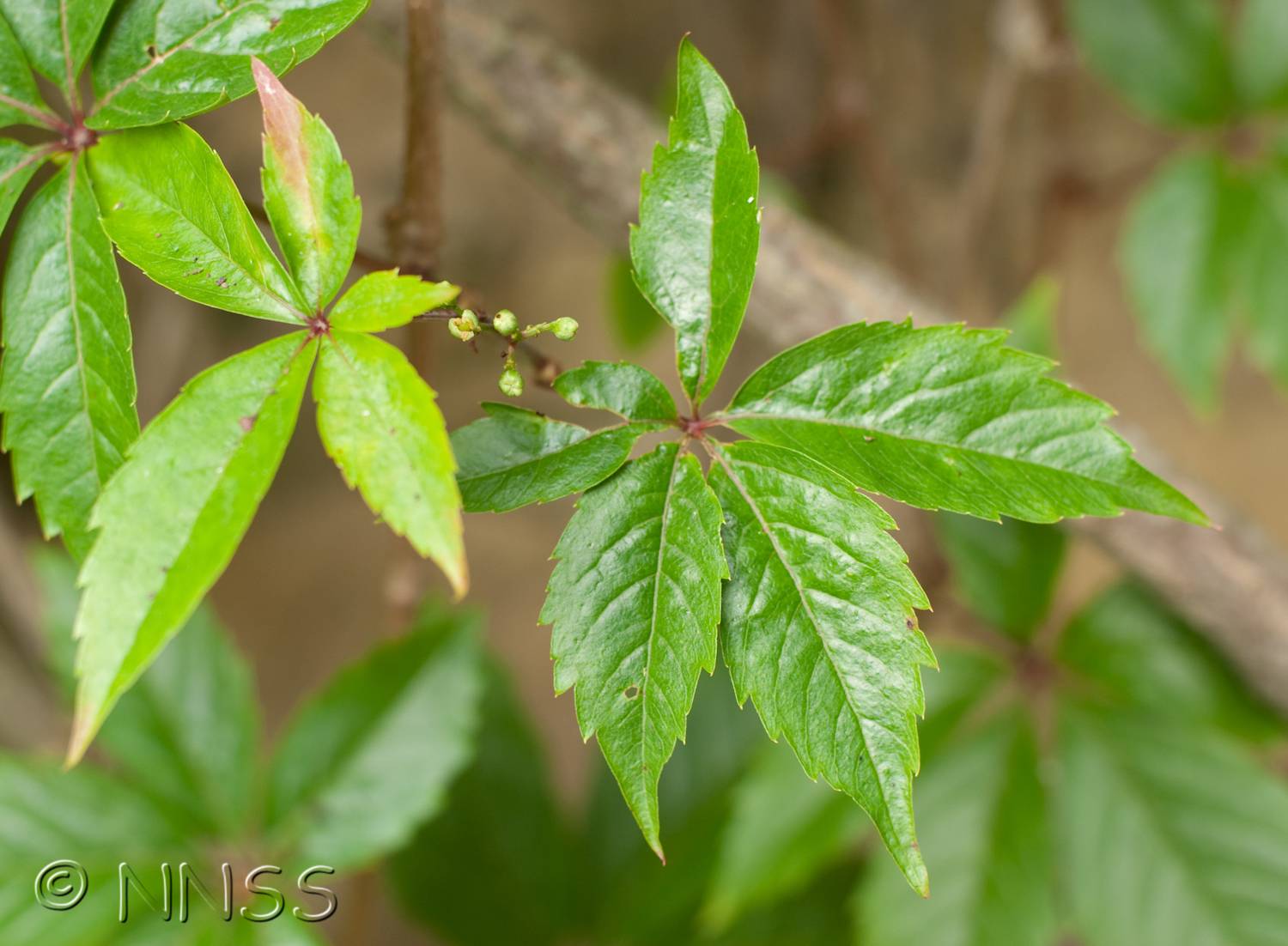
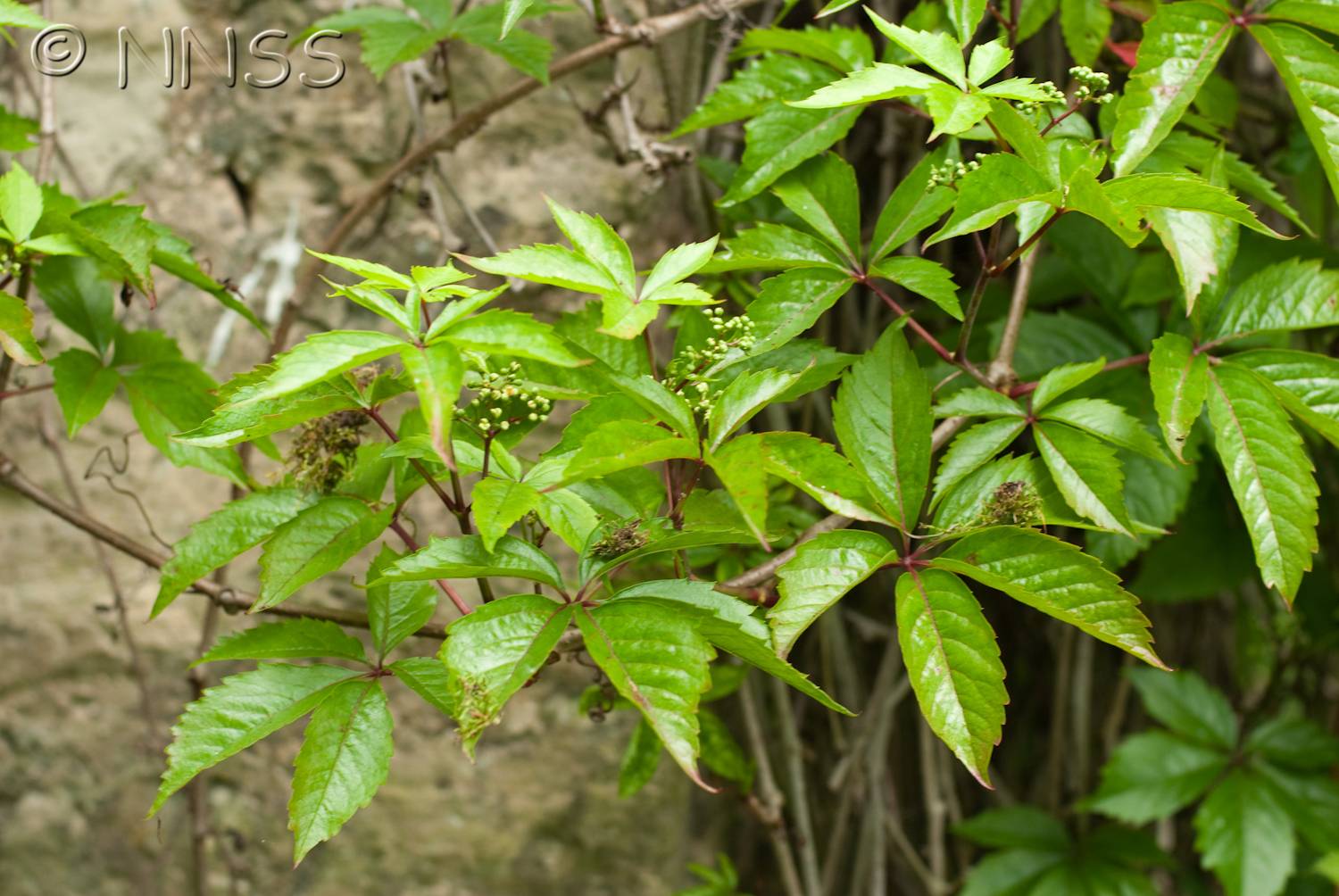
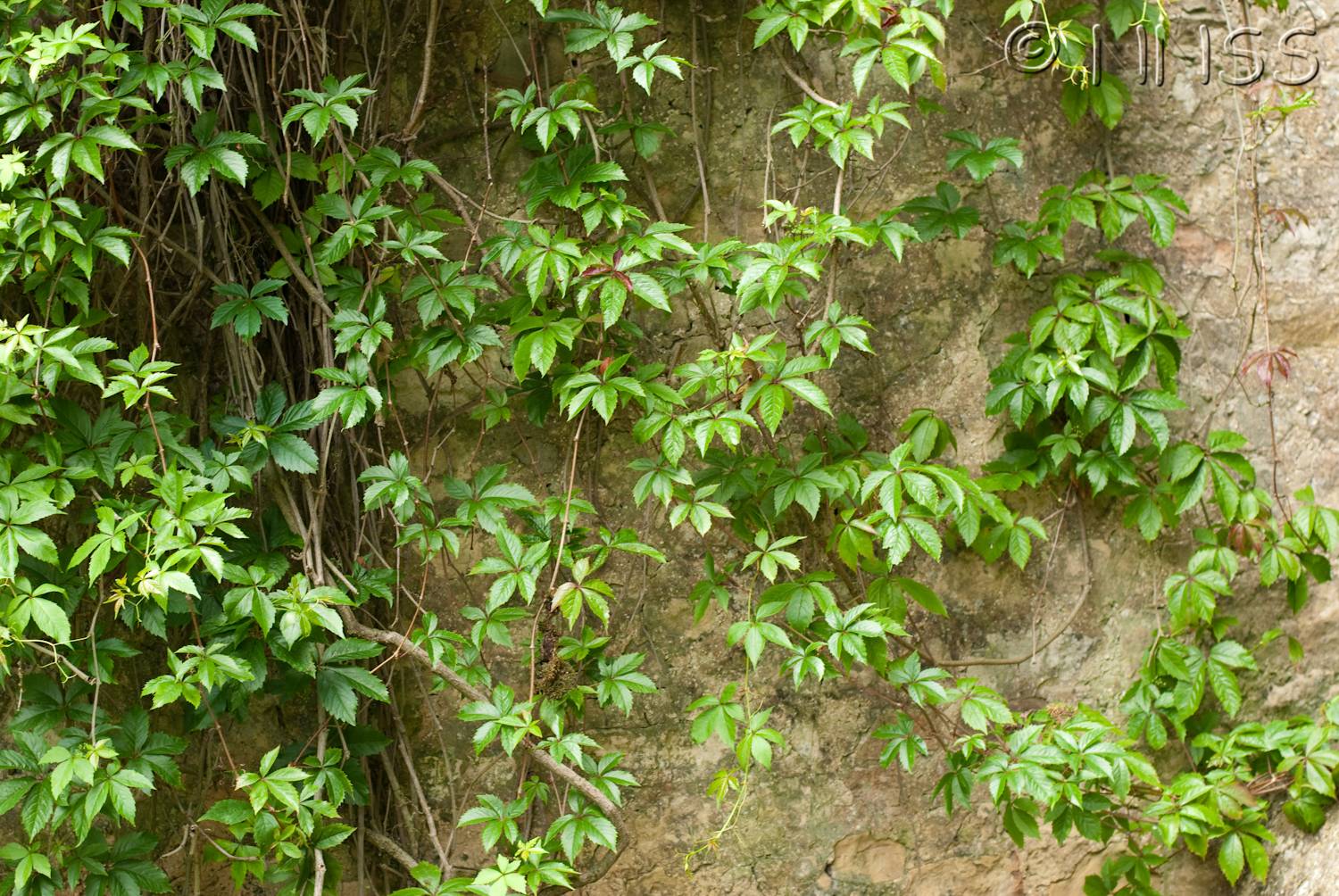
Identification
David, J.C. (2010) Untangling the climbers – Parthenocissus quinquefolia & P. inserta. BSBI News, 113, 60.
Sell, P. & Murrell, G. (2009) Flora of Great Britain and Ireland: Volume 3: Mimosaceae to Lentibulariaceae. Cambridge University Press.
Stace, C.A. (2010) New flora of the British Isles, Third Edition, Cambridge University Press, Cambridge.
Biology, ecology, spread, vectors
Preston, C.D., Pearman, D.A. & Dines, T.D. (2002) New Atlas of the British and Irish Flora, Oxford University Press, Oxford.
Toxicity information: Canadian Biodiversity Information Facility: www.cbif.gc.ca
Distribution map from the NBN Gateway: www.searchnbn.net/searchengine/search.jsp?tab=1&pg=1&searchTerm=Parthenocissus+quinquefolia
Management and impact
Derr, J.F. (1998) Control woody vines in landscapes. In Grounds Maintenance online www.grounds-mag.com
Tworkoski, T.J., Young, R.S. & Sterrett, J.P. (1988) Control of Virginia-creeper (Parthenocissus quinquefolia): Effects of Carrier Volume on Toxicity and Distribution of Triclopyr. Weed Technology, 2(1), 31-35.
Tworkoski, T.J. & Young, R.S. (1990) Rate and time of triclopyr application to kill Virginia-creeper in a peach orchard. HortScience, 25(4), 443-445.
General
General background information from Wikipedia: www.en.wikipedia.org
Royal Horticultural Society (1996) Plant Guides: Shrubs and Climbers, Dorling Kindersley Ltd, London.
United States Department of Agriculture Natural Resources Conservation Service Plant Guide: www.plants.usda.gov/plantguide
Spotted this species?
Distribution map
View the Distribution map for Virginia-creeper, Parthenocissus quinquefolia from BSBI
This species is listed under Schedule 9 of the Wildlife and Countryside Act 1981. Read more about Non-native species legislation.