
Giant Knotweed - Fallopia sachalinensis
Expand and collapse the sections below by clicking on the title or + / - icons.
Short description of Fallopia sachalinensis, Giant Knotweed
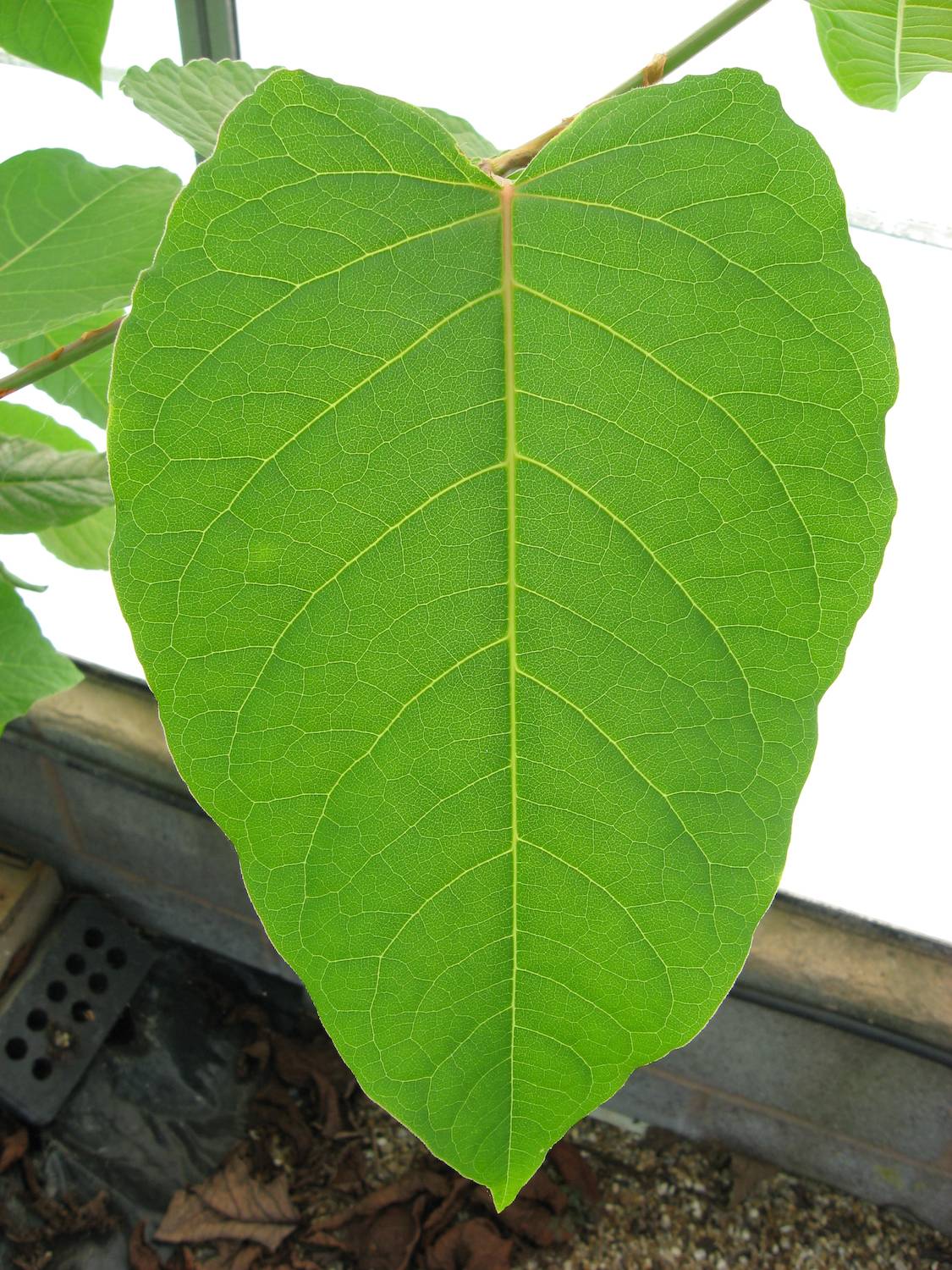
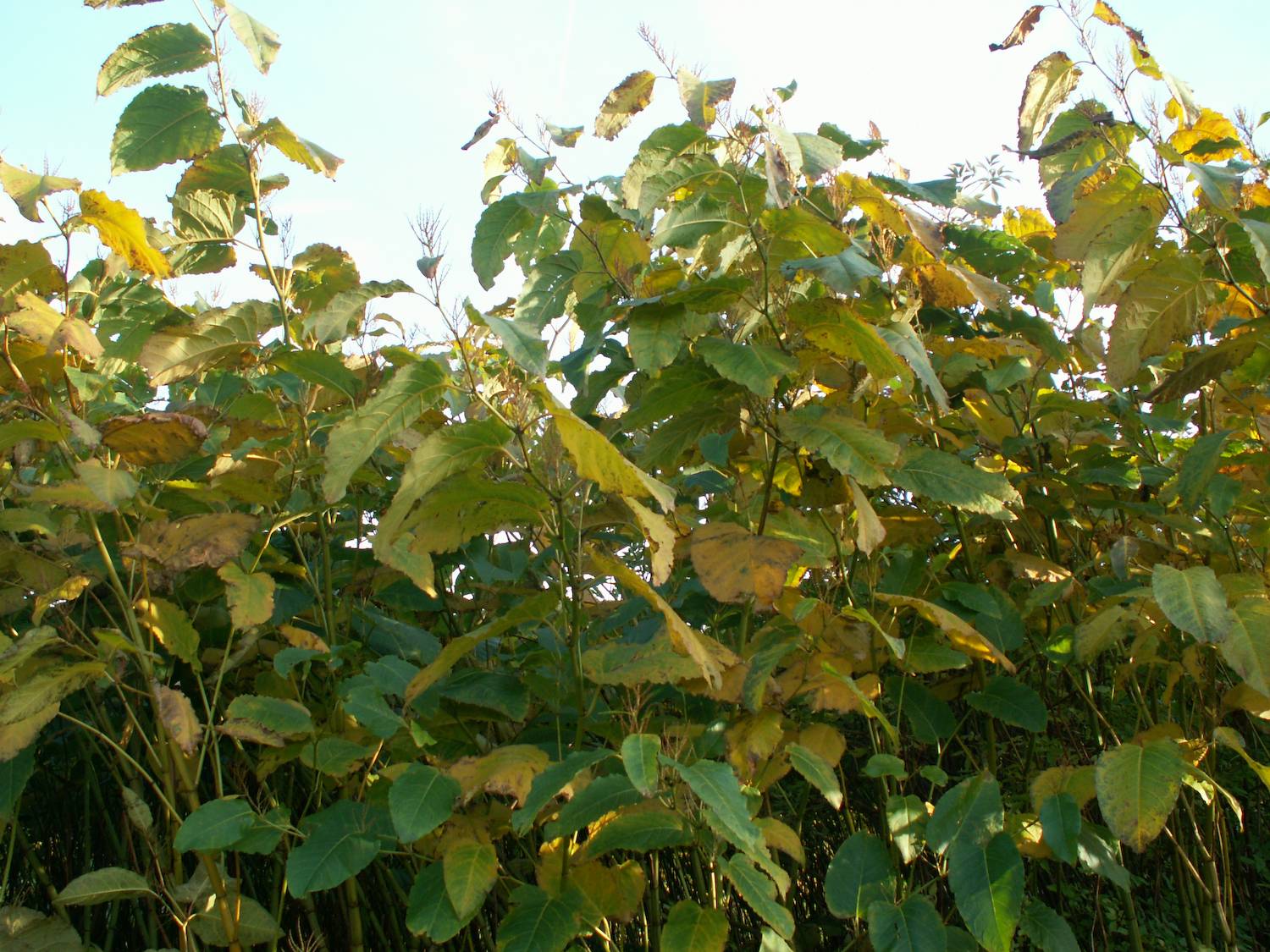
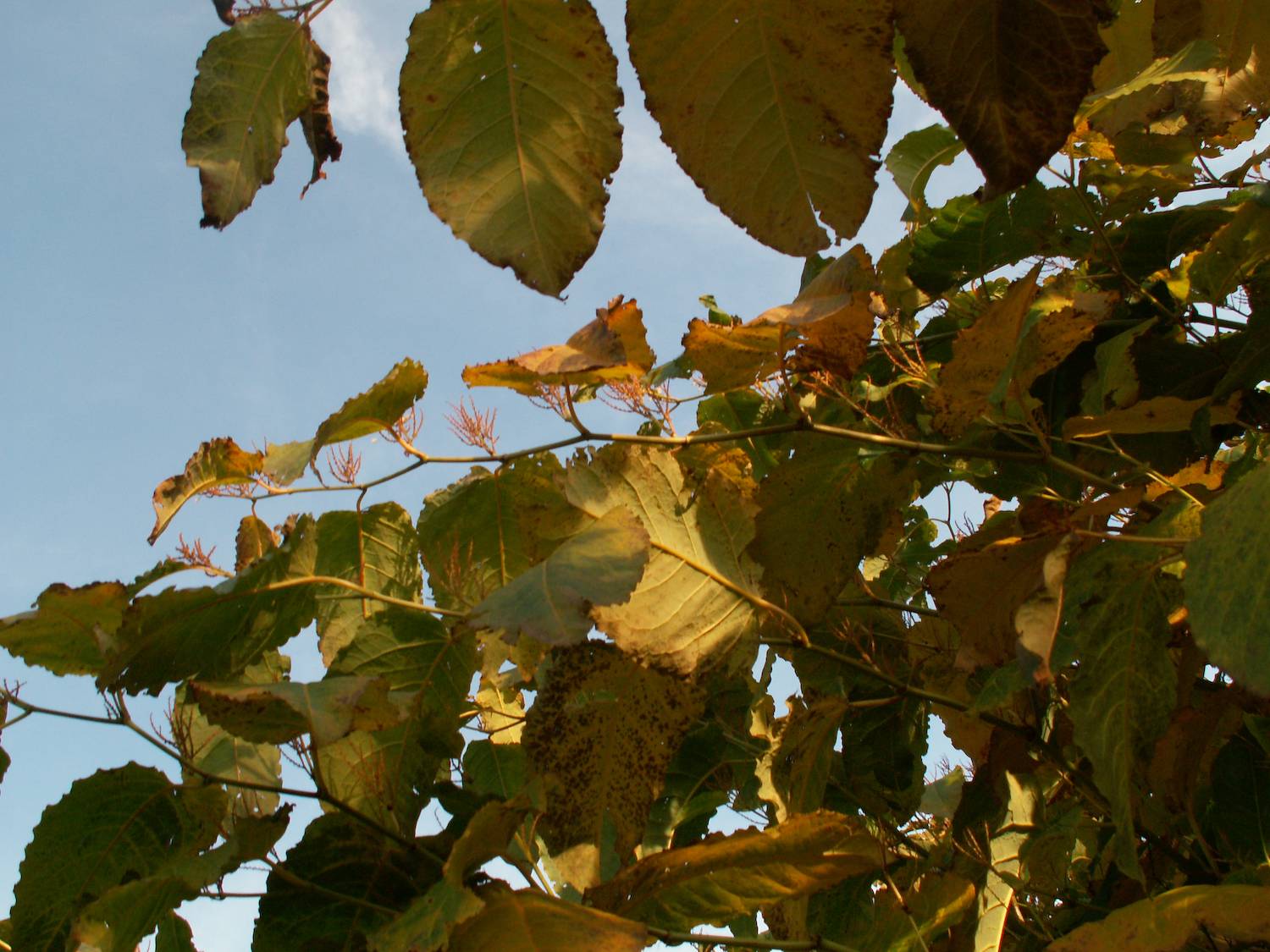
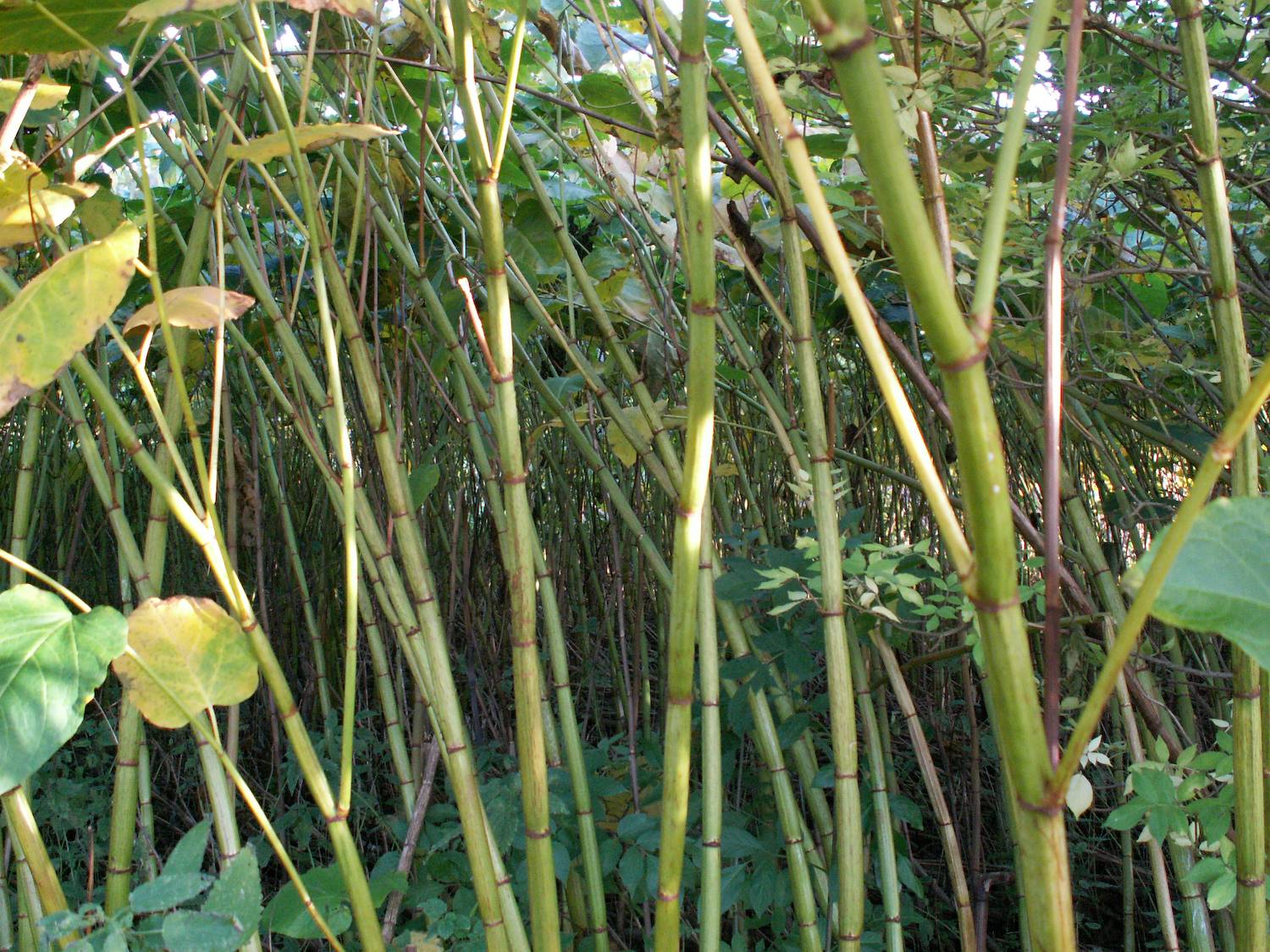
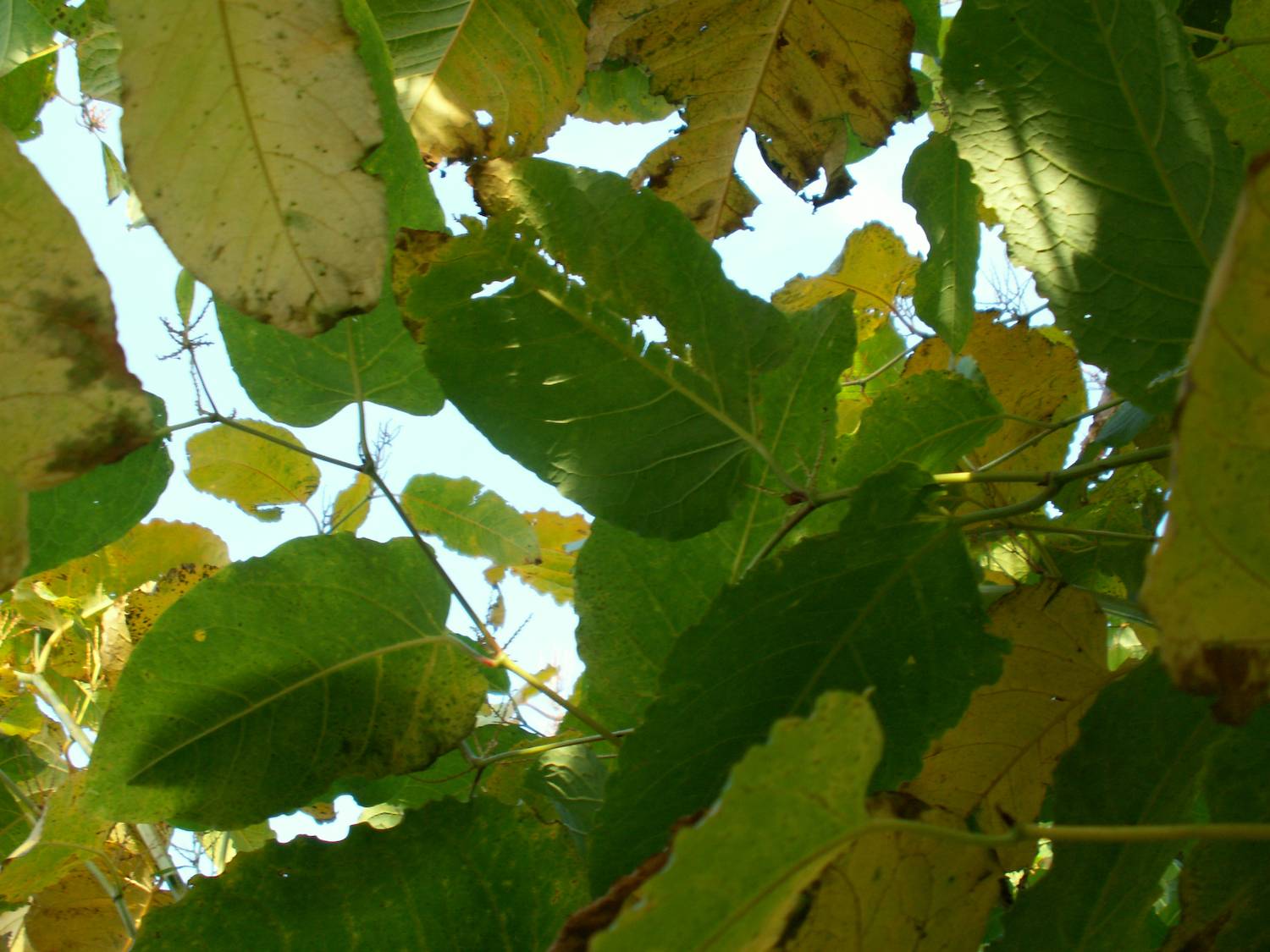
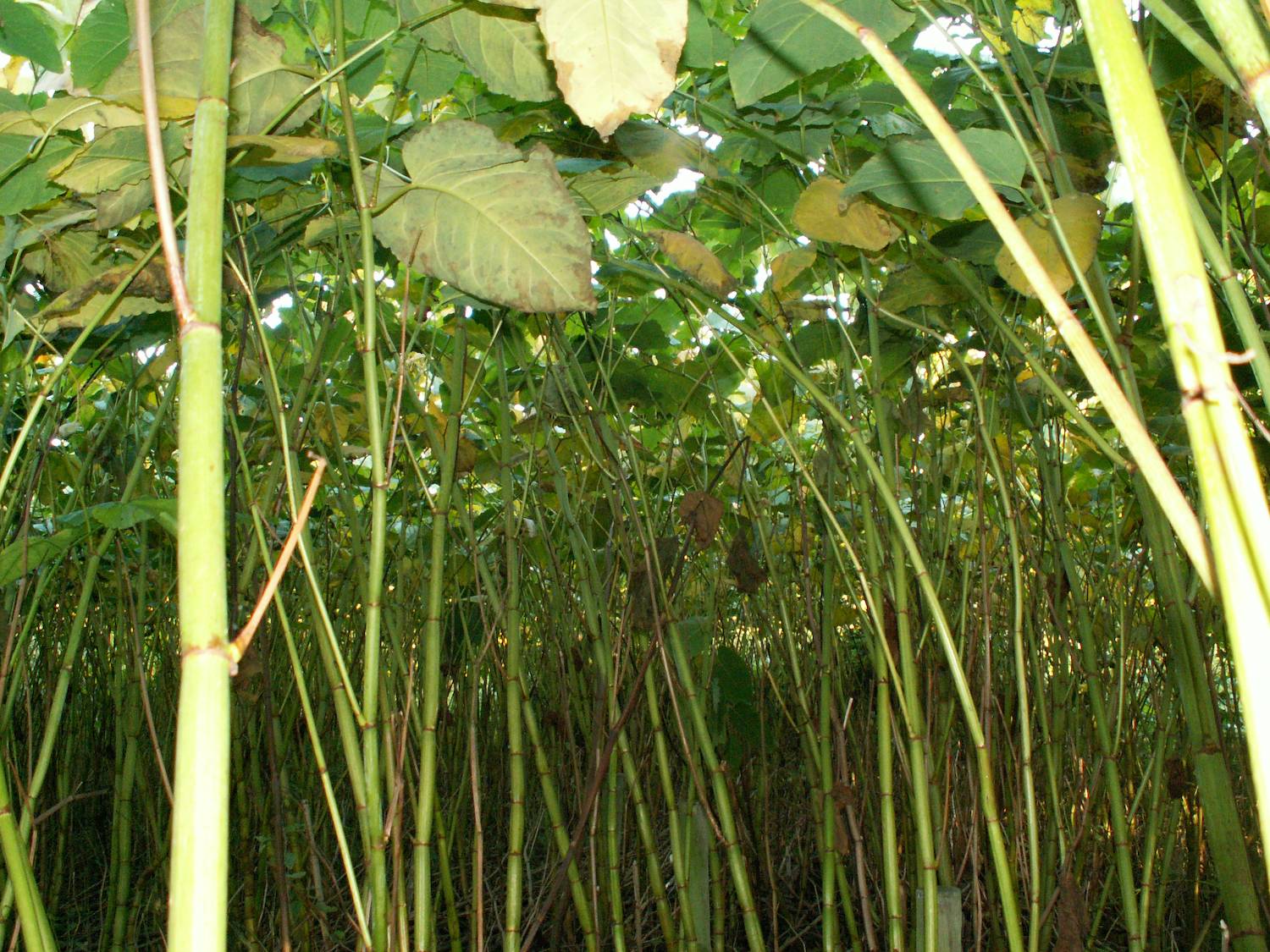
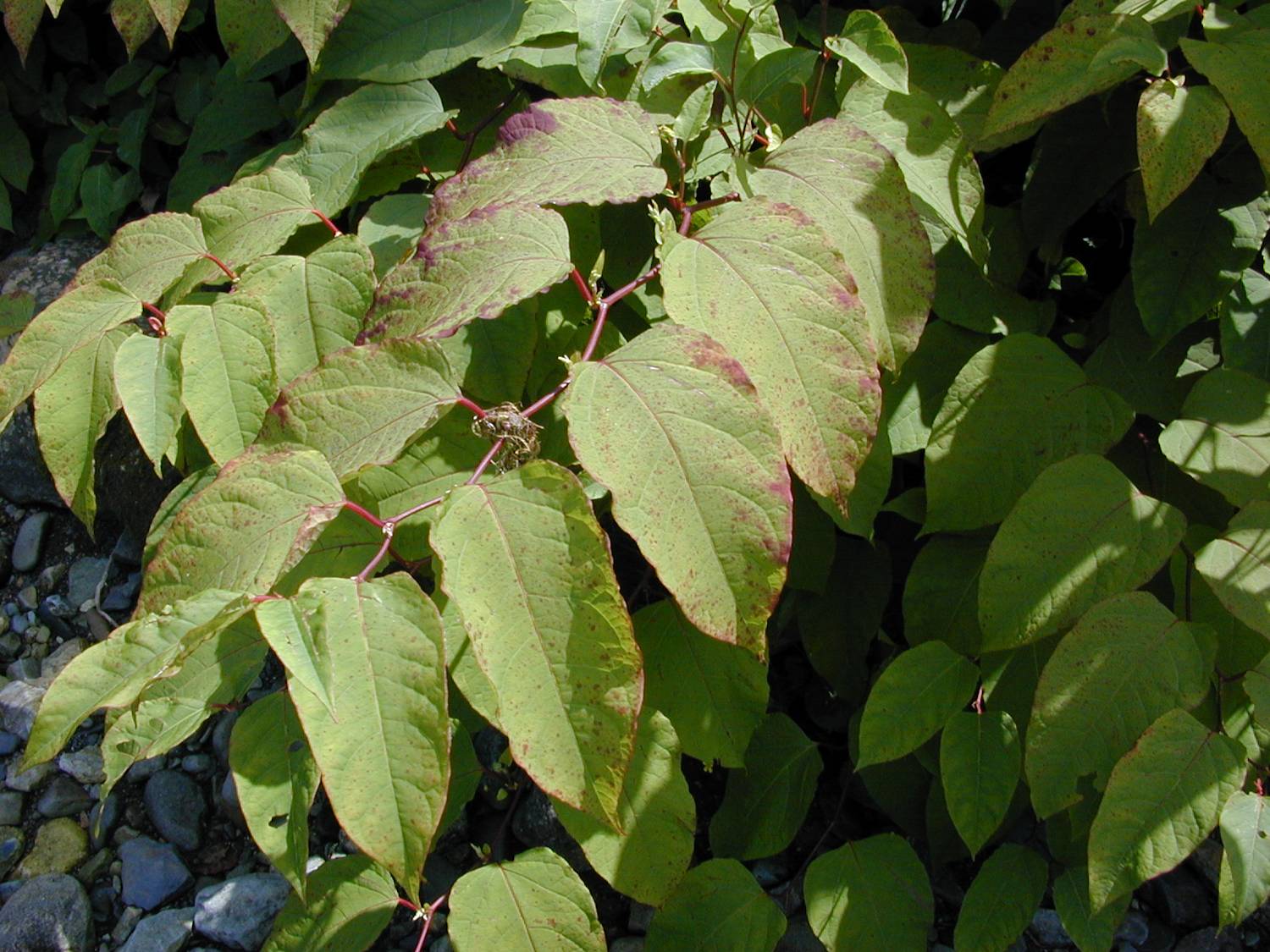
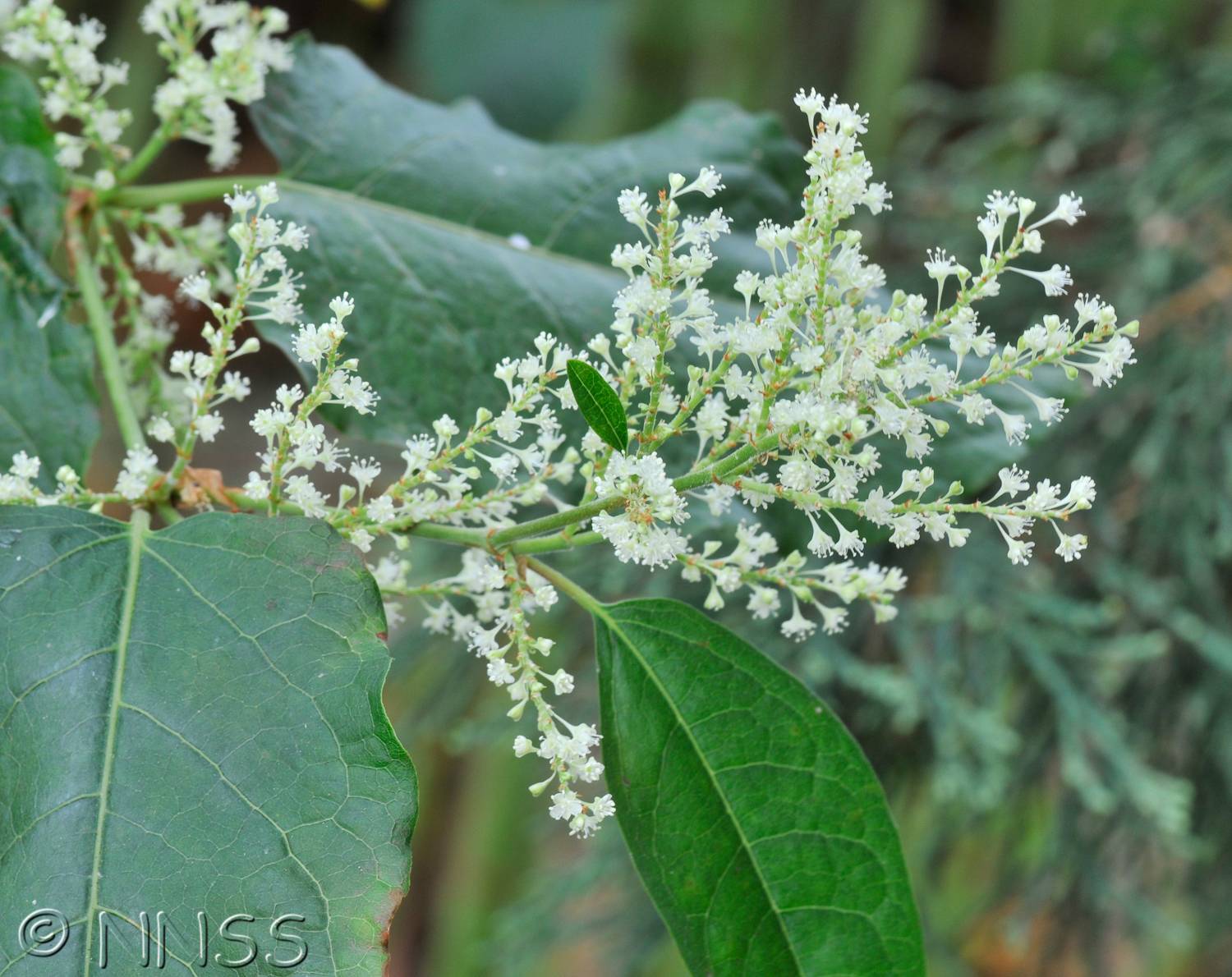
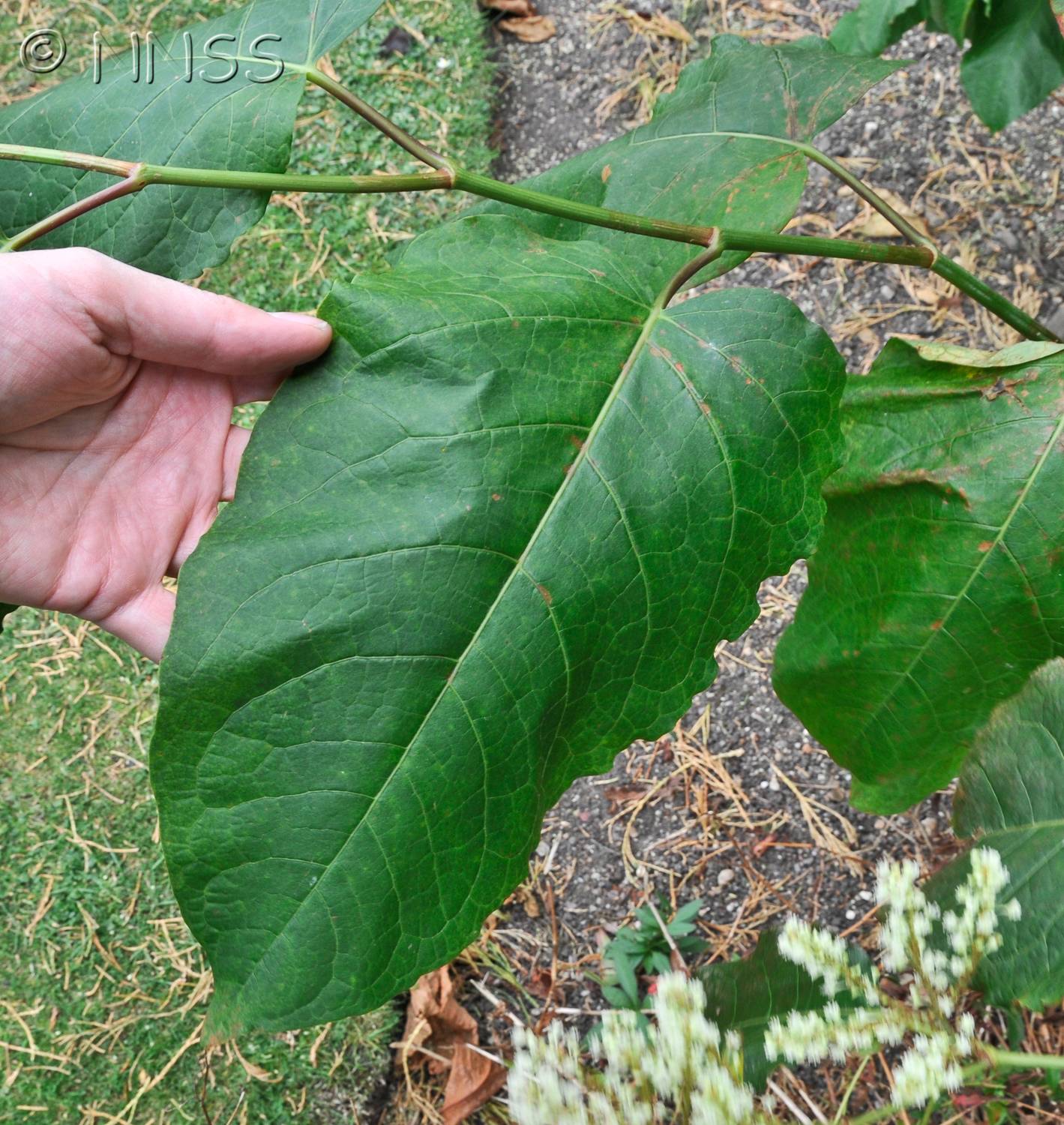
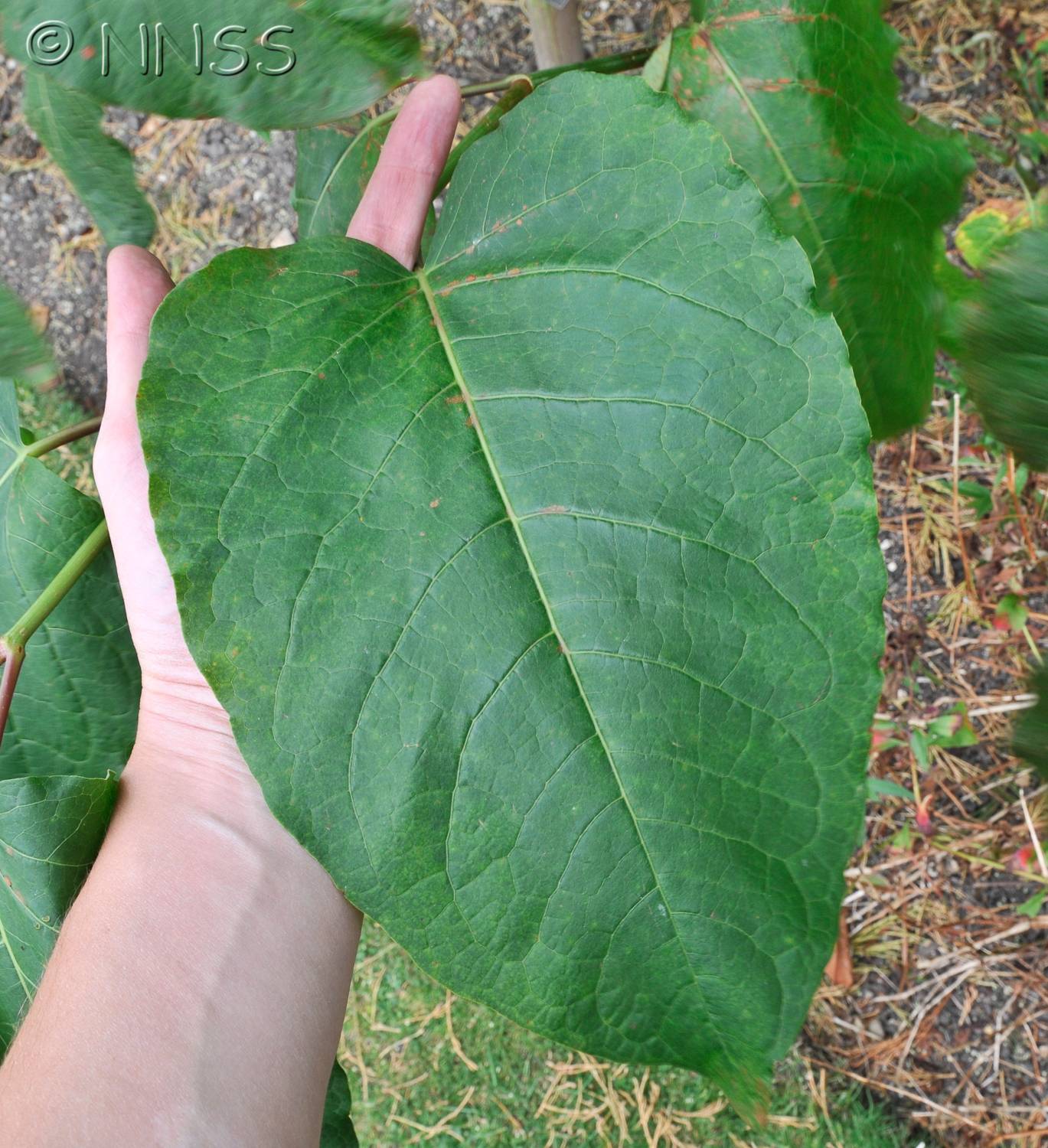
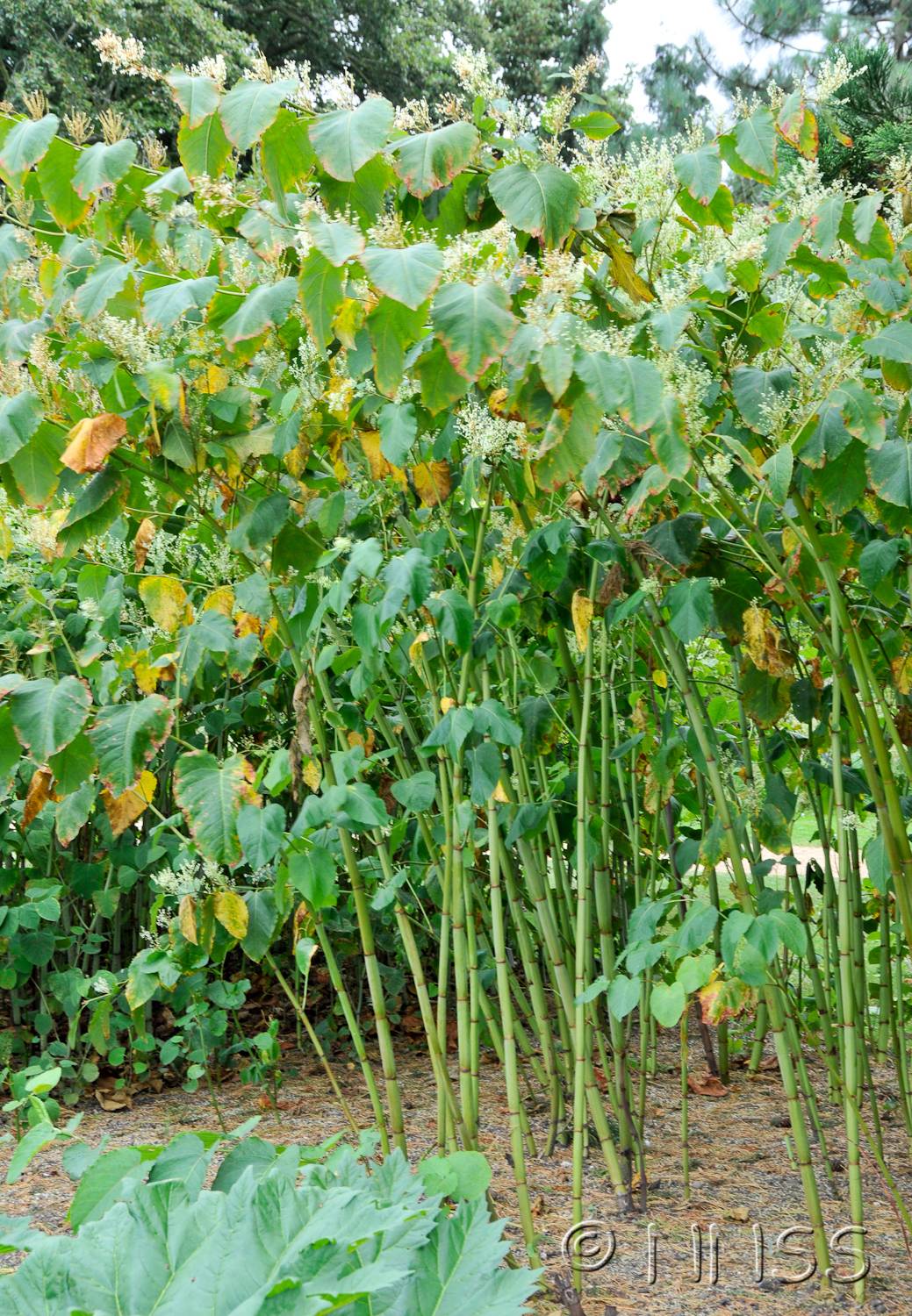
It is a giant, erect perennial herb which forms dense thickets. Stems grow 4-5 m in a single season and bear large, alternate leaves up to 40cm long with heart-shaped bases. In summer plants bear dense panicles of small green-white flowers and seed is sometimes produced. It hybridises with Japanese Knotweed to give a highly invasive hybrid knotweed F. x bohemica.
Impact summary: Fallopia sachalinensis, Giant Knotweed
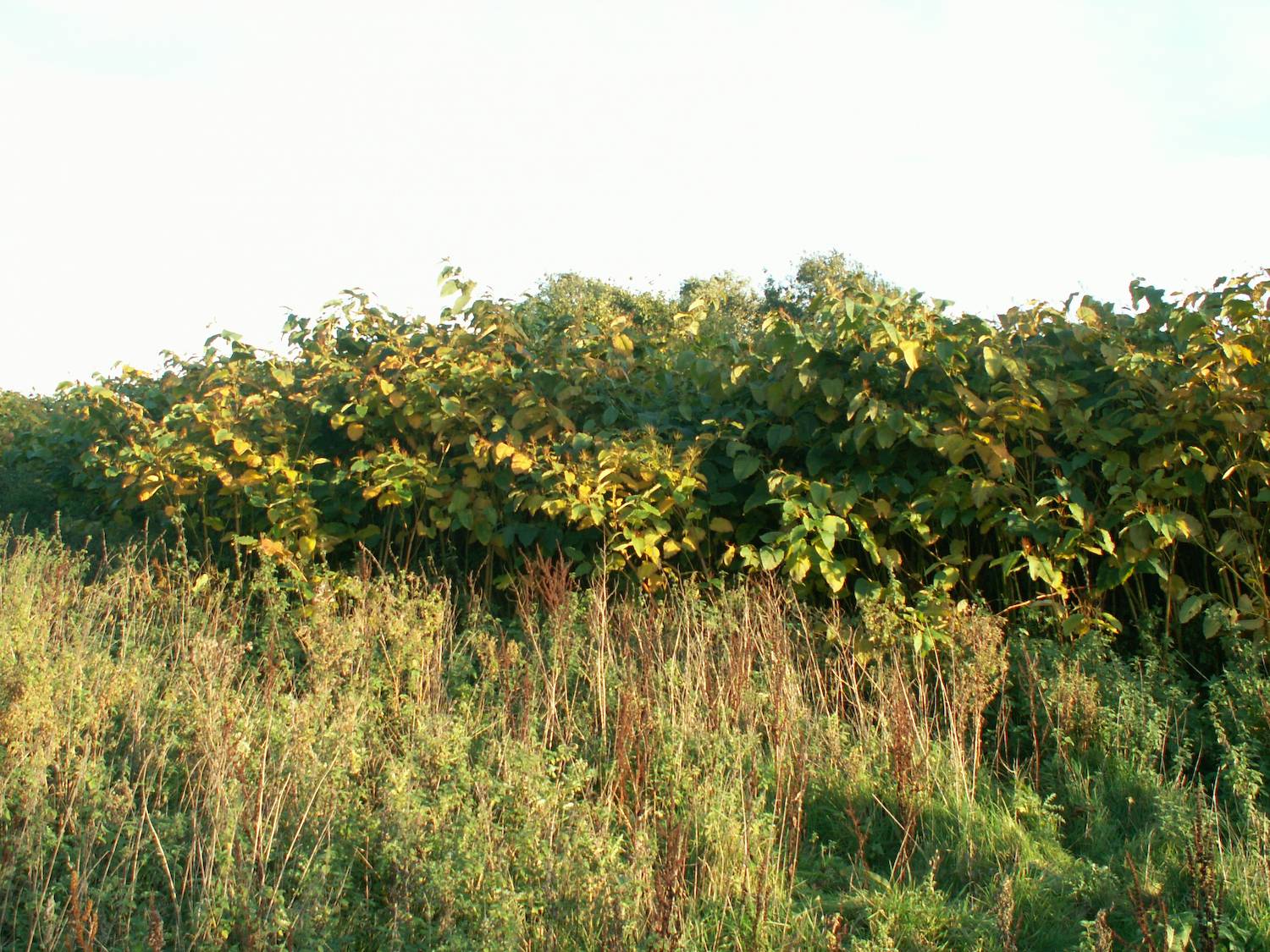
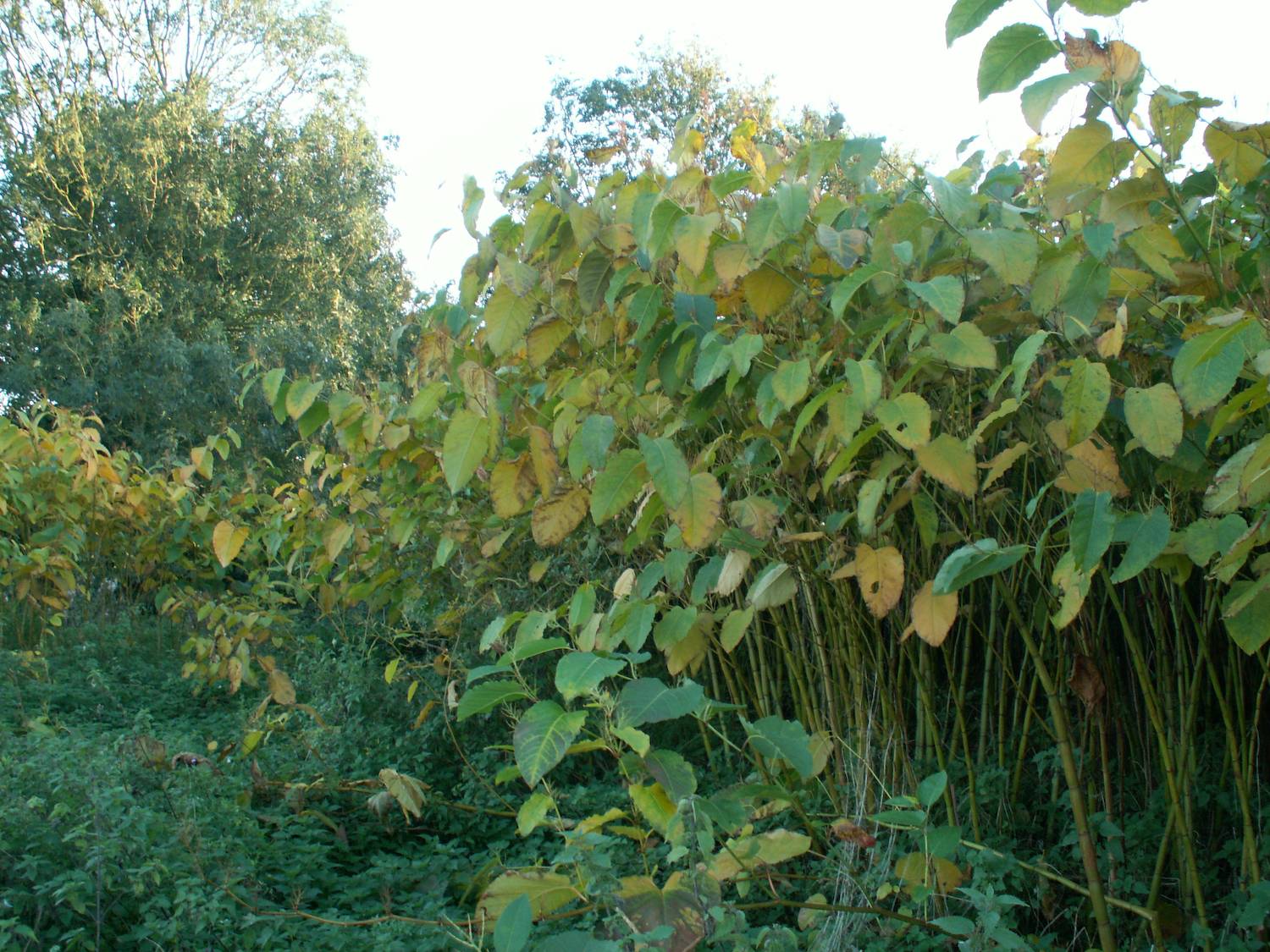
It is less aggressive than Japanese Knotweed but on riverbanks it forms dense thickets which adversely affect local ecosystems and look very unsightly. It is difficult and very costly to eradicate and is unpopular with developers, local communities, nature conservation organisations and local authorities charged with managing or removing it.
Habitat summary: Fallopia sachalinensis, Giant Knotweed
Its most characteristic habitat in GB is on riverbanks. It also occurs on lake shores, around Scottish sea lochs and in various lowland disturbed habitats.
Overview table
| Environment | Terrestrial |
|---|---|
| Species status | Non-Native |
| Native range | Russian Far East, Eastern Asia, Kazan-retto, Nansei-shoto, Ogasawara-shoto, Sakhalin |
| Functional type | Land plant |
| Status in England | Non-Native |
| Status in Scotland | Non-Native |
| Status in Wales | Non-Native |
| Location of first record | v.c.H39 |
| Date of first record | 1896 |
Origin
It is a native of the island of Sakhalin, north of Japan and of the northern part of the Japanese mainland.
First Record
Giant Knotweed is generally assumed to have been introduced by 1869 though it may have arrived before that. The first documented record in the wild was by the Lagan Canal at Lisburn, Antrim in 1896.
Pathway and Method
Early accounts of this species suggest that it was originally introduced for forage in wet grassland and that cattle and horses were fond of its young shoots. Its large stature meant that it was only subsequently grown as a decorative species in gardens and horticultural collections. Spread into the wild is almost invariably by vegetative means, as garden throw-outs and ground works. Seed, though rarely viable, floats and can be carried considerable distances in water, or by wind.
Species Status
This species was not widely planted in gardens due to its size and its pattern of spread was slow at first, accelerating markedly since 1962. In 2002 it was known from 576 10 km squares in Britain and Ireland. In the early stages most sites were in southern and western Great Britain with a small number elsewhere. Latterly its spread has accelerated in the south-east and parts of the north but it appears to prefer warmer and wetter parts of the country. It does not appear to be as invasive as Japanese Knotweed Fallopia japonica and many of its naturalised populations do not spread away from the site of the primary escape. Elsewhere, Giant Knotweed is widely naturalised in most of temperate Europe, especially in parts of France, Germany and the Czech Republic, has invaded the United States from Florida to Alaska and is found in Canada, parts of Asia, Australia and New Zealand.
Dispersal Mechanisms
It is unclear whether seedlings are produced in GB; however the primary means of dispersal is vegetative. It grows readily from pieces of rhizome and green stem. Dispersal vectors are likely to include deliberate throw-outs from gardens and private estates and the action of flooding rivers, which can wash large rafts of plant matter and seed downstream. Seed and rhizome fragments can easily be moved unseen by the transportation of soil, in tyre treads or on boots.
Reproduction
Most plants in GB are functionally female although functionally male plants are not rare. Although flowers are technically bisexual, the species appears to be more or less polygamous in GB. In certain hotspots where Giant Knotweed grows vigorously, male and female flowers are produced, giving rise to seed. This seed is believed to have low viability and seedlings are very rare. Flowers produce nectar and are thought to be pollinated by bees and other insects. Giant Knotweed hybridises with the much commoner Japanese Knotweed producing a highly invasive hybrid, Fallopia x bohemica and backcrosses may also occur.
Known Predators/Herbivores
Large herbivores including cattle, sheep and horses will graze the plant down, at least when it is young; this only suppresses the plant. It has no significant invertebrate predators outside its native range.
Resistant Stages
The plant forms a dense mat of rhizomes which have the potential to give rise to numerous small propagules. A fragment of rhizome no bigger than a thumbnail has the potential to grow into a new full-sized plant. Rhizomes are capable of surviving in soil for many months. Any viable seed may survive for a year or two depending on environmental conditions.
Habitat Occupied in GB
It occurs widely on riverbanks, where it sometimes out-competes its congener Japanese Knotweed. It prefers lowland habitats and often occurs in urban settings including wasteland, roadsides and railway embankments. It has some resistance to salt spray and can be found on the shores of sea lochs in Scotland, as well as freshwater lakes.
Widespread across lowland parts of GB with the highest concentration in London and the Home Counties. Giant Knotweed appears to be absent from upland areas in northern England, Wales and Scotland and is scarce in Ireland.
Environmental Impact
When this species invades established vegetation it has the potential to form very tall and dense thickets that compete with native vegetation for space, light, nutrients and water. Secondary losses of native species are often caused when they succumb to the herbicides which are sprayed on the knotweed in an attempt to control or eradicate it. Large colonies have the potential to rapidly change the structure and species composition of local ecosystems, having a knock-on effect on many plant and animal species, especially in riparian situations.
Health and Social Impact
Roots of Giant Knotweed can penetrate flood defences and make them weaker but the dense mass of rhizomes may in fact stabilise and protect riverbanks from erosion. In winter stands of the plant trap litter and look unsightly and can make an area look run-down and neglected.
Economic Impact
Much less is known about the economic impacts of this species than Japanese Knotweed. However there is little doubt that infestations in urban areas may deter development on contaminated sites because of fears about the costs of eradication. This is likely to have consequences for land values and the willingness of lenders to offer mortgages for properties. Some councils spend hundreds of thousands of pounds annually on eradication measures for Japanese Knotweed. The Giant Knotweed is nowhere near as common but costs of herbicidal spraying are likely to be very unpopular with cash-strapped local authorities, other public bodies and nature conservation organisations.

.jpg)
.jpg)
.jpg)
.jpg)
.jpg)


Identification
Child, L.E. & Wade, P.M. (2000) The Japanese Knotweed Manual, pp. 9-17. Packard Publishing Ltd.
Biology, ecology, spread, vectors
Conolly, A.P. (1977) The distribution and history in the British Isles of some alien species of Polygonum and Reynoutria. Watsonia, 11, 291-311.
Preston, C.D., Pearman, D.A. & Dines, T.D. (2002) New Atlas of the British and Irish Flora, Oxford University Press, Oxford.
Stace, C.A. (2010) New flora of the British Isles, Third Edition, Cambridge University Press, Cambridge.
Distribution map from the NBN Gateway: www.searchnbn.net/searchengine/search.jsp?tab=1&pg=1&searchTerm=Fallopia+sachalinensis
Management and impact
Defra has undertaken a risk assessment for this species at www.defra.gov.uk/nonnativespecies
General
Preston, C.D., Pearman, D.A. & Dines, T.D. (2002) New Atlas of the British and Irish Flora, Oxford University Press, Oxford.
https://www.cabi.org/isc/datasheet/107744
https://secure.fera.defra.gov.uk/nonnativespecies/downloadDocument.cfm?id=385
Spotted this species?
Distribution map
View the Distribution map for Giant Knotweed, Fallopia sachalinensis from BSBI
Risk assessment
Risk assessment for Giant knotweed. See a full list of non-native species Risk assessments.
This species is listed under Schedule 9 of the Wildlife and Countryside Act 1981. Read more about Non-native species legislation.