
Grey Alder - Alnus incana
Expand and collapse the sections below by clicking on the title or + / - icons.
Short description of Alnus incana, Grey Alder
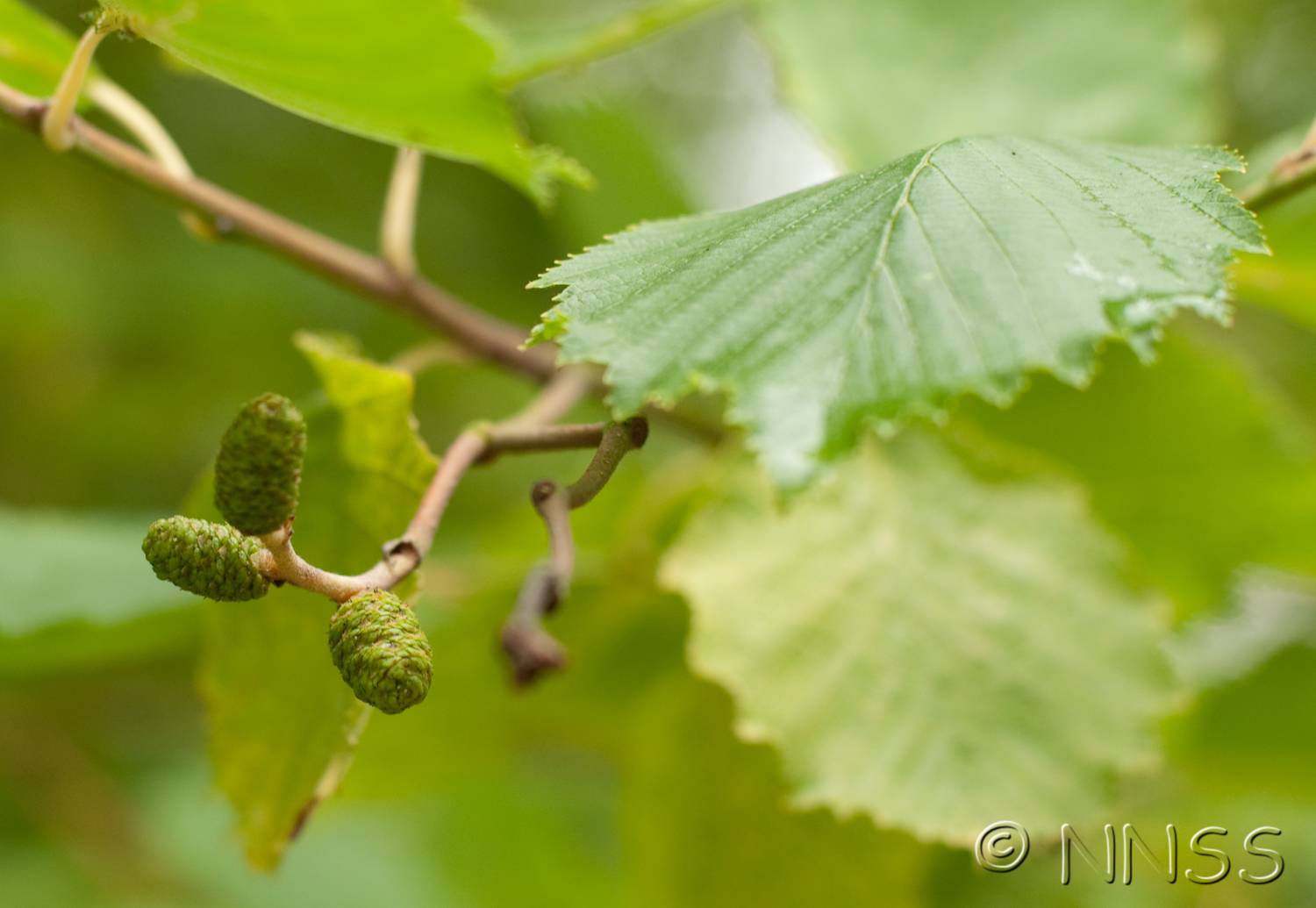
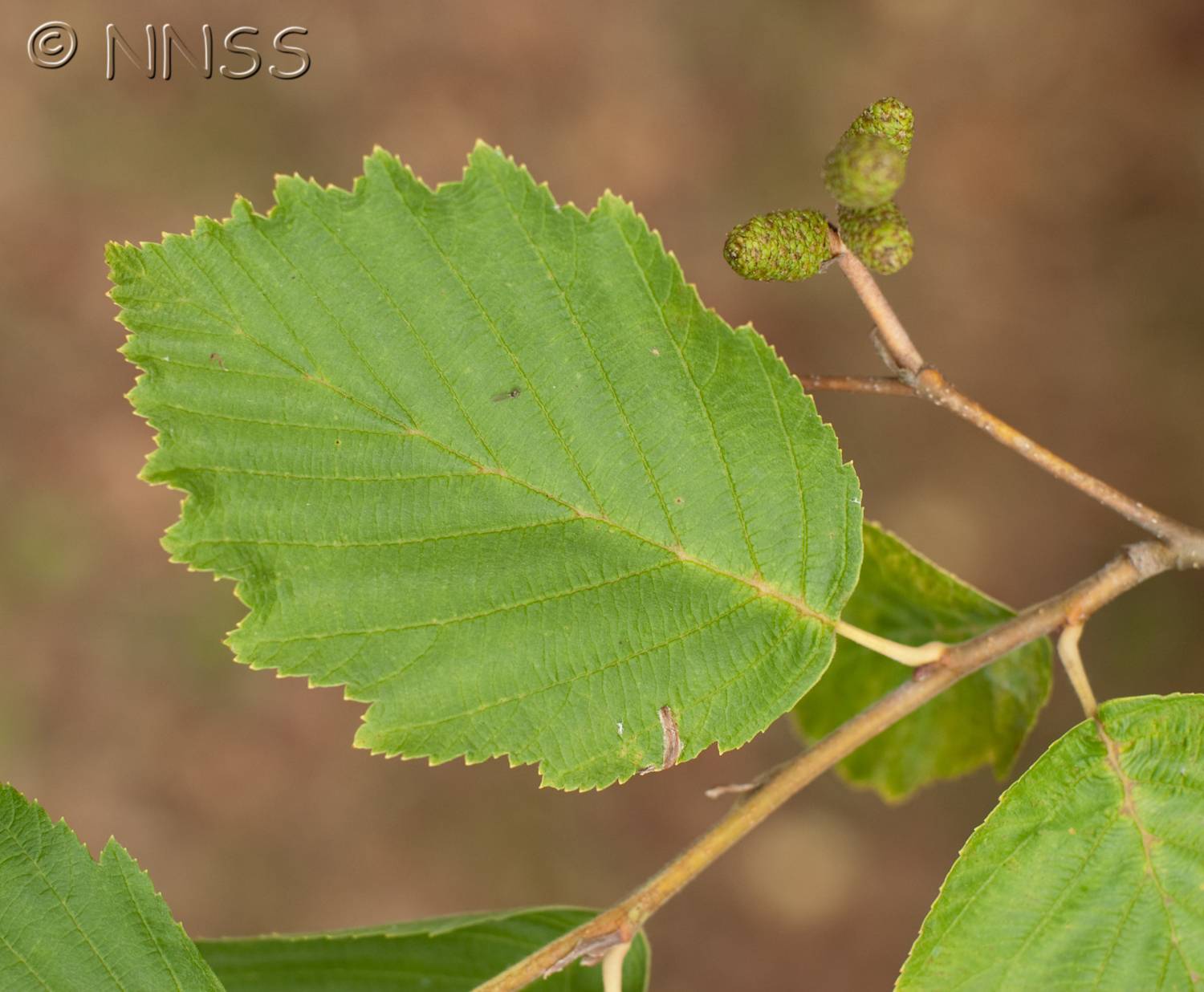
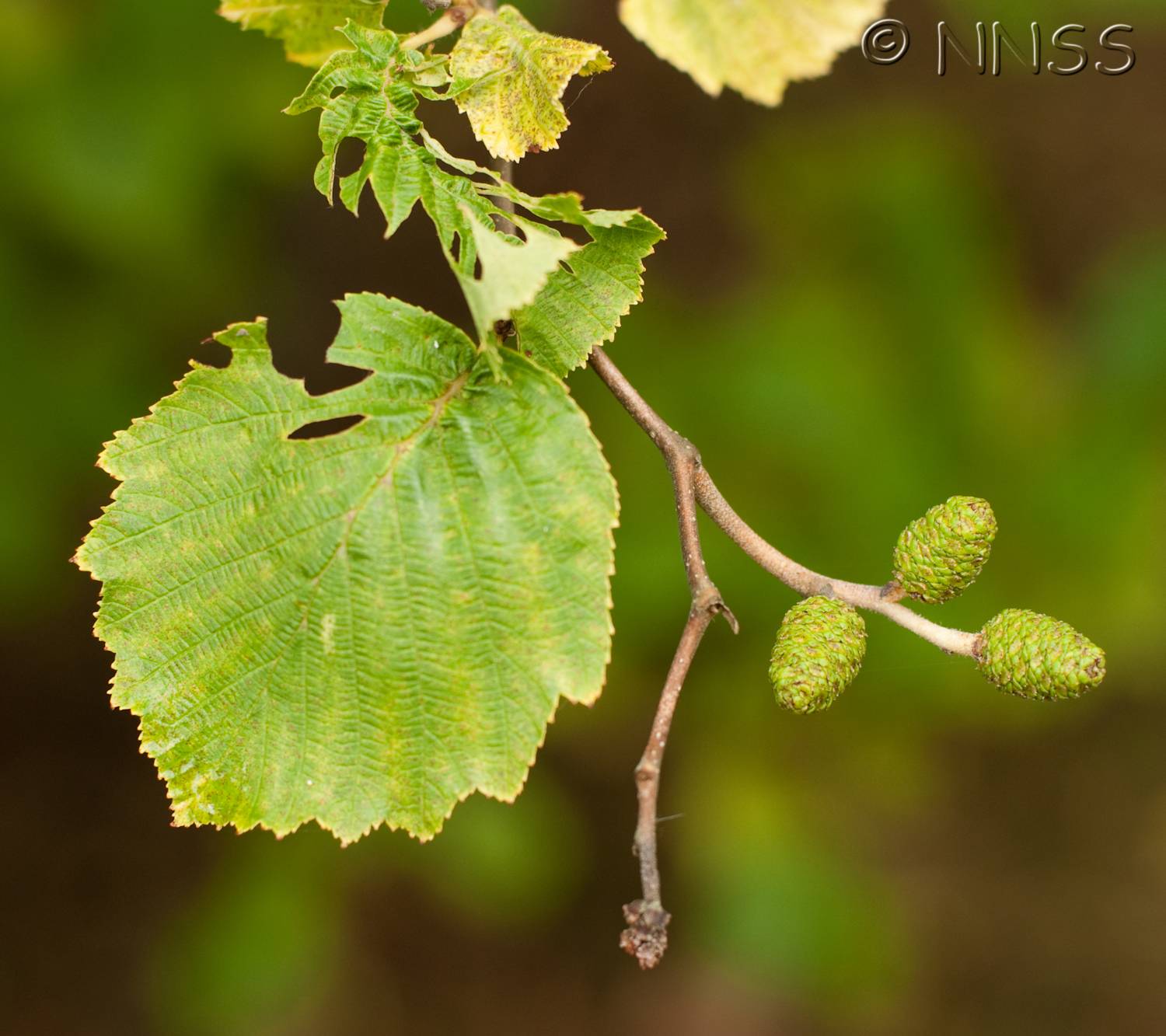
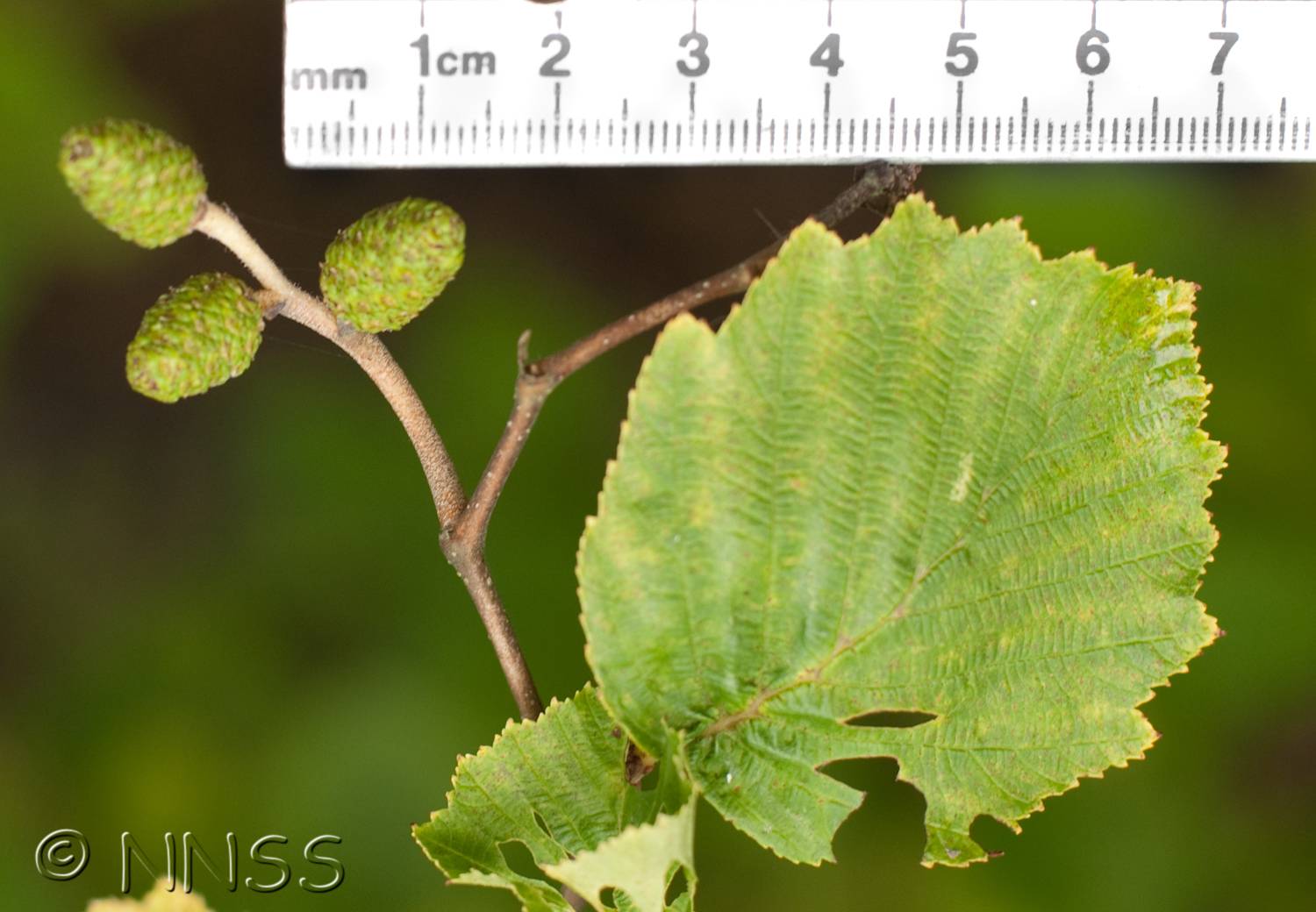
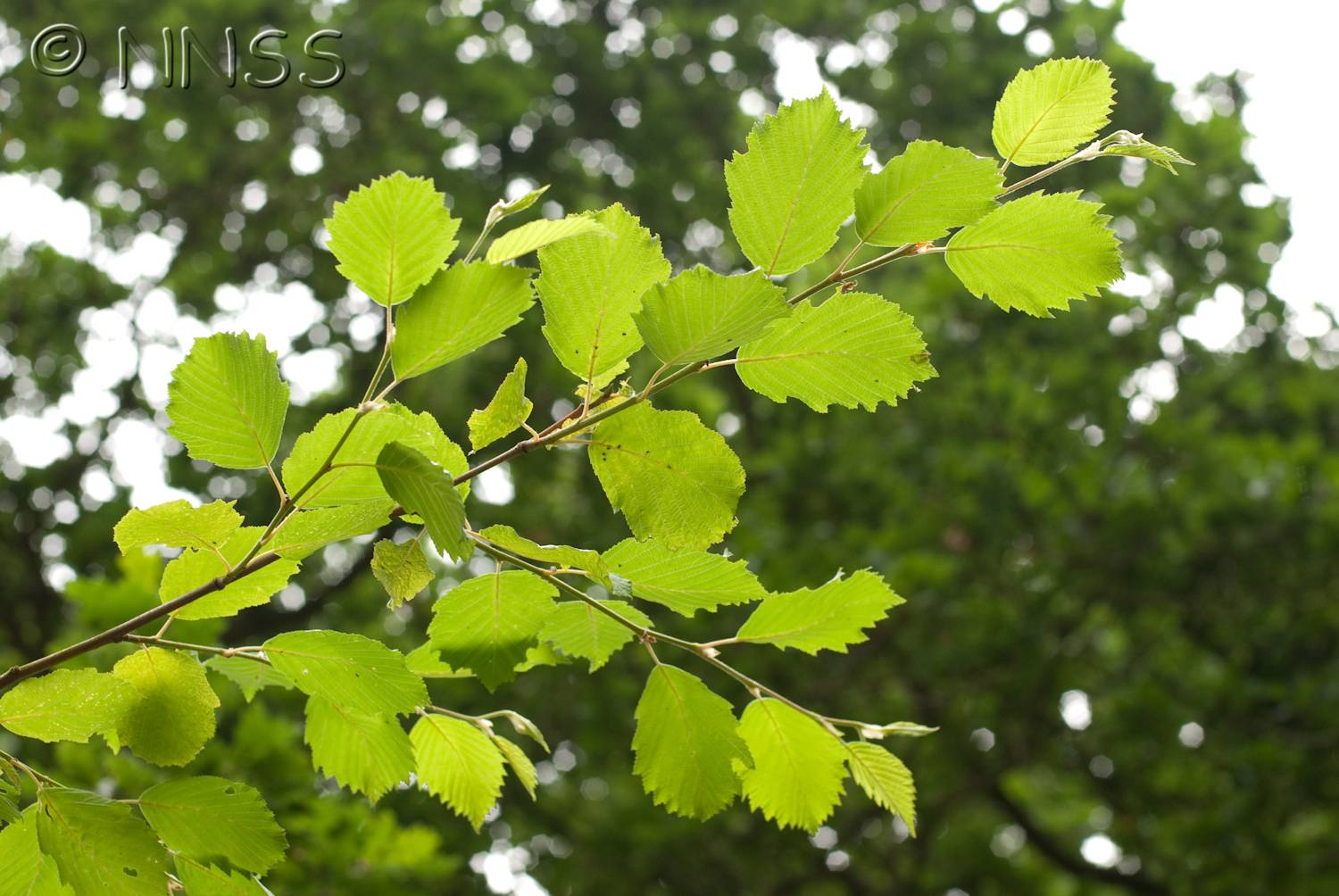
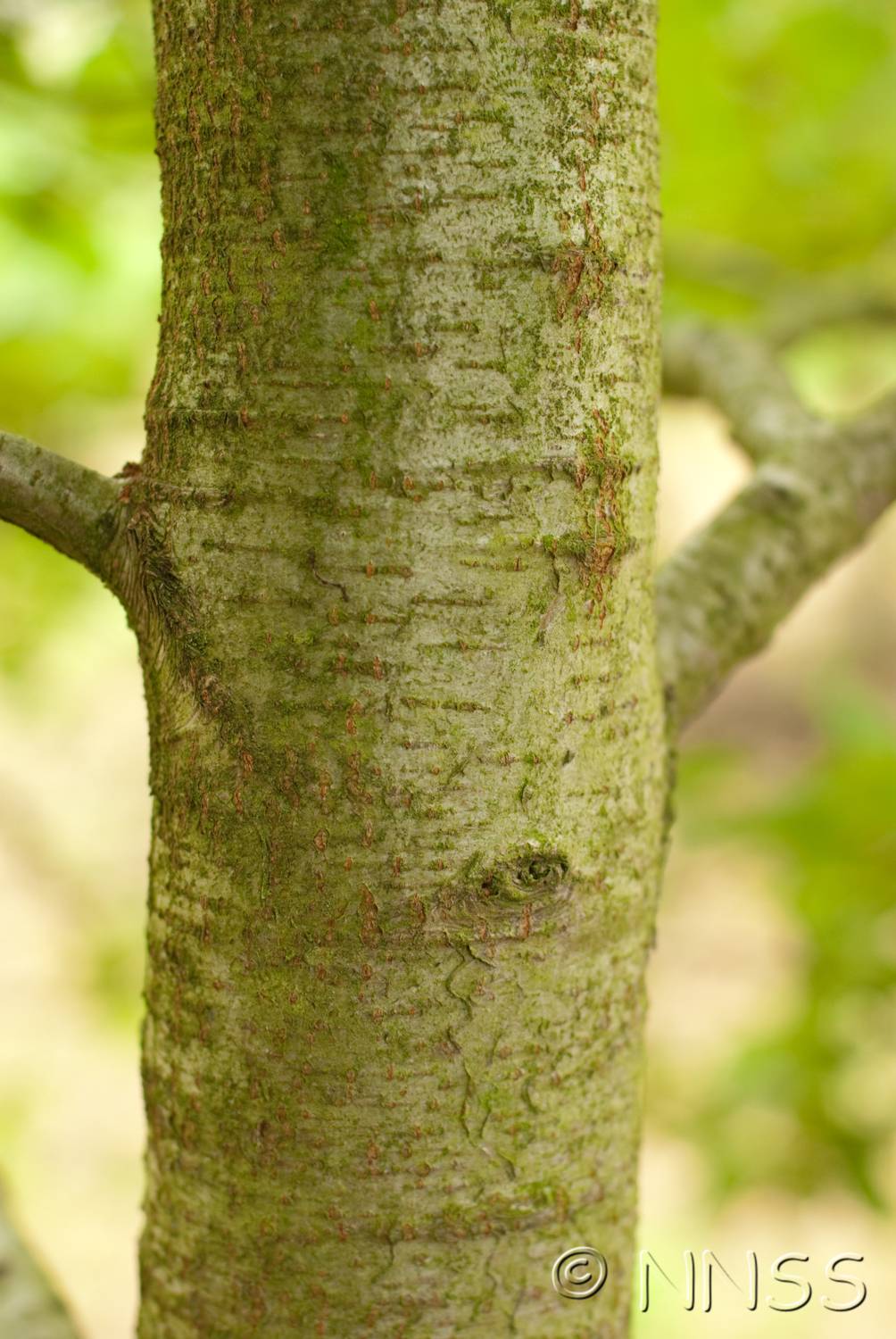
Alnus incana is a fast-growing deciduous tree, tolerant of relatively infertile soils, from moderately dry to wet. A nitrogen-fixing plant, owing to a symbiosis with N-fixing bacteria (Frankia alni) at the site of root nodules (Bjelke et al, 2016), A. incana is very similar in appearance to the native Alnus glutinosa but is distinguishable from it by having a paler and smoother bark, pubescent twigs, smaller leaves (5-11cm by 4-8cm) that lack a sticky underside when young, and usually growing up to just 15m (as opposed to 25m for A. glutinosa).
Impact summary: Alnus incana, Grey Alder
A. incana is a fast-growing deciduous tree, tolerant of relatively infertile soils, from moderately dry to wet. A nitrogen-fixing plant, owing to a symbiosis with N-fixing bacteria (Frankia alni) at the site of root nodules (Bjelke et al, 2016), A. incana is very similar in appearance to the native Alnus glutinosa but is distinguishable from it by having a paler and smoother bark, pubescent twigs, smaller leaves (5-11cm by 4-8cm) that lack a sticky underside when young, and usually growing up to just 15m (as opposed to 25m for A. glutinosa).
Habitat summary: Alnus incana, Grey Alder
A. incana is a fast-growing deciduous tree, tolerant of relatively infertile soils, from moderately dry to wet. A nitrogen-fixing plant, owing to a symbiosis with N-fixing bacteria (Frankia alni) at the site of root nodules (Bjelke et al, 2016), A. incana is very similar in appearance to the native Alnus glutinosa but is distinguishable from it by having a paler and smoother bark, pubescent twigs, smaller leaves (5-11cm by 4-8cm) that lack a sticky underside when young, and usually growing up to just 15m (as opposed to 25m for A. glutinosa).
Overview table
| Environment | Terrestrial |
|---|---|
| Species status | Non-Native |
| Native range | Northern Europe, Middle Europe, Eastern Europe, Caucasus, West Siberia |
| Functional type | Land plant |
| Status in England | Non-Native |
| Status in Scotland | Non-Native |
| Status in Wales | Non-Native |
| Location of first record | Cumberland |
| Date of first record | 1922 |
Origin
A Circumpolar Boreal-montane species. Up to six subspecies are recognized by various authors. Alnus incana ssp. incana is thought to comprise the majority of plants in the UK, and is native throughout Scandinavia and into Russia and western Siberia, as well as parts of the Caucasus and Central Europe into Eastern France on the western edge of its range. A. incana ssp. hirsuta is native to Eastern Siberia, A. incana ssp. rugosa to north-eastern North America and A. incana ssp. tenuifolia to western North America.
First Record
A. incana was first cultivated in Britain in 1780, but was not recorded from the wild until 1922 (Cumberland).
Pathway and Method
Introduced by the horticulture industry and widely planted for ornament and shelter, particularly since the 1960s in parks and on roadsides, and often in conjunction with other alder species. An increase in records, from 118 to 2376 between 1970-2019, may be due to amenity planting, though it may also now be better recorded.
Species Status
Alnus incana ssp. rugosa (Speckled Alder) can be invasive in wet sedge meadows, open fens and bogs in North America (Brisson et al, 2006; Fryer, 2011), covering up to 10% of these habitats in some places. Alnus species (including A. incana) are also invasive in northwestern Patagonia.
Dispersal Mechanisms
Seeds are small obovate, flat samaras, produced in abundance and dispersed by wind or water. They ripen and disperse between September and November (Houston Durrant, 2016). A. glutinosa seeds have been observed to disperse on average only 20-30m from the parent plant at Chippenham Fen (McVean, 1955), though the presence of a wing on the seed of A. incana which is not present in A. glutinosa, is likely to ensure a greater dispersal distance, as will dispersal by water in a riparian situation.
Reproduction
Monoecious and wind pollinated. The woody Female catkins (1-2cm) are found in clusters of 3-8, and Male catkins (5-10cm) in clusters of 3-4, both opening the year after their formation (Stace, 2010; Houston Durrant, 2016). Reproduces by seed and can spread prolifically by suckering.
Known Predators/Herbivores
A. incana is a major host for a range of herbivorous insects and fungal pathogens, the majority of which do not cause significant damage (CABI, 2020). Phytophthora alni is a soil and waterborne pathogen prevalent in the UK and several other Euriopean countries which has been causing serious declines in Alder species over the past few decades (Bjelke et al, 2010). Although affected, A. incana appears to be more resistant than the native A. glutinosa. (Weber & Gibbs, 2004; Weber et al, 2004).
Resistant Stages
None found.
Habitat Occupied in GB
In the UK it has been widely planted in parks, on roadsides, reclaimed tips, old gravel workings, riverbanks and more occasionally in small plantations and in hedgerows. The propensity of A. incana to establish on disturbed ground has meant is sometimes spreads to waste ground and railway embankments.
Since it was first recorded in 1922, Alnus incana has been reported from 1807 10-km squares throughout Britain and Ireland, with the most northerly record from Orkney, and the most southerly in the Channel Islands.
Environmental Impact
As a pioneer species with a propensity to form dense thickets, A.incana can, in certain situations, outcompete native plants, particularly in recently logged or open habitats, such as on old gravel workings.Its ability to hybridise with native Alnus glutinosa (A. glutinosa x A. incana = A. x hybrida; Parnell 1994, BSBI Distribution Database) could threaten the genetic diversity of the latter in the UK, particularly as hybrids may be genetically closer to A. incana (Jurksiene et al., 2021). Although the probability of hybridizations has been found to be low in many areas where these species co-exist due to differences in flowering time, this appears to increase at the Northern edge of their range (Banaev & Bazant, 2007), and hybrids have been recorded throughout much of the UK (BSBI Distribution Database).
Health and Social Impact
None known.
Economic Impact
The cost of removing mature trees can be considerable (Keet et al, 2020), so ensuring saplings are identified and removed early is desirable.



Identification
Poland, J. & Clement, E. 2010. Vegetative Key. Botanical Society of Britain and Ireland, London.Stace, C.A. 2010. New Flora of the British Isles, Third Edition, Cambridge University Press.https://www.treeguideuk.co.uk/more-alders/
Biology, ecology, spread, vectors
Baenev, E.V. & Bazant, V. 2007. Study of natural hybridization between Alnus incana (L.) Moench. and Alnus glutinosa (L.) Gaertn. Journal of Forest Science, 53(2), 66-73.
Bjelke, U., Boberg, J., Olivia, J., Tattersdill, K. & McKie, B. 2016. Dieback of riparian Alder caused by the Phytophthora Alni complex: Projected consequences for stream ecosystems. Freshwater Biology, 61, 565-579.
CABI 2015. Invasive Species Compendium. Alnus Incana. https://www.cabi.org/isc/datasheet/4578
Houston Durrant, T., de Rigo, D., Caudullo, G., 2016. Alnus incana in Europe: distribution, habitat, usage and threats. In: San-MiguelAyanz, J., de Rigo, D., Caudullo, G., Houston Durrant, T., Mauri, A. (Eds.), European Atlas of Forest Tree Species. Publ. Off. EU, Luxembourg. https://ies-ows.jrc.ec.europa.eu/efdac/download/Atlas/pdf/Alnus_incana.pdf
Jurkšienė, G., Tamošaitis, S., Kavaliauskas, D., Buchovska, J., Danusevičius, D. & Baliuckas, V. 2021. Identification of Alnus glutinosa L. and A. incana (L.) Moench. Hybrids in natural forests using nuclear DNA microsatellite and morphometric markers. Forests 12(11), 1504. https://doi.org/10.3390/f12111504.
Preston, C. D., Pearman, D., Dines, T. D., & Botanical Society of the British Isles. 2002. New atlas of the British & Irish flora: An atlas of the vascular plants of Britain, Ireland, the Isle of Man and the Channel Islands. Oxford [England]: Oxford University Press.https://plantatlas.brc.ac.uk/plant/alnus-incana
Streito, J-C., Legrand, PH., Tabary, F & Jarnouen de Villartay, G. 2002. Phytophthora disease of alder (Alnus glutinosa) in France: Investigations between 1995 and 1999. Forest Pathology, 32, 179-191.
Management and impact
Brisson, J., Cogliastro, A. & Robert, M. 2006. Controlling Speckled Alder (Alnus incana ssp. rugosa) Invasion in a Wetland Reserve of Southern Quebec. Natural Areas Journal, 26(1), 78-83.
Calviño, C., Edwards, P., Fernández, M., Relva, M. & Ezcurra, C. 2018. Not one but three: undetected invasive Alnus species in northwestern Patagonia confirmed with cpDNA and ITS sequences. Biological Invasions, 20(10), 2715-2722.
Fryer, Janet L. 2011. Alnus incana. In: Fire Effects Information System, [Online]. U.S. Department of Agriculture, Forest Service, Rocky Mountain Research Station, Fire Sciences Laboratory (Producer). https://www.fs.fed.us/database/feis/plants/tree/alninc/all.html [2022, May 19]
Keet, J., Robertson, M.P & Riuchardson, D.M. 2020. Alnus glutinosa (Betulaceae) in South Africa: invasive potential and management options. South African Journal of Botany, 135, 280-293.
Weber, J.F. & Gibbs, J.N. (2004) Phytophthora Disease of Alder in the UK. Forest Research. https://citeseerx.ist.psu.edu/viewdoc/download?doi=10.1.1.619.7614&rep=rep1&type=pdf
Weber, J.F., Gibbs, J.N. & Hendry, S. (2004) Phytophthora Disease of Alder Information Note. Forestry Commision. https://www.planthealthcentre.scot/sites/www.planthealthcentre.scot/files/inline-files/FCIN006.pdf
General
Wilson, S.McG., Mason, W.L., Savill, P., & Jinks, R. (2018) Non-native alder species (Alnus ssp.). Quarterly Journal of Forestry, 112, 163-174.
Spotted this species?
Distribution map
View the Distribution map for Grey Alder, Alnus incana from BSBI

Native range map
View an interactive native range map for Grey Alder, Alnus incana