
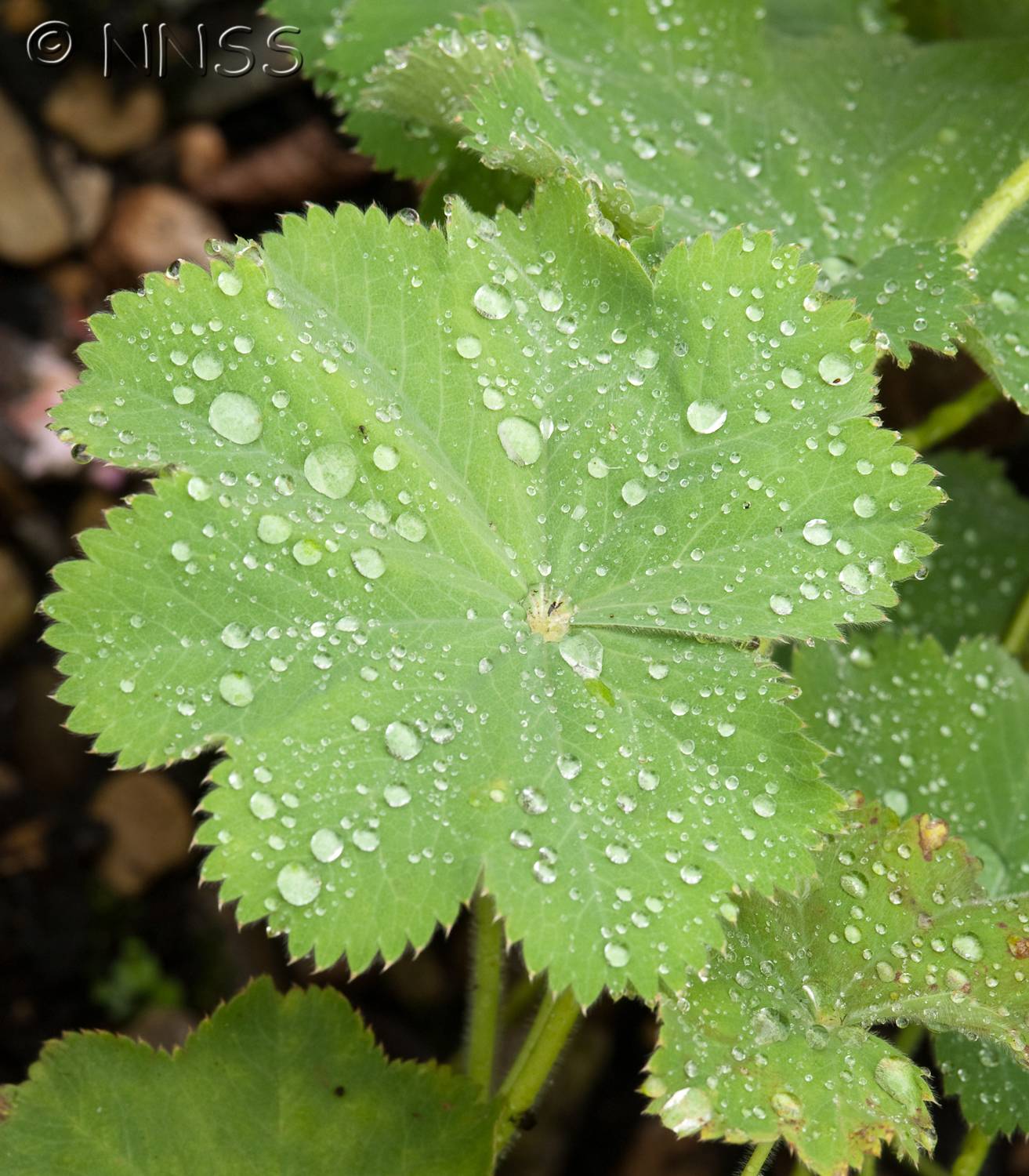
Garden Lady's-mantle - Alchemilla mollis
Expand and collapse the sections below by clicking on the title or + / - icons.
Short description of Alchemilla mollis, Garden Lady's-mantle
A. mollis can be told from all other British Lady’s-mantles by the combination of patent hairs on the lower part of the stem, the epi-calyx segments being about as long as the sepals and the hypanthium being much shorter than the mature achene.
Impact summary: Alchemilla mollis, Garden Lady's-mantle
In most places A. mollis has no or negligible impact; however, it can become highly invasive in dry, sandy or calcareous grasslands that are periodically disturbed by drought, animals or human activities.
Habitat summary: Alchemilla mollis, Garden Lady's-mantle
Roadsides, riverbanks, dry sandy or calcareous grassland, waste ground and dumped soil or rubbish, mainly in the lowlands but ascending to 660 m in Scotland.
Overview table
| Environment | Terrestrial |
|---|---|
| Species status | Non-Native |
| Native range | Southeastern Europe, Eastern Europe |
| Functional type | Land plant |
| Status in England | Non-Native |
| Status in Scotland | Non-Native |
| Status in Wales | Non-Native |
| Location of first record | v.c.17 |
| Date of first record | 1948 |
Origin
Native in the Carpathian mountain region of southeast Europe (Bulgaria, Romania, Greece) and southwest Asia (Northern Anotalia, Caucasus, Northern Iran) (Vitkova et al., 2011).
First Record
A. mollis has been cultivated in Britain since 1874 and was first recorded in the wild in 1948, at Box Hill, Surrey (VC17).
Pathway and Method
A. mollis has been widely grown as an ornamental in British gardens for over a century. It spreads vigorously by seed and vegetative growth and so escapes are likely to have originated directly from gardens or as a result of the dumping of garden waste.
Species Status
Cultivated in gardens throughout Europe and widely naturalised in in the north and west as well as in North America, Australia and New Zealand (GBIF, 2021). Only listed as an invasive alien in Oregon and Alaska (https://www.invasiveplantatlas.org/subject.html?sub=17291).
Dispersal Mechanisms
As many gardeners will know A. mollis can reproduce prolifically by seed and by rhizome fragments making it a very difficult species to control. It is therefore likely to be a common constituent of garden waste or topsoil and can regenerate from it where it is dumped in the wild. It is also likely to have dispersed by seed from gardens into surrounding grasslands habitats. In dry grasslands it can spread rapidly, presumably by seed dispersed by wind, machinery and animals.
Reproduction
An apomictic species that produces copious amounts of seed; it also spreads by short rhizomes and would appear to be able to regenerate from root fragments.
Known Predators/Herbivores
None known.
Resistant Stages
None known.
Habitat Occupied in GB
A. mollis is widely grown in gardens and is frequently found naturalised on pavements, roadsides, hedgebanks, tracksides, riverbanks, disused railway lines and gravel pits, dry grassland, waste ground and anywhere where garden refuse is dumped. It also occurs as a casual on piles of topsoil or on rubbish tips. It is mainly a lowland plant, usually growing close to habitation, but it increasing in the uplands and in remoter regions and was even recorded as established in roadside grassland at 660 m by the Glenshee Ski Centre, south Aberdeenshire (VC92).
A. mollis has been cultivated in Britain since 1874 and was first recorded in the wild in 1948, at Box Hill, Surrey (VC17). Since then it has spread rapidly and is now one of the commonest alien plants likely to be encountered in the wild. It occurs throughout much of lowland Britain (80% of records are from below 250 m altitude) and is particularly abundant in and around major cities such as London, Birmingham, Manchester, Glasgow and Edinburgh. It is also widely naturalised in upland regions of Wales and England but less so in Scotland where it is notably absent from much of the central and western Highlands. It is also notably scarce in arable regions of eastern England.
Environmental Impact
A. mollis is a vigorous perennial herb of free draining soils with a pH ranging from acidic to calcareous. It reproduces prolifically by seed but it can also spread by rhizome fragments. It grows vigorously and can quickly become abundant in dry grasslands where it can rapidly outcompete other species including nationally threatened lady’s-mantles such as A. monticola. This is supported by an experimental study in North America that showed that A. mollis was highly effective as a weed suppressant when planted on roadsides as ground cover (Eom et al., 2005).
Health and Social Impact
There are no known health impacts but it can have an aesthetic impact, especially on nature reserves, where it can be perceived to devalue the quality of existing high quality habitats such as limestone grassland with associated specialist species including rare, native Lady’s-mantles.
Economic Impact
Some conservation organisations in Britain have incurred costs in attempting to control A. mollis on nature reserves via hand pulling or spot-treating with herbicides. However, most of this information is anecdotal and as a result no precise figures are available.

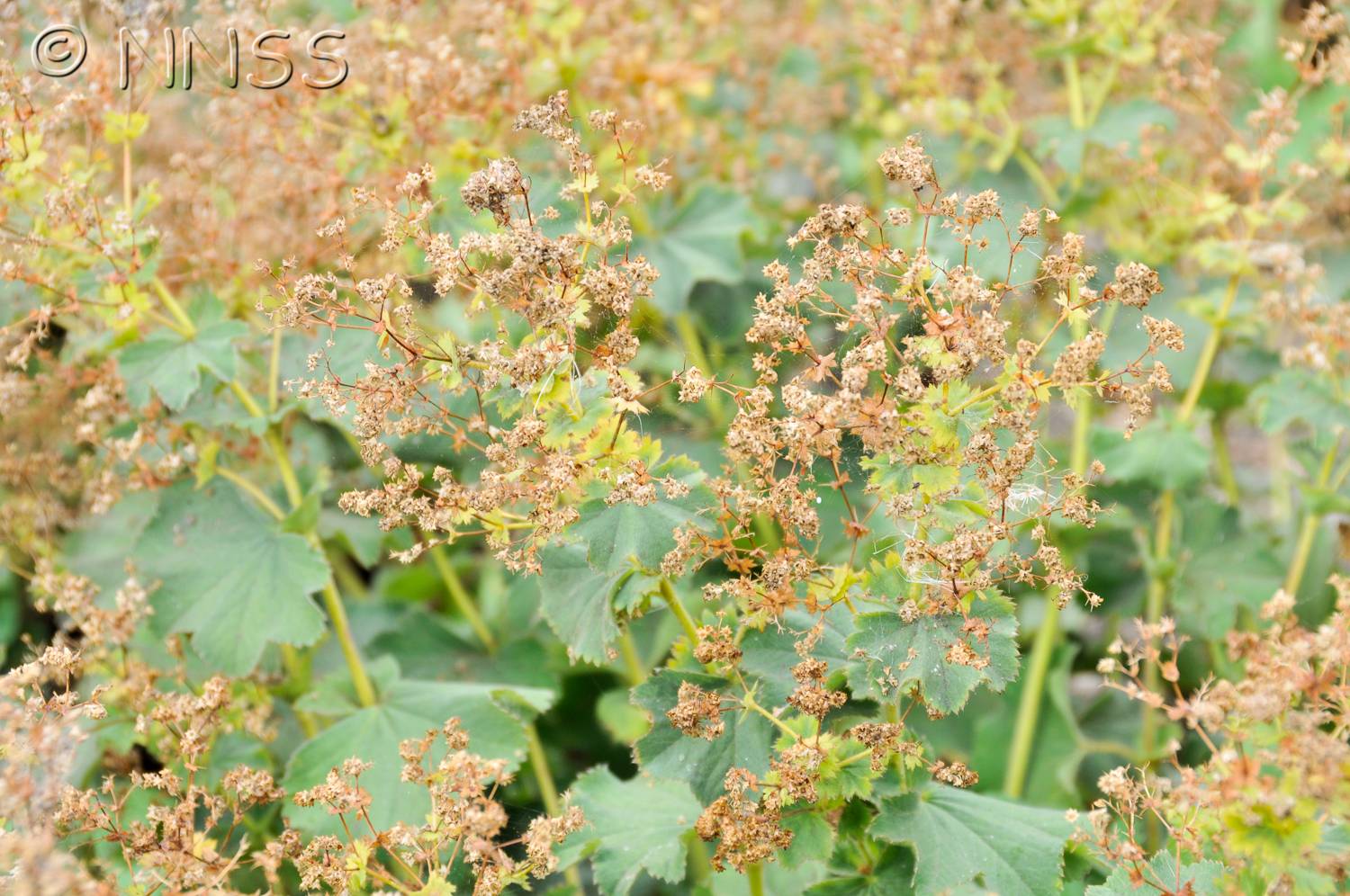
Identification
Lynes, M. In prep.[due 2021]. Lady’s-mantles of Britain and Ireland. Botanical Society of Britain and Ireland, Durham.
Biology, ecology, spread, vectors
Vitkova, A., Gavrilova, A. & Tashev, A. 2011. Alchemilla mollis (Rosaceae) – a critically endangered species in Bulgaria. Phytologia Balcanica 17, 83-88.
Management and impact
Eom, S.H., Senesac, A.F., Tsontakis-Bradley, I. & Watson, L.A. 2005. Evaluation of herbaceous perennials as weed suppressive ground covers for use along roadsides or in landscape. Journal of Environmental Horticulture 23, 198-203.
General
https://www.brc.ac.uk/Plantatlas/plant/alchemilla-mollis
Spotted this species?
Distribution map
View the Distribution map for Garden Lady's-mantle, Alchemilla mollis from BSBI